Languages
Friday, November 27, 2026



News and Views from the Global South
Asia-Pacific
ECONOMY: Lin Yifu's World Bank Job May Add To China's Clout
The pending appointment of a Chinese academic as chief economist in one of the world’s prime financial institutions, the World Bank, comes at a time of symbolic shifts in economic power from west to east and foreshadows a more assertive China on the international stage.MEDIA-MALAYSIA: Call To Boycott Newspapers For Biased Reporting
Fed up with what they see as biased and distorted reporting, a group of concerned Malaysians has launched a campaign urging the public to boycott newspapers ahead of a general election widely expected in March.CORRUPTION: Treaty Could Be Working – Or Not
Ongoing international talks on the question of how to strengthen a U.N. treaty against corruption are doomed to failure unless governments agree to take practical actions to demonstrate compliance, according to observers who are attending a major anti-corruption summit in Indonesia this week.
RIGHTS-AFGHANISTAN: Internet Article Lands Journalist on Death Row
An Afghan court has sentenced a 23-year-old journalist to death for blasphemy, apparently after criticising the Prophet Mohammed's views on women's rights, and downloading and circulating material from the Internet.THAILAND: New Premier Starts on Populist Note
Thailand's new prime minister, Samak Sundaravej, chose an apt location to set the tone for his leadership style hours after winning the backing of 310 legislators in the 480-member lower house this week. He went shopping for vegetables at a popular market that sells fresh local produce.INDONESIA: Suharto’s Death Shows ‘Reformasi’ Merely Shift in Power
The death of former Indonesian president Suharto shows the country’s ‘reformasi’ (reformation) as nothing more than a shift in power instead of a gradual process to democracy, say analysts here.SOUTH-EAST ASIA: ASEAN Leaders Condone Suharto Era Corruption
‘’We pray to Allah to bless Pak Harto’s soul and to place him among the blessed,’’ Malaysian Prime Minister Abdullah Ahamad Badawi is reported to have told the local media after news broke of the death on Sunday of Indonesia’s former president Suharto.INDONESIA: The 'Kemusuk Thug' Is Finally Dead
Minutes after hearing of Suharto’s passing away on Sunday, Marco, a militia leader in the capital, donned battle fatigues and raced to the former president’s mansion on Cendana street to help with guard duties.
JAPAN/CHINA: Relations Thaw Despite Gas Reserves Issue
Prime Minister Yasuo Fukuda’s efforts at forging closer relations between Japan and China, rectifying the abrasive course set by his predecessors in office, is apparently bearing fruit.RIGHTS-AUSTRALIA: Apology, No Compensation For Lost Generations
While aboriginal groups have welcomed the Australian government’s pledge to apologise to the 'stolen generations', they argue that the gesture should be backed up with compensation.RIGHTS-CAMBODIA: Land Grabbing – A Serious Concern
At the beginning of January, Ros Sovann was just another private security guard one sees standing outside fancy restaurants and the homes of the rich in Phnom Penh. By month end, the 28-year-old had catapulted from obscurity to become the symbol of rage spreading through Cambodia over land grabbing.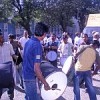
WORLD SOCIAL FORUM: Mumbai Marches on Against Globalisation
There was grim determination on the faces of the 500-strong crowd that marched through the streets of this western port city for the World Social Forum’s Global Day of Action on Saturday.
Q&A: ''Lee Myung-bak Has Mafia-like Capability''
One month before Lee Myung-bak officially takes over the South Korean presidency, liberals and progressives are apprehensive about the conservative credentials of the ‘CEO President’ and their impact on civil society.POLITICS-NEPAL: Plains People's Demands Cast Shadow on Polls
While Apr. 10 has been set as the day on which Nepalis will elect a constituent assembly to draft a new constitution, violent protests by plains people demanding regional autonomy threaten the thrice-postponed polls.INDIA/US: Nuclear Deal Runs Out of Steam
Has the controversial United States-India nuclear cooperation deal finally run out of steam after tough, and at times tortuous, negotiations spread over two-and-a-half years?POLITICS-CHINA: Coveting Neighbourhood Energy Resources
Even as it expands economic cooperation with its wary South-east Asian neighbours, China’s thirst for energy is compelling it to resurrect territorial claims to resources-rich spots in the region that have lain dormant for years.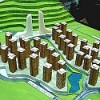
DEVELOPMENT-MALAYSIA: Civil Society Stalls Eight Billion Dollar Project
Civil society groups here are mulling their next move after having stalled a massive, private project to build close to 40 high-rise towers on a precious green lung on this land-scarce Malaysian island.HEALTH-PAKISTAN: National Alert Over Bird Flu Deaths
Although genetic sequencing tests conducted by the World Health Organisation (WHO) of samples from a man who died of H5N1 avian influenza do not confirm human-to-human transmission, authorities in this region, bordering Afghanistan, are taking no chances.DEVELOPMENT-INDIA: Democracy In Conflict With Free Market Policy
Two years ago India was the toast of global investors at the World Economic Forum meet in Davos with the government of Prime Minister Manmohan Singh proudly proclaiming the country as the ‘world’s largest free market democracy’.RIGHTS-THAILAND: War on Drugs Massacre – Officials Scot-Free
Shortly after Thailand’s military leaders grabbed power in the September 2006 coup, they pledged to rectify the ‘wrongs’ committed during the five-and-a-half years of the Thaksin Shinawatra administration. Securing justice for the victims of a bloody ‘war on drugs’ was one of them.HEALTH-INDIA: Bird Flu Virus Outpaces Culling in West Bengal
When nine out West Bengal state’s 19 districts were declared on Wednesday to be in the grip of a bird flu outbreak, it belied Chief Minister Buddhadeb Battacharya’s assertions, earlier in the week, that the spread of the deadly H5N1 virus was well under control.« Previous Page — Next Page »


The Week with IPS

NEXT STOP - SDGs
Tracking global progress towards a sustainable world
