Languages
Tuesday, September 1, 2026



News and Views from the Global South
Democracy

Deepening Democracy in an AI-enabled World
In 2002, the Human Development Report (UNDP) focused on ‘Deepening Democracy in a Fragmented World’. It was an important discourse then [and still is] that evoked lot of insightful cross-regional exchanges of ideas. It reiterates that politics matter for human development because people everywhere want to be free to determine their destinies, express their views and participate in the decisions that shape their lives.
A Global Survey of Democracy Finds Both Sobering and Alarming Results
The recent epidemic of coups in Africa -- including military take-overs in Mali, Burkina Faso, Niger and Gabon-- have triggered the inevitable question: Is multi-party democracy on the retreat? The Open Society Barometer, an annual global survey from Open Society Foundations, launched September 12, reflects the positive and negative aspects of the state democracy worldwide.
Gabon: The End of a Dictatorship… and the Beginning of Another?
On 26 August, Gabon went through the motions of an election. Official results were announced four days later, in the middle of the night, with the country under curfew. Predictably, incumbent President Ali Bongo, in power since the death of his father and predecessor in 2009, was handed a third term. Fraud allegations were rife, as in previous elections. But this time something unprecedented happened: less than an hour later the military had taken over, and the Bongo family’s 56-year reign had ended.
Global Governance for Achieving the SDGs From Viewpoint of Sociology of Domination
SDGs and global governance Sustainable development is the challenge of how to build a society in which humanity can live with dignity in this global environment. The SDGs set 17 goals and 169 targets to achieve sustainable development. Goals 16 and 17 are aimed precisely at building global governance through the formation of global rules. Goal 16 lists 10 specific targets, while Goal 17 lists 19 targets.

World Leaders Offered “15 Minutes of Fame” at UN’s High-Level Meeting
Everyone in this world is entitled to 15 minutes of fame-- is a legendary quote mis-attributed to the American pop icon Andy Warhol. Over the years, the United Nations has laid down its own 15-minute rule for world leaders addressing the UN General Assembly.
When the UN Came Under Attack— from a Mis-Guided Rocket Launcher
When 150+ world leaders, including Presidents and Prime Ministers, arrive in New York to address the high-level segment of the General Assembly beginning September 19, the UN neighborhood will be turned into a veritable war zone. The streets will be littered with scores of police officers, US secret service personnel, UN security officers, bomb-sniffing dogs, road closures-- and a stand-by ambulance in the UN campus ready to cope with any medical emergencies.
What Niger’s Coup Says About US Security Assistance in the Sahel
In what has become an all too familiar phenomenon, U.S.-trained security personnel have been implicated in the July 26th coup that deposed Niger’s democratically elected president, Mohamed Bazoum.
‘Investing’ Key to the Prevention of Military Coups – UN
The United Nations says increased investment in the Sahel region will assist in preventing military coups. This after military officers in Gabon announced a seizure of power from long-time President Ali Bongo Ondimba following the results of a disputed election in Gabon on Wednesday.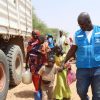
Want to Prevent Atrocities? Think Locally. Act Locally
When I first travelled to the Middle Belt of Nigeria, I listened to harrowing tales of murdered family members, physical injury, sexual violence, displacement, and hopelessness. In the years that have passed, these stories have only continued to stack up.
Guatemala: Change Within Reach
On 20 August, Guatemala witnessed a rare event: despite numerous attempts to stop it, the will of the majority prevailed. Democracy was at a dramatic crossroads, but voters got their say, and said it clearly: the country needs dramatic change and needs it now.
Taliban’s Policies Plunge Afghan Women into Poverty and Despair
In July of this year, the Taliban issued a decree that resulted in the closure of hair salons and beauty parlors across Afghanistan. This directive aligns with the extreme Islamist policies now governing Afghanistan, which aim to confine women strictly within their homes.
UN’s Annual Culture of Peace Forum Remains Derailed– & Civil Society Bypassed
14 June has become a black day for the UN High Forum on The Culture of Peace (HLF-CoP) convened by the successive Presidents of the UN General Assembly since 2012.
Press Freedom and LGBTQ+ Rights: Benchmarks of Democracy Decline in Southeast Asia
Three notable events have boosted the democratic process in Southeast Asia in recent decades. The fall of the Marcos regime in 1986, the Reformasi that shifted Indonesian politics in the late 1990s, and Aung San Suu Kyi's victory over the military junta in Myanmar. However, today Marcos' son is president of the Philippines, Indonesian presidential candidates want to centralize power again, and Myanmar is embroiled in an armed conflict. What is going on in the region, and what does this mean for democracy?
Can Netanyahu Rise to The Unparalleled Historic Occasion & Normalize Israeli-Saudi Relations?
The prospect of normalization of relations between Israel and Saudi Arabia will have enormous implications on Israel and the entire region. Since it will certainly take a personal sacrifice to put Israel’s national interests first, the question is, will Prime Minister Netanyahu muster the courage to do what’s best for the country
Governments in Thailand and Cambodia Play a Poker Game for Power
Democracy is declining in Southeast Asia. The Cambodian prime minister will hand over his office to his son later this month, after rigged elections. Meanwhile, Thailand's largest political party is kept from power.
Artificial Intelligence Faces Charges of Left-Wing Political Bias
The artificial intelligence (AI) platform ChatGPT, whose negative consequences include misinformation, is facing new charges of political bias. According to a study by the University of East Anglia (UEA), released August 17, AI ChatGPT shows “a significant and systemic left-wing bias”.
Let’s Shape Tech to be Transformative & Meet Every Child’s Learning Needs
Did you know that the power of computers has been doubling roughly every two years since the 1960s? Every day it seems there’s a new app or piece of tech that unlocks new and efficient ways to do things; to better engage with the world, or with learning.
Russia Upstages Neo-Colonialist France in West Africa
Going back to the 16th century and continuing through the late 1960s, France was described as the world’s second largest colonial power—just behind the British Empire. As the old saying goes: The sun would never set over the British Empire because God wouldn’t trust an Englishman in the dark. But would that also apply to the French colonial empire?
Requiem for the UN Security Council: Towards a UN Charter Review Conference
The world’s institutions are ill-prepared and poorly designed to effectively address global challenges such as major power conflicts, pandemics, the climate catastrophe, refugee crises, violent extremism, illicit profiteering from natural resources, and the regulation of artificial intelligence systems.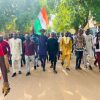
France, Russia, ECOWAS in Battle for Soul of West Africa
On July 26 2023 a man named Colonel-Major Amadou Abdramane, flanked by soldiers with military fatigues, appeared on Niger's national television to announce the execution of a coup. It was the country’s fourth coup since it gained independence from France in 1960.
Cambodia’s Election a Blatant Farce
The title shouldn’t fool you: Cambodian Prime Minister Hun Sen is one of the world’s longest-ruling autocrats. A political survivor, this former military commander had been bolted to his chair since 1985, presiding over what he turned into a de facto one-party system – and now apparently a dynastic regime.« Previous Page — Next Page »


The Week with IPS

NEXT STOP - SDGs
Tracking global progress towards a sustainable world
Tracking global progress towards a sustainable world
