Languages
Sunday, November 22, 2026



News and Views from the Global South
Economy & Trade
What is lost in the smoke of COVID-19
When countries shuttered their shops, closed their markets, and cordoned off places of gathering to help ward off the coronavirus, they did so out of immediate concern for the health and wellbeing of their citizens.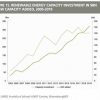
Falling Clean Energy Costs Create Opportunity to Boost Climate Action in COVID-19 Recovery Packages
As COVID-19 hits the fossil fuel industry, a new report shows that renewable energy is more cost-effective than ever - providing an opportunity to prioritize clean energy in economic recovery packages and bring the world closer to meeting the Paris Agreement goals.
Politics of the Pandemic Pains: WHO is to Blame?
Politics have exacerbated the already severe pains that the raging COVID Pandemic have been inflicting on the global population. The spread of Coronavirus coincided with three major developments in the global arena. First was the end of what Charles Krauthammer, the American neo-conservative guru had called, as the title of his book on that subject suggested, America’s “Unipolar Moment”. This was the period, since the implosion of the Soviet Union in the early 1990s, when the United states was the only pre-dominant superpower that ruled the roost in the global arena. Though China was rising in the meantime, politically, economically and militarily, it was still coy about it, conforming to the Deng Xia0ping counsel to “hide its capabilities and bide its time”.
Global Solidarity & Effective Cooperation in the Face of COVID-19
The COVID-19 pandemic upended almost every aspects of life as we know it. Even those countries that are supposed to have the means to manage the spread and mitigate the effects are struggling.
Economic Ghosts Block Post-Lockdown Recovery
As governments the world over struggle to revive their economies after the debilitating lockdowns they imposed following their failure to undertake adequate precautionary containment measures to curb Covid-19 contagion, neoliberal naysayers are already warning against needed deficit financing for relief and recovery.
We Need to Slow down and Reconnect with Our Ocean for the Future of the Planet
 COVID19 has brought the world to a halt. The devastating impact of the global pandemic on people’s lives and the world’s economy is a jarring and historic turning point for all of us but it is also an opportunity to re-think many of our practices.

2nd World Food Safety Day
Few things are as natural and as necessary as eating food. However, if food producers, food processors, food handlers and consumers do not follow good food safety practices, food can become contaminated and rather than nourishing us and bringing us pleasure it can make us sick or even kill us.
Agroecology. The Challenge of Farming for the Future
The COVID-19 outbreak has brought the world back to the essentials: health and food. Fighting the spread of the virus while ensuring access to food has proven to be a challenge in many countries. The loss of income is reducing families’ ability to feed themselves; movement restrictions and lack of labour for planting and harvesting are a strain on the chain that brings food from field to fork. Hundreds of millions of the most vulnerable people are on the brink of acute hunger, and food insecurity is likely to increase globally.
Water, Climate, Conflict & Migration: Coping with 1 Billion People on the Move by 2050
Do migrants willingly choose to flee their homes, or is migration the only option available? There is no clear, one-size-fits-all explanation for a decision to migrate — a choice that will be made today by many people worldwide, and by an ever-rising number in years to come because of a lack of access to water, climate disasters, a health crisis and other problems.
Post-COVID recovery should lock in ocean sustainability, says Commonwealth Secretary-General
The Commonwealth Secretary-General is urging governments to ensure their countries’ post-COVID economic recoveries are environmentally sustainable and safe for the ocean.
Safeguarding Africa’s Food Security in the Age of COVID-19
Food security in sub-Saharan Africa is under threat. The ability of many Africans to access sufficient, safe and nutritious food to meet their dietary needs has been disrupted by successive natural disasters and epidemics. Cyclones Idai and Kenneth, locust outbreaks in eastern Africa, and droughts in southern and eastern Africa are some examples. The COVID-19 pandemic is just the latest catastrophe to have swollen the ranks of 240 million people going hungry in the region. In some countries, over 70 percent of the population has problems accessing food.
Shedding Some Light at the End of the Covid-19 Tunnel: Plotting a Way Forward
Lockdowns have been the main measures to ‘flatten the curve’ of COVID-19 infections. But lockdowns typically incur huge economic costs, distributed unevenly in economies and societies. In fact, some governments acknowledged that they were choosing ‘life over economy’. ‘Life vs. Economy’: A false dichotomy As lockdowns have been repeatedly extended arguing that economy can be revived but not the dead, it has become increasingly clear that ‘lives and livelihoods’ are intrinsically intertwined. The longer the lockdowns, higher is the risk of hunger and hence death.
The Struggle for Land and Food in the Locked-down Philippines
Landless farmers who produce rice for the landlords of big “haciendas” can’t get more than a little pocket money from their harsh work—not enough to provide diverse and healthy food for their families. Seasonal workers on sugar-cane plantations know that they can count on only six months of earnings. When summer arrives, those whose irrigation facilities have been destroyed by typhoons, or those who never had any, struggle while waiting for the rain.
COVID-19: Reset Food Systems Now for a Better Future
The COVID-19 pandemic has highlighted the inherent fragility of food systems, Marta Antonelli told an international video conference organised by the Barilla Center for Food Nutrition (BCFN).
Covid-19 Recessions: This Time It’s Really Different
The world economic contraction so far this year is largely due to measures, especially at the national or local level, to contain or prevent Covid-19 contagion, particularly those restricting business operations, thus reducing economic activity, output, incomes and spending.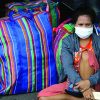
Lifelines in Danger
The COVID-19 pandemic is crippling the economies of rich and poor countries alike. Yet for many low-income and fragile states, the economic shock will be magnified by the loss of remittances—money sent home by migrant and guest workers employed in foreign countries.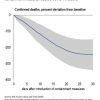
How the Great Lockdown Saved Lives
Since the COVID-19 outbreak was first reported in Wuhan, China in late December 2019, the disease has spread to more than 200 countries and territories. In the absence of a vaccine or effective treatment, governments worldwide have responded by implementing unprecedented containment and mitigation measures—the Great Lockdown. This in turn has resulted in large short-term economic losses, and a decline in global economic activity not seen since the Great Depression. Did it work?
This Year of Living Dangerously
Indonesia’s founding President Sukarno delivered his annual Independence or National Day address on 17 August 1964 anticipating the forthcoming year as Tahun vivere pericoloso, the ‘year of living dangerously’. 2020 may well be the world’s turn, and not only due to the obvious Covid-19 threat to the world.
Beyond the Crisis
Looking back to the start of 2020, the world has changed almost beyond recognition. To protect public health, the global economy was put into stasis. Shops closed, factories were mothballed, and people’s freedom of movement was severely curtailed. No country has escaped the health, economic, and social impacts of the COVID-19 crisis. Tragically, more than 260,000 people have died and millions have been infected. The IMF is projecting global economic activity to decline on a scale not seen since the Great Depression. It is truly a crisis like no other.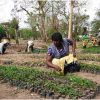
The Consequential Effects of Covid-19 on the Climate Crisis
The tragedy of the coronavirus pandemic and its associated challenges have thrown our world into chaos, with the virus destroying lives and livelihoods in its path.
COVID19 and Its Impact on Pacific Island States
 By now, the impact of COVID19 on our daily lives has been well documented, especially in advanced economies. Anxiety about the future continues to grow everywhere. Much of the corporate news coverage we consume has focused on the toll this pandemic will take on mainland countries. Often neglected, however, is the unique position Pacific Island States find themselves in.
« Previous Page — Next Page »


 UN Commission on International Trade Law Holds Colloquium on Harmonizing Law in Age of Digital Trade and Finance. Credit: UN Photo/Manuel Elías
Trade has historically been a geopolitical tool that can both be used to propel development as well as entrench inequalities. In various nations in East Asia and Latin America, increased trade, as often seen in export booms, has allowed them to achieve influential standings within the global economy. On the other hand, many low-income countries in Sub-Saharan Africa, Asia, and Latin America struggle to maintain a robust trade performance, and oftentimes are subjugated to exploitative trade dynamics through intense extraction of their natural resources. In recent decades, international trade has reached a new era as emerging economies across the world are rising in economic preeminence. Stable international trade is crucial to world peace as global interconnectedness facilitates reliable diplomacy. Nevertheless, significant challenges are on the rise. Notably, a major wave of United States tariff escalations in January 2025 lifted US import taxes to their highest level since the 1930s, changing market dynamics and forcing renegotiations with global trading partners.These articles are aimed at informing readers about the complexities of trade and its varying effects on development, with a special focus on the consequences of the global economic crisis, the potential of fair trade and the gender implications of trade policies.
Updated by Yilan Batista and Shuli Wong August 2026

The Week with IPS

NEXT STOP - SDGs
Tracking global progress towards a sustainable world
Tracking global progress towards a sustainable world
