Languages
Sunday, November 22, 2026



News and Views from the Global South
Economy & Trade

How a Post-COVID-19 Revival Could Kickstart Africa’s Free Trade Area
The African Continental Free Trade Area was launched two years ago at an African Union (AU) summit in Kigali. It was scheduled to be implemented from 1 July 2020. But this has been pushed out until 2021 because of the impact of COVID-19 and the need for leaders to focus on saving lives.
Innovation Is an Imperative – for Sustainable Food Systems
Hunger and food insecurity continue to rise. The official 2019 statistics refer to 821 million people suffering from hunger all over the world. According the recently launched Global Report on Food Crises, there are further 135 million people facing crisis levels of hunger or worse. WFP estimates that due to the impacts of COVID19, additional 130 million people could be pushed to the brink of starvation by the end of 2020. This means a total increase of 265 million people. If there will be no appropriate and urgent actions, “we could be facing multiple famines of biblical proportions within a short few months”, said David Beasley, WFP Executive Director, addressing the UN Security Council on 21st April.
Politics, Profits Undermine Public Interest in Covid-19 Vaccine Race
With well over five million Covid-19 infections worldwide, and deaths exceeding 340,000, the race for an effective vaccine has accelerated since the SARS-Cov-2 virus was first identified as the culprit.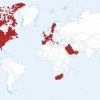
‘Declare remittance as an essential financial service’
The UK and Switzerland are calling for greater global collaboration to ensure access to digital remittance services to support people during the coronavirus outbreak.
Crisis Hits Oil Industry and Energy Transition Alike
While it attempts to cushion the effects of the coronavirus pandemic, the Latin American and Caribbean region also faces concerns about the future of the energy transition and state-owned oil companies.
Unite Behind Environmental Science: Transforming Values and Behaviour is as Important as Restoring Global Ecosystems
Restoring damaged ecosystems is vital to avoid the collapse of nature’s most valuable contributions to people, but International Day for Biological Diversity 2020 should also be a wake-up call about the importance of addressing our social, economic and systemic values, because it is these that are driving the destruction of nature.
COVID-19 Pandemic and the Pacific Islands
As of 11 AM (AEST) on 20th May 2020 the incidence of COVID-19 virus (henceforth virus) on the Pacific Islands was limited. Active cases (deaths) in some of the Pacific Islands were Australia 7,072 (100), New Zealand 1,503 (21), PNG 8(0), Guam 154 (5), Fiji 18 (0), Timor-Leste 24 (0), French Polynesia 60(0), and New Caledonia 18(0).1 Standards of comparison are not uniform across the region since testing capacities of the various countries differ widely. The low number of cases in the smaller Pacific Islands compared to their larger neighbours, i.e., Australia and New Zealand, reflect both variations in testing standards as well as their smaller population size. The smaller Pacific Islands were also not subject to some of the aberrations experienced by the larger countries, e.g., large number of arrivals from foreign countries in planes and cruise ships.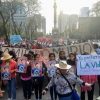
Mexico’s Development Banks Fuel the Fossil Energy Trade
Since 2012, Teresa Castellanos has fought the construction of a gas-fired power plant in Huexca, in the central Mexican state of Morelos, adjacent to the country's capital.
To Restore Forests, First Start With a Seed
In 2011, when Rwanda committed to restoring 2 million hectares of land in a global effort to restore 150 million hectares of degraded and deforested areas by 2020 — it seemed like a big ask.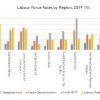
Striking at the core of the COVID-19 employment crisis
What is happening now
In the early months of 2020, much of the globe was put on pause as governments fought to contain the COVID-19 outbreak. For many, work came to a grinding halt as factories and shops were forced to close their doors, transforming a global health catastrophe into a labour market and economic crisis.
EXCLUSIVE: In the Face of the COVID-19 Pandemic We Are Only as Strong as the Weakest of Us
When the COVID-19 virus travelled from Wuhan, China halfway across the world through Europe, the Americas and beyond in the space of a few weeks, it gave us proof, if one was ever needed, of how tightly interconnected we all are. Not only are our globalized economies interdepended, but also we ourselves are one with the environment around us, and with one another. We are one humankind sharing one planet. And yet, all too often we seem to forget it, as we carelessly revert to misguiding differences between “us” and “them.” Take, for example, the distinction between rich and poor countries, or as economists put it, between advanced economies and least developed countries. In the face of COVID-19, the only difference that matters is if we are sick or healthy. Other than that, we are all the same, regardless of economic status or geographic location.
Africa Needs a DOVE Fund: Or Should We Starve So We Can Pay our Debts?
Sub-Saharan Africa has a debt problem. According to the most recent World Bank debt statistics, in 2018 the region had about $493 billion in long term external debt.
Covid-19 Straw Breaks Free Trade Camel’s Back
Economic growth is supposed to be the tide that lifts all boats. According to the conventional wisdom until recently, growth in China, India and East Asian countries took off thanks to opening up to international trade and investment.
The Hotting-Up of the Sino-American Spat: Most Dangerous Side-Effect of Covid-19?
When the United States and China signed the First-Phase of their Trade Agreement in January this year, President Donald Trump called it a “momentous step”, and the world believed they had stepped back from a dangerous brink. But, alas, to cite an idiom that is so current today, it was but a ‘false positive’. As the globe reels from the surgoing COVID-19 pandemic, it is possible that the rapid deterioration of US-China relationship can become one of the worst side-effects of this raging virus.
Coronavirus Leads to Nosedive in Remittances in Latin America
Remittances that support millions of households in Latin America and the Caribbean have plunged as family members lose jobs and income in their host countries, with entire families sliding back into poverty, as a result of the COVID-19 health crisis and global economic recession.
Modern Slavery in Asia Pacific Fuelled by Widespread Poverty, Migration & Weak Governance – Part 1
Aged 17, Moe Turaga was saddled with the responsibility of providing for his mother and young siblings when a family member approached him with the promise of a job and education in Australia. Dreaming of a bright future for himself and his family, he seized the opportunity and left the protective confines of his home in Fiji, only to find himself trapped in modern slavery on a remote agriculture farm in the state of Victoria.
Without Universal Health Coverage We Are Sitting Ducks When the next Pandemic Strikes
We live in a different world to the one we inhabited six short months ago. With more than 4 million people infected and over 280,000 dead globally by mid May 2020, Covid-19 has ruthlessly exposed the vulnerability of a globalised world to pandemic disease. People are slowly coming to terms with the frightening and heartbreaking death toll, and we are still not out of the danger.
The Commonwealth’s Response to COVID-19
The Coronovirus pandemic has been an unforgiving test of advanced economies. Health systems in the United States, France, Italy, Spain, and the UK have been put under immense pressure, with shortages of doctors, ventilators, personal protective equipment and the capacity to test for the virus. Their economies have been battered and the consequences are spoken of in terms of the Great Depression.
Why Some National Health Care Systems Do Better than Others
In public health discussions, it is generally recognized that the social returns to health care investments are greater than the private returns, and much of such investments should be financed by the state.
COVID-19: Why We Must Reset Our Thinking
Covid-19 is the most significant event since the Second World War. It changes everything. It brings great sadness to many of us as we lose loved ones, as we see people losing their jobs, and as we see people around the world suffering immensely.
Women Taking Charge during COVID-19
As the COVID-19 mayhem carries on in most countries, the role of mothers, daughters, and female caregivers have been affected the most. Besides looking after the household and home schooling children, they are also working on the front lines, actively or passively caring for their respective communities.« Previous Page — Next Page »


 UN Commission on International Trade Law Holds Colloquium on Harmonizing Law in Age of Digital Trade and Finance. Credit: UN Photo/Manuel Elías
Trade has historically been a geopolitical tool that can both be used to propel development as well as entrench inequalities. In various nations in East Asia and Latin America, increased trade, as often seen in export booms, has allowed them to achieve influential standings within the global economy. On the other hand, many low-income countries in Sub-Saharan Africa, Asia, and Latin America struggle to maintain a robust trade performance, and oftentimes are subjugated to exploitative trade dynamics through intense extraction of their natural resources. In recent decades, international trade has reached a new era as emerging economies across the world are rising in economic preeminence. Stable international trade is crucial to world peace as global interconnectedness facilitates reliable diplomacy. Nevertheless, significant challenges are on the rise. Notably, a major wave of United States tariff escalations in January 2025 lifted US import taxes to their highest level since the 1930s, changing market dynamics and forcing renegotiations with global trading partners.These articles are aimed at informing readers about the complexities of trade and its varying effects on development, with a special focus on the consequences of the global economic crisis, the potential of fair trade and the gender implications of trade policies.
Updated by Yilan Batista and Shuli Wong August 2026

The Week with IPS

NEXT STOP - SDGs
Tracking global progress towards a sustainable world
Tracking global progress towards a sustainable world
