
Friday, November 27, 2026



News and Views from the Global South
Environment
ECONOMY: 'Crisis Must Lead to Greater Voice for Workers'
The compensation for managers must be capped at 15 times that of workers, civil society groups demanded Sunday following a conference in Florence.ENERGY: Oil Economy Driving Growth of Controversial Tar Sands
A report from one of the world’s top energy consultancies says oil production in Canada’s tar sands could see a five-fold increase by 2035.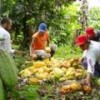
The Farmers Who Abandoned Coca for Cocoa
Amidst the violence of civil war and the illegal coca trade, a handful of Colombian farmers have embraced chocolate production in the Amazon forest.
“I Hope We Are Civilized When Climate Disaster Hits”
"It's like the pre-World War II calm," says British scientist James Lovelock in describing the human situation and lack of action to adapt to global climate change.Ecobreves – VENEZUELA: Orinoco Delta Now a Biosphere Reserve
The Orinoco Delta, Venezuela's youngest geological area at just one million years old, has been added to the network of 544 biosphere reserves of UNESCO (United Nations Educational, Scientific and Cultural Organization).Ecobreves – CHILE: No to a Gas Tax Cut
Environmental groups in Chile oppose President Michelle Bachelet's decision to lower the maximum tax on gasoline until April 2010.Ecobreves – HONDURAS: Oil Exploration Threatens Marine Resources
The oil exploration effort that the Honduran government plans for parts of the Caribbean coast endangers the marine areas of the Mesoamerican biological corridor, warned the Environmental Prosecutor's Office.Ecobreves – CUBA: Invasive Plants Gain Ground
Cuban scientists have warned that this Caribbean island nation lacks an updated inventory of invasive plant species and sufficient information about the real damage they cause the ecosystems.Ecobreves – BRAZIL: University Students Take On E-Waste
The University of São Paulo has opened Brazil's first government-run center for recycling electronic waste.
Q&A: ‘Climate Change Will Soon Make Millions Homeless’
Millions of people will soon have to leave their homeland as a result of global warming, says a report on environmental refugees by the Italian environmental association Legambiente. Half of them will move due to natural catastrophes, the rest will be hit by desertification and rising sea levels.
DOMINICAN REPUBLIC: Tourism Threatens Natural Treasure
Jaragua National Park, famous for housing the world's tiniest reptile, will itself be in danger if the green light is given to mega-hotel projects instead of ecotourism and sustainable development initiatives, say Dominican ecologists.BRAZIL: 100,000 Hectares of Atlantic Forest Lost in Three Years
Stretched out along the coastal zones of 17 of Brazil’s 26 states, an area marked by a high level of agricultural and industrial development, the Mata Atlântica or Atlantic Forest lost more than 100,000 hectares in the last three years, mainly due to urban expansion and economic growth.DEVELOPMENT-VIETNAM: Govt Bauxite Plan Stirs Public Worries
While investors and their opponents argue the pros and cons of an ambitious plan to mine bauxite deposits in Vietnam's Central Highlands region, life for the tea and coffee farmers in nearby towns has already become a lot more complicated.CLIMATE CHANGE: More Subsidies for Fossil Fuels in Recovery Plans
Despite the economic slow down, growing numbers of world leaders are calling for urgent action on climate change while many governments used their economic stimulus packages to increase subsidies to the fossil fuel industry.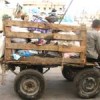
MIDEAST: Gaza Collects So Much Rubbish
Suliman Khodari begins his shift at 5am on one of Gaza City's busiest streets. With his horse-drawn cart, Suliman spends seven hours every morning hauling away the rubbish left by residents and shop owners of the neighbourhood. But he is not a scavenger.ROMANIA: Foreign Corporation Faces Public Scrutiny
Public pressure from Romanian citizens has forced one of the biggest European producers of wood products, Austrian Kronospan, to halt construction of new production lines and to improve environmental standards at its plants.YEMEN: Qat Cultivation Draining Water Reserves
The tall green shrubs on Yehia Abdullah's farm in the Haraz mountains produce the bitter-tasting leaves that feed the nation's number one addiction. More than seven million Yemenis chew qat, the mildly narcotic leaf of the Catha edulis tree. Expanding cultivation of qat to meet growing national demand is rapidly depleting Yemen's limited groundwater resources, experts warn.BOOKS: Canada’s Agent Orange Victims Still Seeking Justice
Bruce Brown died of cancer at age 18. Some of Marilyn Kissinger’s other friends lived into their early and late twenties, dying in the late 1960s. Most had died by the late 1980s.COSTA RICA: Indigenous People Sidelined in Plans for Dam
The Diquís dam, the largest hydroelectric project in Central America, is worrying indigenous communities because Costa Rica’s state power company has excluded them from the decision-making process, in spite of international treaties that stipulate that they must be consulted.COSTA RICA: Indigenous People Sidelined in Plans for Dam
The Diquís dam, the largest hydroelectric project in Central America, is worrying indigenous communities because Costa Rica’s state power company has excluded them from the decision-making process, in spite of international treaties that stipulate that they must be consulted.ENVIRONMENT: Damaged Ecosystems Not Lost Forever
Most polluted or damaged ecosystems worldwide could recover within a single lifetime if societies commit to their cleanup or restoration, according to researchers at the Yale School of Forestry & Environmental Studies.« Previous Page — Next Page »


Through our global network of local writers, we are continuing our award-winning coverage of global and local environmental challenges, with a focus on the people for whom the ecosphere matters in a direct way: rural dwellers who have little means to protect themselves against adverse conditions; communities that need to switch to sustainable development in order to survive; poor women and children, who are the most vulnerable in natural disasters. Sponsored by the United Nations Environment Program (UNEP), the United Nations Development Program (UNDP) and The World Bank (WB), IPS also maintains the award-winning Tierramérica, a specialised information service on environment and development.

The Week with IPS

Tracking global progress towards a sustainable world


