
Saturday, November 28, 2026



News and Views from the Global South
Environment
ENVIRONMENT: Soaring Energy Costs May Force Low-CO2 Living
Climate change is a global problem but individuals and communities can take simple measures to cut their carbon emissions in half, experts said Thursday on World Environment Day.ENVIRONMENT-SPAIN: Activists, Business Join Forces on Solar Energy
An environmental organisation, a private company and an international bank signed an agreement Thursday in the capital of Spain to promote, install, manage and sell power plants fuelled by renewable energy sources.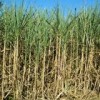
ENERGY: Green Standards Proposed for Biofuel Production
The adoption of international standards for the sustainable production of biofuels emerged as a controversial approach at the recent United Nations conference on biodiversity here.RUSSIA: The Siberian Giant Is Waking Up
Ludmila Nikolovna, an ethnic Russian from Moldova, has no misgivings about her decision to come and study economics at Tomsk State University, even though she had to leave her two-month old daughter with her grandparents in Moscow.
Q&A: "We're Running the Risk of Unstoppable Climate Change"
Warming seawater, melting sea ice and glaciers, sea level rise, storm intensification, changes in ocean currents, growing "dead zones", and ocean acidification are just some of the signs that the oceans that cover 71 percent of our watery planet are changing.
Q&A: Bulgarian Greens Go Political
Members of a group of environmental NGOs have announced the formation of green party, Zelenite. Among the founders are activists who have been engaged for two years in a campaign to prevent large-scale tourism development in protected natural sites in the Rila Mountains and the Black Sea shore (the NATURA 2000 campaign).BIODIVERSITY: How a Golden Opportunity Became a Zero-Sum Game
Self-interest and petty politicking largely paralysed efforts to solve the urgent problem of the widespread extinction of species, with few concrete achievements after nearly two weeks of 14-hour meetings at the Convention on Biodiversity (CBD) in Bonn that concluded last Friday.RIGHTS-INDIA: State-Sponsored Repression, Say Human Rights Activists
The People’s Union for Civil Liberties (PUCL), a 32-year-old Indian human- rights group, has decried India’s judiciary for refusing bail to ‘jungle doctor’ and human rights activist Binayak Sen. Sen is widely-respected for his 30 years of healthcare work among tribals in the central Indian State of Chhattisgarh, and has criticised the State for the mass-eviction of thousands of tribal villagers.BRAZIL: Climate Change Will Weaken Renewable Energy Sources
To Brazil's credit, 45 percent of its energy comes from renewable sources, three times as much as in industrialised countries, but for that very reason it will be more vulnerable to climate change, according to a new study.
DEVELOPMENT: About Farmers, Without Farmers
Record high food prices and their impact on poor countries will dominate the three-day UN Food and Agriculture Organisation (FAO) summit of world leaders that opened Tuesday in Rome. But the solutions to the food crisis cannot be left to governments only, according to several small farmers groups running a parallel civil society food forum.DEVELOPMENT: Blessed and Cursed by Water
Millions of people are threatened by poor, unreliable, or non-existent water resources, and climate change could make things worse. IPS looked at some of the issues before participants at a World Bank conference on water and sanitation issues held in Oslo last week.
Q&A: ‘Need For a New Social Alliance’
A global alliance of human rights activists, environmentalists and ethically run small enterprises is needed to save the planet from self-destruction, says Susan George, chair of the Planning Board of the Transnational Institute in Amsterdam. The institute works "to contribute to social justice."HEALTH: Bird Flu – Vietnam Reports Headway in Human Vaccine
Vietnamese researchers have announced significant progress in their effort to develop a prototype vaccine for the H5N1 avian influenza, despite criticism from some scientists that their methods are "unorthodox".
DEVELOPMENT-KENYA: Water Studies – But Where Are the Water Supplies?
The road leading to the informal settlement of Korogocho is narrow and winding. Here, in Nairobi's third largest slum, up to 150,000 people are crammed into an area of just over one square kilometre, their shanties made of cardboard, wood or metal.POLITICS-AFRICA: Critics Target U.S. Military Command
In just a few months, the United States Africa Command (AFRICOM) - Washington's latest military oversight structure for the continent - is expected to be fully operational.BRAZIL: Landowning-Military Front Against Indigenous Policy
The battle to defend Brazil’s Amazon region "began in Roraima," according to Paulo Cesar Quartiero, a central figure in land conflicts in the indigenous border territory of Raposa Serra do Sol (RSS) which are prompting politicians and military officers to organise an opposition front.UKRAINE: Nuclear Power Seen As the Answer to Russia
Ukraine is embarking on a costly and inefficient path of nuclear development, hoping it will halt its energy dependence on Russia.
Tobacco Regulations as Solid as Smoke
Widespread cigarette advertising and the freedom to smoke in public -- including in hospitals and schools -- continue in most Latin American countries.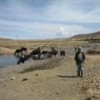
Titicaca Truths Revealed
A binational effort, with the backing of the UN Environment Program, is expected to shed light on the scope, origin and possible cures for the contamination of Lake Titicaca on the Peru-Bolivia border.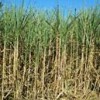
Green Standards Proposed for Biofuel Production
The world is beginning to debate the need for environmental rules to govern production of agriculture-based biofuels.
For a Tobacco-Free Youth
Most smokers begin the habit before reaching their 18th birthday, and a quarter of those began smoking before age 10, writes Mirta Roses, director of the Pan-American Health Organization, in this exclusive column for Tierramérica.« Previous Page — Next Page »


Through our global network of local writers, we are continuing our award-winning coverage of global and local environmental challenges, with a focus on the people for whom the ecosphere matters in a direct way: rural dwellers who have little means to protect themselves against adverse conditions; communities that need to switch to sustainable development in order to survive; poor women and children, who are the most vulnerable in natural disasters. Sponsored by the United Nations Environment Program (UNEP), the United Nations Development Program (UNDP) and The World Bank (WB), IPS also maintains the award-winning Tierramérica, a specialised information service on environment and development.

The Week with IPS

Tracking global progress towards a sustainable world


