Languages
Wednesday, October 21, 2026



News and Views from the Global South
Financial Crisis

Running on Sunshine: Pakistan’s Solar Boom to Tide Over Middle East Energy Crisis
Energy expert Vaqar Zakaria believes solar power makes “excellent economic sense” – and he lives by it. For over five years, his rooftop panels have slashed his bills, sometimes to zero, even allowing him to sell surplus electricity back through net metering.
Oil Shocks, Political Upheaval and the One Solution Governments Keep Ignoring
Once again, global oil prices are spiking, driven by the Israeli-US war against Iran. With Iran retaliating by attacking infrastructure and transport hubs and blocking the Strait of Hormuz, through which one-fifth of the world’s oil passes, oil supplies from the region are being choked, pushing up prices. The cost of a barrel of Brent crude – the international benchmark for oil prices – stood at US$73 before the conflict but has surged beyond US$100 since. It could go higher still as war continues.
Massive US War Spending Hike Raises Debt, Taxes, Doubts
As US President Donald Trump pushes the world to war, arms spending has been rising worldwide. Wars secure more budgetary allocations, mainly benefiting the US-dominated military-industrial complex.
Trump Tariffs Creating Less Manufacturing Jobs
President Donald Trump has shaken up the world economy and the rule of international law in the first year of his second term – ostensibly to make America great again, particularly by reviving US manufacturing jobs.
Trade Liberalisation Undermines Development
Despite lacking both evidence and theory, many economists claim trade liberalisation accelerates development. But only a few economies have gained many jobs from external market access.
Economic Dogma Blocks Pragmatic Policies
After condemning pragmatic responses to the 1997-98 Asian financial crises, the West pursued similar policies in response to the 2008 global financial crisis without acknowledging its own mistakes.
Trump De-dollarisation Accelerant
While US President Donald Trump has blamed the BRICS and foreign investors for de-dollarisation, his rhetoric, actions and policy measures are mainly responsible for the trend’s recent acceleration.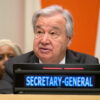
Millions at Risk in 2026 as Aid Budgets Hit Historic Lows
2025 has been an especially turbulent year for humanitarian aid operations as global aid budgets have experienced record declines in funding. As conflicts, environmental disasters, and economic crises intensify and disproportionately impact the world’s most vulnerable communities, the resources available in global emergency funds are falling far short of rapidly growing needs.
Graduation Must Be a Springboard, Not a Stumbling Block
As we gather in Doha for the High-Level Meeting on “Forging Ambitious Global Partnerships for Sustainable and Resilient Graduation of Least Developed Countries,” the stakes could not be higher. A record number of fourteen countries-equally divided between Asia and Africa are now on graduation track. Graduation from the Least Developed Country (LDC) category is a landmark national achievement—a recognition of hard-won gains in income, human development, and resilience. Yet, for too many countries, this milestone comes with new vulnerabilities that risk undermining the very gains that enabled graduation.
World Must Pay to Make America Great Again
US President Trump’s economic strategy for his second term aims to get the rest of the world, especially its wealthy allies with greater means, to pay more to help strengthen the US economy.
World Food Programme Warns of Emergency Levels of Hunger Amid Severe Funding Cuts
In 2025, unprecedented cuts to foreign aid and humanitarian funding have exacerbated global hunger crises, leaving millions without access to food or basic services. Funding shortfalls have forced aid agencies to scale back or suspend lifesaving programs in some of the world’s most food-insecure regions, particularly across the Global South—exacerbating already dire conditions caused by conflict, displacement, economic instability, and climate shocks.
Strengthening East Asian Cooperation via ASEAN?
Global South cooperation arrangements must evolve to better respond to pressing contemporary and imminent challenges, rather than risk being irrelevant straitjackets stuck in the past.
Moldova’s Democratic Defiance
Democracy was the winner and Russia the loser in Moldova’s 28 September election. The incumbent pro-Europe Party of Action and Solidarity (PAS) won a parliamentary majority on just over half of the vote, while support for a pro-Russia coalition collapsed to a record low. The result came in the face of Russia’s most intense attempt yet to influence an election, with a propaganda and disinformation operation allegedly orchestrated by Ilan Shor, a disgraced Moldovan oligarch who fled to Russia to escape jail time for his role in a massive fraud.
‘The Government Was Corrupt and Willing to Kill Its Own People to Stay in Power’
CIVICUS discusses recent protests that led to a change of government in Nepal with Dikpal Khatri Chhetri, co-founder of Youth in Federal Discourse (YFD). YFD is a youth-led organisation that advocates for democracy, civic engagement and young people’s empowerment.
No African Development from Western Trade Policies
The World Bank’s 1981 Berg Report provided the blueprint for structural adjustment, including economic liberalisation in Africa. Urging trade liberalisation, it promised growth from its supposed comparative advantage in agriculture.
UN80: Three Tests to Make Reform About People, Not Spreadsheets
This September the UN turns 80, but the lessons of peace, justice, and cooperation are still unfinished. The world today faces the flames of inequality, conflict, ecological collapse and growing digital threats. In short, the very problems the UN was created to solve are once again staring us in the face.
UN at 80: Civil Society Must Have a Say in the Struggle for Renewal
As the high-level opening week of the UN General Assembly unfolds, with heads of states delivering often self-serving speeches from the UN’s podium, the organisation is undergoing one of its worst set of crises since its founding 80 years ago. This year’s General Assembly – ostensibly focused on development, human rights and peace – comes as wars are raging across multiple continents, climate targets are dangerously being missed and the institution designed to address these global challenges is being hollowed out by funding cuts and political withdrawals.
Beware Independent Central Banks
US President Trump’s snide barbs against his appointee, US Federal Reserve Bank Chairman Jerome Powell, have revived support for central bank independence – long abused by powerful finance interests against growth and equity.
Overtourism: Civil Society Mobilising
It’s peak holiday season across Europe and North America, and people are hitting the beaches and crowding into city centres in ever-increasing numbers. They’re part of a huge industry: last year, travel and tourism’s share of the global economy stood at US$10.9 trillion, around 10 per cent of the world’s GDP.
Inequality Worsens Planetary Heating
The accumulation of still growing greenhouse gas emissions (GHG) in an increasingly unequal world is accelerating planetary heating. It is also worsening disparities, especially between the rich and others, both nationally and internationally.
Soaring Demand for Electric Vehicles, Lithium-Ion Batteries Creates Environmental Crisis in DRC
Electric vehicles contribute to an ongoing environmental and humanitarian crisis in the Democratic Republic of the Congo (DRC). Mining operations cause deforestation, pollution, food insecurity and exploitative labor practices.« Previous Page — Next Page »





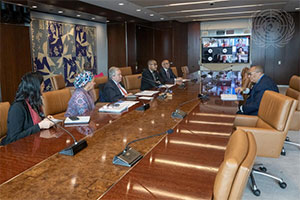 Secretary-General Meets with Members of Debt Expert Group. Credit: UN Photo/Eskinder Debeb
Financial crises are often defined by banking panics, recession, loss of market value, and deflation. Various financial crises at the turn of the 20th century, such as the Asian Crisis of 1997-1998 and the 2007-2008 Global Financial Crisis, have had immense impacts on the world economy. The COVID-19 pandemic also caused a financial crisis when mass lockdowns triggered staggering unemployment rates, a stagnation of economic growth, and led to the 2020 stock market crash. With the Russian invasion of Ukraine, the world has also witnessed a global energy crisis with shortages and increased prices in oil, gas, and electricity markets. According to UNCTAD’s World of Debt 2025, global public debt surpassed $100 trillion in 2024, with developing country debt growing twice as fast as developed economies since 2010. Burdens of debt servicing come with economic slowdowns and demands of austerity from lenders, with some economists arguing that this will lead to a new “lost decade” for the Global South. IPS brings you worldwide coverage of these financial developments and how we should manage these crises.

The Week with IPS

NEXT STOP - SDGs
Tracking global progress towards a sustainable world
Tracking global progress towards a sustainable world
