Languages
Friday, November 20, 2026



News and Views from the Global South
Global Geopolitics
DEVELOPMENT: Listen to Us, Fragile States Tell Donors
"Work with us, not against us" was the message for international donors that came out of the g7+ meeting of fragile states, which met in Dili this week to discuss how they can make better use of the foreign aid they get.DISARMAMENT: Hollywood Documentary Calls for Zero Nuclear Weapons
Hollywood and Silicon Valley leaders have teamed up with Middle Eastern royalty and high-level U.S. diplomats to send a message to heads of state who are gathering here in Washington next week: the world needs to reduce its nuclear arsenal to zero as soon as possible.RWANDA: Remembering the Unforgettable
Sixteen years after the genocide in Rwanda, U.N. Secretary-General Ban Ki-moon vowed that the international community would never again sit by while mass atrocities are committed against innocent civilians.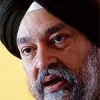
Q&A: IBSA Summit Aims to Strengthen South-South Cooperation
When the political leaders of three of the world's major democracies in the global South - India, Brazil and South Africa (IBSA) - gather at a high-powered summit meeting in Brasilia next week, one of the key items on the agenda would be how best to strength economic cooperation among developing nations.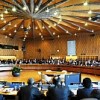
RIGHTS: UNESCO in Disarray Over Controversial Prize
As UNESCO’s executive board meets here in the first of its two sessions per year, behind-the-scenes wrangling could result in a controversial life sciences prize being put on hold indefinitely.HEALTH: Putting the Focus on Cities
The world's public health policy-makers should focus on urban health problems, since for the last three years the majority of the planet's population is living in cities, World Health Organisation (WHO) experts say.RIGHTS-US: Love Without Borders – Or Papers
Tom is in love. It's an old story: he noticed an attractive stranger at a friend's party, and the attractive stranger noticed Tom. They began talking, then dating, and then they fell in love. For a while, they enjoyed a perfect romance.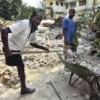
HAITI: Rebuilding Waits on Promised Aid
A week ago, 59 U.N. member states, international institutions and NGO coalitions pledged nearly 10 billion dollars towards rebuilding Haiti over the next decade.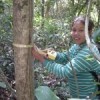
ENVIRONMENT: Forests at a Climate Crossroads
Billions of dollars are being mobilised to protect and increase the world's forests under a climate protection mechanism known as REDD (Reduced Emissions from Deforestation and Degradation). But many experts are unsure that it will work, and some fear it could end in disaster.DISARMAMENT: Mixed Reviews for Obama’s Nuclear Strategy
U.S. President Barack Obama Tuesday unveiled a new Nuclear Posture Review (NPR) that will significantly limit the circumstances under which Washington would use nuclear weapons as part of a strategy to bolster the Nuclear Non-Proliferation Treaty (NPT) and other efforts to halt and reverse the spread of nuclear arms.RIGHTS: Death Penalty Lingers in Former Soviet Republics
The executions of two Belarus citizens in March and calls by Russian senators to reintroduce capital punishment for terrorists are being seen as indications that the death penalty is not about to fade out soon in the former Soviet republics.POLITICS: Obama Expands Military Involvement in Africa
When Pres. Barack Obama took office in January 2009, it was widely expected that he would dramatically change, or even reverse, the militarised and unilateral security policy that had been pursued by the George W. Bush administration toward Africa, as well as toward other parts of the world.DEVELOPMENT: East Timor, Fragile States Compare Notes on Aid
When the Group of Seven (G7) industrialised nations hold meetings, the first thing many people think of is protests. But when the g7 - with a lowercase G - get together for their first meeting in East Timor next week, it could revolutionise how donor countries give assistance to fragile states.TRADE: Something’s Rotten in European Supermarkets
The majority of European supermarkets failed to take adequate responsibility for labour conditions and fair-trade relationships in their food supply chains, a new report revealed.IRAN: Obama Sanctions Strategy Complicated by Congress
President Barack Obama is hoping that relatively quick approval by the U.N. Security Council of a new round of sanctions against Iran will relieve growing pressure on Capitol Hill to take stronger measures against Tehran.DEVELOPMENT: No Room for Complacency in Avian Flu – Experts
Government and international non-government organisations need to put as much effort in fighting the spread of complacency in the battle against the H5N1 virus as they do in curbing avian flu itself, experts say./CORRECTION*/HAITI: Donors Pledge 10 Billion Dollars in Aid
Eleven weeks after an earthquake killed over two percent of its population and flattened its capital city, Haiti is looking towards a long and complex rebuilding process.POLITICS: U.N. Panel Rejects Request to Reopen Bhutto Probe
A three-member U.N. commission, which has been investigating the 2007 assassination of former Pakistani Prime Minister Benazir Bhutto, has flatly rejected a request to reopen the inquiry.HEALTH: Seeking Funds to Fight Neglected Diseases
Experts from around the world are trying to attract attention to deadly but little-known illnesses, such as Chagas disease, visceral leishmaniasis and sleeping sickness, that have been neglected by the pharmaceutical industry.DEVELOPMENT: Recovery Could Leave Behind World’s Poorest
The world's 49 least developed countries (LDCs), described as the poorest of the poor, could feel the effects of the global economic crisis for decades, a senior U.N. official warned this week.DEVELOPMENT: More Food, Except For That Billion Or So
While agricultural research has made massive strides over the years in helping the world produce more food from the same amount of land, around one in six people, the 1.02 billion hungry, have not noticed.« Previous Page — Next Page »


Is the world dominated by three great empires -- the U.S.A, China and the European Union? How much power do the great behemoths of the south -- India, Brazil, and South Africa -- wield? And where does Russia fit in that equation? Are we in the middle of a new Cold War? What are the implications of the armed conflict with Georgia? What about the new axis: Venezuela-Russia? And what role does Turkey play? What about issues like Climate Change and other global forces like the food crisis and the high energy prices? How is all this reshaping the world's forces? IPS looks for some answers.

The Week with IPS

NEXT STOP - SDGs
Tracking global progress towards a sustainable world
Tracking global progress towards a sustainable world
