Languages
Tuesday, November 24, 2026



News and Views from the Global South
Global Geopolitics
FINANCE: IMF “Cure” for Food Crisis Also a Cause
The International Monetary Fund (IMF) says it is responding to the global food crisis by doling out new emergency loans to 15 of the world's poorest nations, mostly in Africa.DEVELOPMENT: Food Crisis Rippling Out Like a “Tsunami”
"A rolling tsunami of social unrest is underway as we speak - hungry people are desperate people capable of taking desperate actions. This tsunami is rapidly enveloping the global South, and it won't take much longer before it knocks at the door of the global North," warned Vicente Garcia-Delgado, the U.N. representative for CIVICUS, the world alliance for citizen participation.SPORTS-GERMANY: Women Take the Football Field
"Football is not a sport for women," Peco Bauwens, then president of the German Football Association, said in 1955, adding "we will never take this issue seriously."DEVELOPMENT: More Fears Rise Around Doha Deal
As WTO negotiations pick up this week, some developing countries are in growing doubt that a deal liberalising their economies further could help them cope with the food crisis.DEVELOPMENT: UN Sees Major Successes in Child Survival
The developing world is making significant progress in child survival despite the fact that nearly 2.2 billion children worldwide continue to battle poverty, sexual abuse, forced military conscription, labour exploitation and HIV/AIDS.BURMA: Public Health Ailing Even Before Cyclone Struck
Even before Cyclone Nargis tore through Burma’s populous Irrawaddy Delta, the country’s public health system was ailing. It struggled to survive on a slow drip of funds from the state’s coffers.POLITICS: Burma Fears Politicisation of Humanitarian Crisis
The United Nations, which has accelerated its pace of humanitarian assistance to cyclone-devastated Burma (Myanmar), is making little or no progress in dealing with the country's military leaders - both at a political and personal level.POLITICS: Human Rights Council Back in the Spotlight
When the United States was ousted from the Geneva-based Human Rights Commission (HRC) back in May 2001, a right-wing Republican politician was livid that "one of the world's greatest human rights defenders" couldn't find a seat in a body dominated by countries such as Libya, Cuba, Sudan and China.HEALTH: World Bank Shifting Gears on AIDS in Africa
The World Bank says it is recalibrating its financing for anti-AIDS efforts in Africa, which shoulders more than two-thirds of the world's HIV/AIDS burden.EUROPE: Call to Link Trade With Children’s Rights
The European Union has been urged to make its trading relationships with foreign countries conditional on reducing and eventually eradicating child labour.RIGHTS: Women’s Groups Push for Gender-Sensitive Budgets
As women's groups and political activists intensify their global campaign for gender empowerment, there is a growing trend towards "gender budgeting" both among developed and developing nations.
Q&A: Can Save the MDGs Yet
White banners were draped across public buildings in much of Europe during 2005 as an unlikely coalition of celebrities, church groups and trade unionists took part in the Make Poverty History campaign. The Group of Eight (G8) top industrialised countries and the European Union responded by promising to double their aid to Africa by 2010 at a summit in Gleneagles, Scotland.TRANSPORT: Major Hurdle for IBSA Initiative
As the foreign ministers of India, Brazil and South Africa (IBSA) met in Cape Town on Monday, to take forward a unique initiative in South-South economic cooperation, a gathering of hard-nosed corporate captains from the three countries discussed the absence of adequate transportation facilities among the ‘IBSA’ members.ENVIRONMENT: Only the Cover Is Green
Notice how green the public relations campaigns of multinational corporations have become.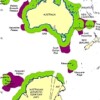
AUSTRALIA: Diffident on UN Grant of Larger Continental Shelf
While last month’s landmark ruling by a United Nations body granting Australia jurisdiction over an additional 2.5 million square kilometres of seabed has been hailed as a "potential bonanza", a leading expert on international law expects the government to proceed with caution.DEVELOPMENT: Sweden, Ireland, Britain Lead in Aiding Africa
Sweden, Ireland and Britain top an index of 21 rich countries that ranks their commitment to help develop African nations. The United States, the world's largest economy, was a distant thirteenth, while Japan remains the least committed to the continent among rich nations.RIGHTS-US: School Recruiting Could Violate Int’l Protocol
Pressed by the demands of the "global war on terrorism", the United States is violating an international protocol that forbids the recruitment of children under the age of 18 for military service, according to a new report released Tuesday by a major civil rights group that charged that recruitment practices target children as young as 11 years old.POLITICS: 1968 and the Birth of Diversity
The year 1968 has become a symbol, but not necessarily one that is easy to sum up. High-profile violent events involving multitudes of people marked it as revolutionary, but it is hard to define the nature of that revolution. Endless enigmas and controversies still surround it.
Q&A: Child Soldiering Driven by “Unequal Power Equation”
The growing phenomenon of child soldiers - long prevalent in African countries such as Uganda, Somalia, Sudan and the Democratic Republic of Congo - is also taking root in Asia, specifically in Afghanistan, Sri Lanka, Nepal, Burma (Myanmar) and the Philippines.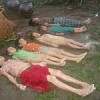
BURMA: Foreigners, Cameras Banned in Cyclone-Hit Areas
Images of the dead keep trickling out of Burma. The most moving are those of children who died when Cyclone Nargis tore through their world in the populous Irrawaddy delta.
DEVELOPMENT: Can Sorghum Solve the Biofuels Dilemma?
A new crop that provides food, animal feed and fuel at the same time promises to help developing countries redirect money spent on oil imports to benefit their own farmers. Is sweet sorghum biofuel's "holy grail"?« Previous Page — Next Page »


Is the world dominated by three great empires -- the U.S.A, China and the European Union? How much power do the great behemoths of the south -- India, Brazil, and South Africa -- wield? And where does Russia fit in that equation? Are we in the middle of a new Cold War? What are the implications of the armed conflict with Georgia? What about the new axis: Venezuela-Russia? And what role does Turkey play? What about issues like Climate Change and other global forces like the food crisis and the high energy prices? How is all this reshaping the world's forces? IPS looks for some answers.

The Week with IPS

NEXT STOP - SDGs
Tracking global progress towards a sustainable world
