Languages
Saturday, November 21, 2026



News and Views from the Global South
Global
Opinion: UN Frontline Staff Consider Options as Pay Cuts Loom
When the world’s most powerful ambassadors gathered in New York last week to celebrate the United Nations’ 70th anniversary, it would have been undiplomatic to mention the looming crisis facing the UN’s proudest achievement - its humanitarian aid programmes.
World Trade Organization Rules Help to Support Better Public Health
Trade and the multilateral trading system can help in creating a more favourable global environment for public health policies and the implementation of a balanced and effective intellectual property system.
Open Data – Still Closed to Latin American Communities
Open data policies in Latin America have not yet enabled communities to exercise their right to access to information, consultation and participation with regard to mining or infrastructure projects that affect their surroundings and way of life.
Decent Work Crucial To Eliminating Poverty and Hunger
Over the eight years since the onset of the global financial crisis in 2008, the ranks of the unemployed have swollen to over 200 million worldwide. That number captures only a fraction of those who remain vulnerable and insecure, since more than four-fifths of the global workforce is outside the formal sector, with poor access to unemployment or other traditional social security benefits.
Journalists Under Siege As Occupational Hazards Rise
As news coverage from conflict zones -- and reporting from authoritarian regimes-- continue to be occupational hazards, journalists may fast become an “endangered species.”
Opinion: Integrating Water, Sanitation and Health are Key to the Promise of the UN Global Goals
The 193 member states of the United Nations have adopted an ambitious 15-year sustainable development agenda, the 2030 Global Goals.
Nepal Appeals to U.N. to Help Lift Economic Blockade
A coalition of independent Nepali citizens – including diplomats, journalists, women’s rights leaders, medical doctors and former U.N. officials – is calling on the international community and the United Nations to take “effective steps” to help remove an “economic blockade” imposed on Nepal.
Opinion: Women on Reproductive Strike
Women are having fewer than two children on average in 83 countries, representing nearly half of the world’s population. And in some countries, such as Germany, Italy, Japan, Poland, Singapore, South Korea and Spain, average fertility levels are now closer to one child per woman than the replacement level of about two children (Figure 1).
Opinion: The West Vote for a Better Yesterday
The recent elections in Switzerland and Poland are good indicators of what will happen elsewhere in Europe, with this irresistible growing wave of refugees. But let us first make some crucial considerations.
U.N. Plans New Working Groups Aimed at Nuclear Disarmament
Against the backdrop of a potential military confrontation between the world’s two major nuclear powers – the United States and Russia – the United Nations is taking a significant step towards a hitherto impossible goal: nuclear disarmament.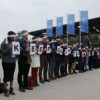
Civil Society Activists Cold-Shouldered at Climate Talks
A former UN Secretary-General once paid a supreme compliment to the work of civil society groups when he described non-governmental organisations (NGOs) as the world’s “third super power” –- presumably ranking behind the United States and Russia.
Opinion: People-Powered Data Set to Transform Dull Statistics
You probably didn’t notice it was World Statistics Day last week because, let’s be honest, statistics don’t have the most exciting reputation. Thankfully, I have a feeling this is about to change, big time.NGOs Disappointed With Final Round of Climate Negotiations
Civil society groups have expressed disappointment over the outcome of the final round of U.N. climate change negotiations in Bonn -- 38 days ahead of the upcoming summit in Paris.
Analysis: Taxation for Development
In recent decades, many developing countries have experienced declines in fiscal revenue as a share of national income. There is an urgent need to reverse this trend, with greater revenue collection to finance the realization of developing countries’ developmental aspirations.
U.N. Rights Commissioner Blasts Harsh Treatment of Refugees
As the flow of migrants continues to rise – from war-ravaged countries in the Middle East, Asia and Africa to Europe – so do the horror stories of the harsh treatment meted out to these refugees.
Opinion: TPP is Bad for One’s Health
Reflecting President Barack Obama’s pivot to Asia, the US, Japan and 10 other Pacific Rim nations have inked a Trans-Pacific Partnership (TPP) agreement. This is the largest mega free trade agreement (FTA) in two decades and represents 40 per cent of the global economy.
Water Remains Largely Marginalized in Climate Talks
U.S. Secretary of State John Kerry last week turned the spotlight on the “record number” of extreme weather-related events the world is witnessing these days.
Opinion: Demography and Destiny
The demographic revolutions the world is experiencing are profound and far-reaching, affecting virtually every aspect of human society. Whether in politics, business, international relations, environmental affairs or even personal matters, understanding the fundamental demographic changes underway and anticipating their juggernaut consequences can contribute considerably to the setting of meaningful goals, designing effective strategies and achieving genuine progress.
OPINION: Time to Reform the Global Casino
The year 2015 highlights the global shift from traditional money-based, gross domestic product (GDP)-measured economic growth to the new models of sustainable, inclusive human development embodied in the United Nations Sustainable Development Goals (SDGs) ratified by its 193 member nations.
Angus Deaton: An Appreciation
After Adam Smith and Amartya Sen, Angus Deaton, this year’s Nobel laureate in economics, has contributed most to broaden and enrich our understanding of human well-being. His brilliant and path-breaking contributions to the theory and measurement of consumption, poverty, inequality, nutrition – and, more recently, aging, morbidity and suicides – have inspired a generation of economists to carry out reformulations, refinements and extensions.
Opinion: Will the SDGs Serve to Bridge the Gender Gap?
Increasingly gender equality, rooted in human rights, is recognized both as a key development goal on its own and as a vital means to helping accelerate sustainable development. And while the field of gender has expanded exponentially over the years, with programmes focused exclusively on women and girls and greater mainstreaming of gender into many development activities, a range of challenges remain.« Previous Page — Next Page »


The Week with IPS

NEXT STOP - SDGs
Tracking global progress towards a sustainable world
Tracking global progress towards a sustainable world
