Languages
Friday, October 23, 2026



News and Views from the Global South
Health
UNICEF: Overlapping Climate Hazards Threaten Children’s Quality of Life
A new report from the United Nations Children’s Fund (UNICEF) highlights the vast, overlapping climate threats affecting children worldwide, which is leaving them increasingly vulnerable to escalating risks across health, security, and education.
The Last Bottle of Halothane: Why Africa Cannot Wait
Global health has a habit of mobilizing around the visible and the dramatic. Ebola, malaria, and Mpox have all dominated headlines related to Africa in recent years, and understandably so. But nobody is talking about one of the most consequential regional health crises waiting to happen.
Chatbots & AI Companions: From Science Fiction to Everyday Reality
AI chatbots and AI companions designed to simulate human-like conversation and provide relationships and companionship through generative artificial intelligence (AI) have rapidly evolved from science fiction into everyday reality.
Health Emerges as a Strategic Frontline for Africa Ahead of Bonn Climate Conference
Africa contributes the least to global greenhouse gas emissions, yet it faces some of the world's most severe climate-related health impacts. Several realities define the continent's climate and health landscape – increased infectious diseases, air pollution, death, disruption and pressure on health systems through heatwaves, floods, droughts and storms.
BOTSWANA: ‘Court Rulings Matter, but It’s Sustained Civic Action That Turns Them into Real Protection’
CIVICUS discusses Botswana’s decriminalisation of same-sex relations with Faith Gunda, a Botswana-based law student and human rights defender, a member of the CIVICUS Protest Lab and co-founder of Sisterhood Chain International, a solidarity initiative that supports grassroots groups and amplifies young women’s voices.
UN Urgently Calls for Increased Aid in Yemen Following IPC Warnings of Food Insecurity
In Yemen, increasing funding constraints on humanitarian operations have put millions of civilians in dire need of life-saving assistance amid overlapping crises. Acute food insecurity is a persistent issue, as recent reports from the Integrated Food Security Phase Classification (IPC) give a stark warning of conditions without urgent intervention.
Violence, Climate Shocks, and Hunger Push The Sahel To The Brink of Collapse
Over the past few years, the humanitarian crisis in Africa’s Sahel region has expanded considerably, largely driven by a surge of violence—particularly in the Central Sahel. Although the crisis has been described by the United Nations (UN) as having “largely faded from the headlines” since its wake in 2012, millions of people across the region are in dire need of humanitarian assistance as civilian displacement, climate shocks, and widespread hunger rapidly spill across borders.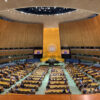
The Moral, Practical, Necessary Invigoration of Nuclear Sanity
Martin Luther King Jr. , when he received the Nobel Peace Prize, reminded us of “The fact that most of the time human beings put the truth about the nature and risks of the nuclear war out of their minds because it is too painful and therefore not ‘acceptable’, does not alter the nature and risks of such war. The device of ‘rejection’ may temporarily cover up anxiety, but it does not bestow peace of mind and emotional security.” I have devoted many decades of my life to not ignoring the risk of nuclear annihilation and since 1995 have attended every Review Conference of the Nuclear Nonproliferation Treaty to learn and hopefully contributed to a saner safer world.
South Africa: Activists Call for Greater Access to Newly-Launched HIV Prevention Drug
As South Africa officially launches the rollout of a groundbreaking HIV prevention drug, civic groups in the country have slammed the plan, saying it will not reach anywhere near enough people.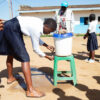
We Knew About the Bundibugyo Ebola Virus for 20 Years. Why was There no Vaccine When the Outbreak Began?
When the world learned that Ebola was spreading across parts of the Democratic Republic of the Congo and Uganda, one fact stood out above all others: there was no approved vaccine for the virus responsible.
GAZA: ‘If Civilians Can Get This Close to Establishing a Humanitarian Corridor, Then Governments Can Do It’
CIVICUS discusses the interception of the Global Sumud Flotilla on its mission to bring humanitarian aid to Palestinians in Gaza with Musa Roshdy, a humanitarian activist who took part in the flotilla.
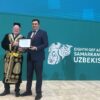
Make Last Sprint Towards 2030 a ‘Turning Point’ for Nature Finance, Eighth GEF Assembly Told
"While pressures on public budgets are growing and geopolitical tensions rising, it can be tempting to see environmental finance as optional. It is not,” GEF Interim CEO and Chair Claude Gascon told the closing plenary of the Eighth GEF Assembly in Samarkand, Uzbekistan, today.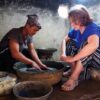
As Global Demand for Gold Grows, UN Mercury Head Warns Toxic Fumes Put Women in a Motherhood Dilemma
Ask any woman miner in the Katoro goldfield in Tanzania’s northern Geita region, and she will tell you that she touches toxic mercury with her bare hands when extracting gold from crushed ore.
A Larger, Older, and More Diverse Population
In 2026, the population of the United States is significantly larger, older, and more diverse than it was 250 years ago when the country declared its independence from the Kingdom of Great Britain on July 4, 1776.
Increased Rates of Deaths, Displacement and Diesel Amid New Ceasefire Escalations in Lebanon
Last week on May 28, the Israeli Defence Forces (IDF) issued an evacuation order to Lebanese civilians ordering them to move north of the Zahrani River, approximately 25 miles from the Israeli border, and roughly 20 percent of the Lebanese territory. These new escalations bring the displaced population to more than 1.3 million people, including more than 300,000 of those people being children. 1.3 million people represents approximately 1/4th of the nation's population of 5.3 million.
World Environment Day, 2026

2025 was one of the three hottest years ever recorded. The years from 2015 to 2025 were the hottest eleven years on record.

Afghan Women Complete Medical Studies but Are Barred From Practicing
While Afghanistan faces a serious shortage of female doctors, the country’s Islamist regime has placed restrictions on female students from graduating, further exacerbating the situation. Female medical graduates are barred from writing their final exams, which provide them with the professional qualification to practice as medical doctors.
“The Heat Is No Longer Distant: A Global Climate Reckoning“
‘As record heat sweeps the world, the climate crisis is no longer a warning for the future, but a reality of the present.’
Ebola Outbreak in the DRC Raises Global Health Concerns Amid Conflict and Displacement
Since May 16, there has been a significant increase in the number of laboratory-confirmed and suspected Ebola cases reported across the Democratic Republic of the Congo (DRC), primarily in Ituri Province, with additional unrelated cases identified in Kampala, Uganda. Although the outbreak has remained largely confined to that region, it has been heavily linked to areas affected by insecurity, civilian displacement, and mining-related migration, raising concerns among global health experts that the outbreak could spread without effective monitoring and response efforts.
Connecting the Dots: Quality Seed, Resilient Food Systems and Good Health
It is often said that the quality of seed determines the quality of the produce and, consequently, the sustainability of the entire agricultural value chain, influencing everything from crop yields to nutritional value.
Scarcity of Treatment Makes Syrians More Vulnerable to Mental Health Crisis
The protracted years of conflict in Syria have inflicted profound scars that transcend physical destruction, permeating the psychological well-being of millions.« Previous Page — Next Page »





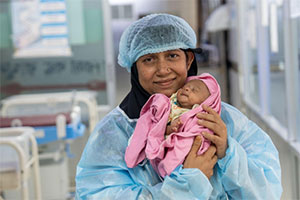 Bangladesh: Sarid, born one month early, receives specialized newborn care and grows stronger every day. Credit: UNICEF/UNI944397/Mojumder
Since the onset of the 2000s, global life expectancy has seen an overall rise, attributed to significant technological and scientific innovations in healthcare. Due to an increased understanding of different conditions as well as a rise in cooperation among healthcare experts around the world, there have been major strides made in ensuring that as few people die from chronic illnesses as possible. Despite the belief that healthcare is a fundamental human right, people from low- or middle-class backgrounds, marginalized groups, and underdeveloped countries have far more limited access to basic healthcare services.
The COVID-19 pandemic showed how marginalized communities are disproportionately affected by health crises, proving that we have much work to do in ensuring that no one dies of terminal conditions. While the global response to the coronavirus saw significant strides in immunization and vaccine development, the global outbreak of mpox in 2022 and its upsurge in parts of Africa in 2024 must remind us to remain vigilant.
Other major disease outbreaks in recent years have been linked to the destruction of infrastructure during warfare. Notably, in 2024, the Gaza Strip witnessed a return of the poliovirus since its eradication in the region 25 years ago. Israel’s blockade on Gaza has resulted in the collapse of the region’s sewage plants and desalination plants, and also destroyed healthcare capacities. The UN stated that this lack of clean water and sanitation would lead to an outbreak of cholera and other deadly infectious diseases. The 2026 OCHA Humanitarian Situation Report confirmed that the over two years of conflict in Gaza has produced a catastrophic health emergency, with millions remaining dependent on relief aid amid tight restrictions and no functioning public health system.
IPS is committed to providing full and comprehensive coverage on healthcare challenges around the world. IPS seeks to address the multifaceted causes of such challenges, including unprecedented pandemics, conflict-driven disease outbreaks, as well as socioeconomic barriers to equal healthcare access. IPS is also dedicated to reporting on innovations in the healthcare industry.

The Week with IPS

NEXT STOP - SDGs
Tracking global progress towards a sustainable world
Tracking global progress towards a sustainable world
