Languages
Wednesday, October 14, 2026



News and Views from the Global South
Humanitarian Emergencies

UN Staff Federation Remembers with Sorrow the Many who have Fallen in the Line of Duty
On this World Humanitarian Day, the members of CCISUA Staff Federation honour colleagues who dedicate their lives to protecting people in crisis, and we remember with sorrow the many who have fallen in the line of duty.
UN Security Council Confronts South Sudan’s ‘Compounding Crises’
The UN Security Council convened today (August 18) to discuss South Sudan and the "interlinked challenges of climate change and conflict" affecting the region.
Visualizing a Sustainable Future: The Intersection of Art and Climate Justice
In the 1900s, global discussions around climate change and fossil fuel usage reached new heights, leading to the emergence of climate change art. Since then, it has remained a key theme in contemporary art, with artists and corporations alike continuing to push messages of climate reform to instill a sense of urgency, fear, and shared responsibility in viewers.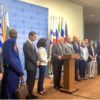
World Leaders Take a Stand as Outrage Against Israel Increases
The world is becoming increasingly outraged at Israel for its actions in the ongoing war against Hamas, particularly amid the recent killings of Palestinian journalists and Israel’s announcement of its plan to seize complete military control of the Gaza Strip.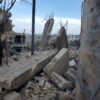
Southern Voices: Grief, Resilience, and Daily Life in Jnoub
"Special, targeted operations in southern Lebanon," a phrase that has echoed repeatedly over the past two years in Israeli Defence Force (IDF) statements. But behind these clinical military terms lies a human cost that statistics cannot capture.
‘Life in Gaza’s Shelters Is Marked by Deprivation – but Also by the Endurance of Human Dignity’
CIVICUS speaks with a West Bank-based Palestinian activist about her family members currently enduring the war in Gaza. She has asked to remain anonymous for security reasons.
The Death of EU Values in Gaza
The EU likes to think of itself as a normative power — a community of values, committed to upholding international law, promoting peace, protecting civilians and building a rules-based global order. These are not just lofty ideals; they are enshrined in EU treaties, declarations and Council conclusions.
Four Years Later, Still No Clarity: WHO Report Highlights Gaps in Global Cooperation
More than four years since Covid-19 upended the world, the question of how it began remains unanswered. Did SARS-CoV-2 originate from animals to humans naturally, or did it accidentally escape from a laboratory? The World Health Organization’s latest report offers little new clarity and raises serious concerns about international cooperation and scientific transparency.
Fiji’s Truth and Reconciliation Commission Aims To Restore Trust and Peace After Decades of Political Crises
Fiji, a nation located west of Tonga in the central Pacific, is renowned for its natural beauty and beach resorts. But for 38 years it has endured a political rollercoaster of instability with four armed coups that overturned democratically elected governments and eroded human rights.
Bending the Curve: Overhaul Global Food Systems to Avert Worsening Land Crisis
Current rates of land degradation pose a major environmental and socioeconomic threat, driving climate change, biodiversity loss, and social crises. Food production to feed more than 8 billion people is the dominant land use on Earth. Yet, this industrial-scale enterprise comes with a heavy environmental toll.
Four Ways Asia Can Strengthen Regional Health Security Before the Next Pandemic
In an interconnected world when infections can circle the globe in hours, cooperation in preparing for pandemics is essential. The COVID-19 pandemic highlighted just how vulnerable countries are when surveillance is fragmented, laboratory networks are underfunded and underequipped, and vaccines are not dispersed equitably.
Women in Sudan are Starving Faster than Men; Female-Headed Households Suffer
The food crisis in Sudan is starving more day by day, yet it is affecting women and girls at double the rate compared to men in the same areas. New findings from UN-Women reveal that female-headed households (FHHs) are three times more likely to be food insecure than ones led by men.
UN Staffers, Threatened with Lay-Offs, are Offered Early Retirement
The United Nations, facing a liquidity crisis, has been threatening to lay-off about 20 percent of its estimated 37,000 employees world-wide: a proposed move that has triggered widespread protests from staff unions both in New York and Geneva.
From Conflict to Climate Crusade, Refugees Lead the Charge in Kenya
For 18-year-old Lionel Ngukusenge, a refugee from Burundi, where he was forced into hiding because of a repressive regime, he has found another foe to contend with at the Kakuma refugee camp in Kenya: climate change.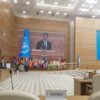
Landlocked Developing Countries to Start ‘New Decade of Delivery’
As the Third United Nations Conference on Landlocked Developing Countries (LLDC3) concludes today (Friday, August 8) in Awaza, Turkmenistan, with the adoption of the Awaza Political Declaration and the formal endorsement of the Awaza Programme of Action (2024–2034), there is optimism that LLDCs are finally at the dawn of a new era.
Beyond Lives Saved: Why Early Warning Systems Are a Smart Investment
Significant progress has been made globally in implementing national and local disaster risk reduction strategies. Yet, the impact of disasters on lives and economies persists and disaster resilience is one of the most regressed areas in Sustainable Development Goal implementation.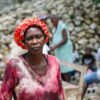
Haiti Faces a ‘Critical Turning Point’ Amid Escalated Violence and Funding Cuts
The humanitarian situation in Haiti has deteriorated significantly in the past few weeks, with the United Nations (UN) underscoring a growing list of abuses committed by armed groups, including killings, kidnappings, and sexual violence. The gap between the vast scale of needs and the supply of available resources has widened, leaving millions of Haitians in dire need of humanitarian support.
Landlocked Nations Form New Bloc to Confront Climate Crisis and Inequity
“The term ‘negotiation' must be understood in ethical context… When an arsonist comes and burns down my house and then asks me to negotiate so I can rebuild my house, that becomes the paradox.”
Landlocked Developing Countries’ Group to Negotiate Way Out of Agricultural Catastrophe
Agriculture is a critical sector in landlocked developing countries, as more than half (55 percent) of the population is employed in the agriculture sector – significantly higher than the global average of 25 per cent. As such, the deterioration of food security in landlocked developing countries (LLDCs) is an unfolding catastrophe.
Roma’s Long Standing Exclusion Compounded As Ukraine War Continues
As Russian forces continue to lay waste to civilian areas of towns and cities across Ukraine, Roma in the country are struggling to access compensation to help them rebuild their damaged homes.
Aid Denied, Questions Ignored: Israel Keeps Focus on Hostages
At the United Nations media stakeout on Tuesday, Israeli officials kept focus exclusively on the hostages, avoiding questions entirely.« Previous Page — Next Page »





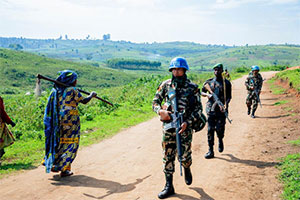 MONUSCO Peacekeepers and FARDC Soldiers Patrol Fataki Area. Credit: UN Photo/Jorkim Jotham Pituwa
Conflict, human rights violations, natural disasters, and famine have been at the forefront of concerns for humanitarian organizations. The escalation of humanitarian crises has led to over 239 million people in need of humanitarian assistance at the start of 2026, as estimated by OCHA’s Global Humanitarian Overview. The 2025 humanitarian appeal received only $12 billion, the lowest funding in over a decade, which has left 24 million fewer people reached in comparison to 2024. Conflict has remained the primary driver of crisis.
Humanitarian emergencies massively impact progress towards the Sustainable Development Goals (SDGs), adversely affecting economic development, inequality, education, planetary well-being, and poverty. Millions of people are faced with reduced access to essential services, including shelter, food, healthcare, and access to clean drinking water. UN Organizations such as UNHCR and the United Nations Children’s Fund (UNICEF) are committed to providing direct relief to affected communities when state governments cannot.
The United Nations 2024 Summit of the Future discussed measures that will be taken to reduce global inequality and promote peacekeeping efforts around the world. The recent UN Climate Change Conference (COP30) in Belém, Brazil, agreed to mobilize $1.3 trillion annually for climate action by 2035, operationalize the loss and damage fund, and triple adaptation finance. However, a fossil fuel transition commitment was not secured, despite climate change and the greenhouse effect being major contributors to humanitarian crises worldwide.
Countries across the world have also rallied to end humanitarian crises, as witnessed in conflicts such as Palestine and Ukraine. IPS is committed to providing relevant and in-depth reports of humanitarian emergencies around the world and their implications.

The Week with IPS

NEXT STOP - SDGs
Tracking global progress towards a sustainable world
Tracking global progress towards a sustainable world