
Sunday, November 15, 2026



News and Views from the Global South
Indigenous Rights
EAST TIMOR: Keeping Youth Off Political Violence
Once a month, 24-year-old Emilia Soares scours the streets of her neighbourhood persuading youth to attend a local assembly. She is a youth leader in Suco Bidau Santana, a residential area in the east of the capital and one of the rare ones who escaped the civil strife of the last few years.ECUADOR: Support Grows for Letting Sleeping Amazon Oil Lie
The innovative offer by the government of Ecuador to refrain from exploiting its largest oil reserve, in exchange for international compensation for nature conservation, is attracting increasing support.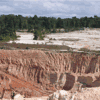
GUYANA: From Lush Jungle to Muddy Moonscape
Late last month, three Guyanese cabinet ministers flew to a southwestern jungle community near Brazil to probe reports that an unscrupulous group of gold and diamond miners had plundered the area so recklessly that roads simply disappeared and the area's water system had crumbled under the weight of heavy machinery.
ENVIRONMENT: Carving Up the Melting North
As climate change hit a cultural tipping point in 2007, with more and more people expressing concern and awareness of the risks posed by rising greenhouse gases, warming in the Arctic is already altering the landscape in Canada's north.THAILAND/LAOS: Hmong Refugees Starve to Resist Deportation
By going on a hunger strike, some 150 ethnic Hmong refugees in Thailand have turned the heat on Bangkok to respect their rights and treat them with compassion.ENVIRONMENT: Satellites Show Logging Decline in Peru’s Amazon Region
Rainforest conservation policies are reducing the rate of deforestation in the Peruvian Amazon, but roads are unquestionably the drivers of change, new satellite data reveal.GUATEMALA: Bloody Campaign Trail
"They were just going to kill us, without any warning. They chased us and started shooting," said Héctor Rosales, a candidate for the presidency of Guatemala, who almost become one of dozens of victims of the political violence that is marring the campaign for the Sept. 9 elections.SRI LANKA: Probe French Aid Agency For Massacre – Gov't
A year after 17 workers of the French aid agency Action Against Hunger (ACF) were lined up and shot dead in the eastern town of Muttur, no one is sure who is responsible for the gruesome massacre - government forces or Tamil separatist rebels.
GUATEMALA: Labour Rights Mean Little in Maquila Factories
"We had no set punch out time. Sometimes we would work through the night until dawn," said Everilda Yanis, who worked at an export garment factory in Guatemala that closed down in December 2006, leaving her and hundreds of co-workers in the street with no severance pay.SOUTH ASIA: Bhutan Refugees Wary of US Resettlement Offer
After languishing for 17 years in temporary camps, some 108,000 ethnic Nepalis, expelled from their homeland in Bhutan, have a real chance to get out of the wilderness.
PERU: No Peace for Living or Dead 22 Years After Massacre
Cirila Pulido and Teófila Ochoa were 12 and 13 years old when a Peruvian army patrol entered their village of Accomarca in Peru’s southern Andean region of Ayacucho on Aug. 14, 1985 and murdered 69 villagers, including the two girls’ mothers and siblings.LATIN AMERICA: Indigenous, Black Women Face ‘Triple Glass Ceiling’
Indigenous and black women in Latin America and the Caribbean face three-fold discrimination because of their gender, race and social class, in politics and at work.LATIN AMERICA: Political Parity for Women Still a Long Way Off
Legislation in the countries of Latin America and the Caribbean has not succeeded in ending discrimination against women in political and public life, say participants at the 10th Regional Conference on Women being held in the Ecuadorean capital.RIGHTS: First Nations Feel Betrayed by Canada at UN
Even though it took two decades to draft a U.N. Declaration on the Rights of Indigenous Peoples, Canada has been actively opposing the document for much of that time period.BOLIVIA: Work Comes First for Women
The role of self-sacrificing wife and mother who stays at home is no longer the main goal of many Bolivian women.MALAYSIA: Racial Divisions Sharper After 50 Years
Malaysia celebrates, this August, 50 years of independence under the slogan ‘one legacy, one destiny,’ reiterated through posters in public places depicting representatives of various races happily holding hands and walking into the sunset.RIGHTS-MEXICO: Victims Abound, But Few Perpetrators Found
"They tortured me, took away my shoes, and beat me brutally, with a lot of hatred and fury," said Pedro Alvarado, a human rights activist arrested by Mexican police.CANADA: Native Land Deals Get Mixed Reaction
The costly British Columbia land claims negotiations between the government and native peoples, which have garnered few victories over many years, seems to be finally achieving results.RIGHTS-GUATEMALA: 1,200 Letters Against Genocide
Guatemala's attorney general received 1,200 letters from people in 23 countries urging him to speed up the cases against former dictator Efraín Ríos Montt and other military officers accused of genocide and crimes against humanity.ELECTIONS-LATAM: Brains Behind Dirty Campaigns Go Global
Consulting firms notorious for orchestrating aggressive attacks on opponents in electoral campaigns, especially in Mexico and the United States, have been much in demand in Latin America in recent years.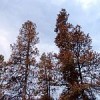
ENVIRONMENT: Climate-Driven Pest Devours Canada’s Forests
Environmentalists and researchers say that climate change is a significant factor in the pine beetle epidemic that has ravaged forests in the western Canadian provinces of British Columbia (BC) and Alberta.« Previous Page — Next Page »


The planet's roughly 350 million indigenous peoples took notable steps on the international stage in the last decade. They got the world's governments to agree to create a body to represent them at the United Nations, the Permanent Forum on Indigenous Issues, and to appoint a special rapporteur responsible for their human rights. In 2007 a Universal Declaration on the Rights of Indigenous Peoples was approved by the UN. Yet the living conditions of most "tribal", "aboriginal", "native" or "first" peoples remain precarious. IPS, with its network of contributors at the UN and linked to indigenous communities worldwide, is committed to tracking the world community's efforts to do justice to the rights and aspirations of these peoples, with a special current focus on Latin America's 40 million rural indigenous peoples.

The Week with IPS

Tracking global progress towards a sustainable world
