Languages
Tuesday, November 17, 2026



News and Views from the Global South
Middle East & North Africa
Arab Refugees Suffer Mind Disorders
Amidst the political upheavals across the Arab world, a new U.N. study highlights the need for neurological health services to monitor brain disorders among displaced people.
MIDEAST: Nablus Stands Beautiful and Unvisited
Palestine experiences a boom in tourism, as herds of tourists storm the cities of Jerusalem, Jericho and Bethlehem. Meanwhile, the West Bank city of Nablus, rich in historic and religious sites, hardly attracts visitors.Arab Spring Stalls as U.S. Defers to Saudi “Counter-revolution”
As the so-called Arab Spring enters its sixth month, it appears to have run into seriously wintry headwinds.Two-Faced Arab League Losing Ground
As the Cairo-based Arab League continues to back western military intervention in support of the popular rebellion in Libya, the League's failure to back similar uprisings in other Arab countries - most notably Bahrain - has led to charges of double standards.EGYPT: Corruption Ran in the Family
Ousted president Hosni Mubarak ran Egypt as his own private estate, carving up its resources and siphoning off its capital into offshore accounts. But he didn’t do it alone: he had help from his family and a few trusted friends.Women Struggle to Unite Fractured Bahrain
Women in Bahrain have launched new initiatives to tackle sectarian tensions that emerged as the fallout of widespread unrest sweeping the country since Feb. 14.Libyan Choice: Starve or Run
Rights groups have condemned the indiscriminate attacks on residential areas in Misrata, that have worsened an already dire situation.LIBYA: Obama Resists Allied Pressure for Escalation
Even as the conflict in Libya appears increasingly stalemated, the administration of President Barack Obama seems determined to resist growing allied pressure to commit more U.S. military resources to the fight.Hezbollah Challenges Bahrain Govt
Hezbollah’s hardening stance in the Bahraini crisis has sowed discord between Lebanon and the Gulf island, currently home to about 5,000 Lebanese expatriates. As the situation escalates, many fear that the status of other Lebanese in the rest of the Gulf could come under threat.EGYPT: Silence Shrouds New Security Agency
In mid-March, Egypt's transitional government formally dissolved the hated State Security Investigations (SSI) apparatus, meeting a longstanding demand of the opposition. But in the month since, authorities have remained tight- lipped about the SSI's planned successor agency, raising fears that the transformation will be in name only.U.S. Denies It Is Trying to Undermine Assad
As anti-government protests in Syria showed no sign of abating, the U.S. State Department Monday denied that it was seeking the regime's ouster.MIDEAST: In the Dark Over Murder of Peace Activists
Palestinians are reeling from the double-murder of two pro-Palestinian peace activists over the last few weeks, one in the West Bank and one in Gaza, with many believing that Israeli intelligence had a hand in the grisly killings, even if indirectly.Thousands Attend Syria Protesters’ Funerals
Tens of thousands of Syrians have attended the funerals for protesters killed in the central city of Homs, chanting slogans demanding the overthrow of Bashar al-Assad, the country’s president.SYRIA: Unrest Spreads Further
Despite scarce official news reports emerging from Syria, information leaking out from activists on the ground describe the situation as deteriorating. While the government remains vague about events unfolding in the country, Friday prayers continue to ignite dissent that seems to be spreading to all social classes.
ISRAEL: Defenceless Against the Political Rocket
The 130,000 residents of this balmy Mediterranean city can breathe a sigh of relief. Their sky is now better protected against sporadic rocket attacks launched from the Gaza Strip, some 12 kilometres away.
MIDEAST: Palestinians Find Trade, Not an Economy
The Palestinian Authority is preapring to establish a state in near future. But the Palestinian economy remains strongly tied to Israel, and manufacturers are struggling to recover from the second Intifadah.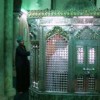
EGYPT: Islamic Hardliners Becoming Aggressive
Shrines venerated for centuries by Sufi Muslims have come under attack as Islamic fundamentalists seek to purge the Egyptian landscape of "heretical" artifacts that do not conform to their strict interpretation of Islam.MIDEAST: U.S. “Democracy” Advisors Suddenly in Demand
For years, U.S. officials and nongovernmental organisations devoted to democracy promotion toiled in the Middle East with little expectation of success.BAHRAIN: U.S. Keeps Quiet over Repression
If President Barack Obama wanted to place Washington "on the right side of history" during the ongoing "Arab Spring", his reaction to recent events in Bahrain will likely make that far more difficult, according to a growing number of analysts and commentators here.Libya Group Agrees ‘Trust Fund’ for Rebels
The international contact group on Libya has agreed to set up a temporary "trust fund" to help the international community channel assets to the opposition Transitional National Council in Benghazi.Libyan Exodus Shrinks Remittances
The exodus of migrants streaming out of Libya due to ongoing unrest has highlighted the heavy dependence of some countries on remittances from their citizens working abroad. In several countries this flow has now become choked.« Previous Page — Next Page »


The Week with IPS

NEXT STOP - SDGs
Tracking global progress towards a sustainable world
Tracking global progress towards a sustainable world
