Languages
Friday, October 2, 2026



News and Views from the Global South
Middle East & North Africa

The Largest Multi-Billion Dollar Deal in US History– & a Potential 51st American State?
When US President Donald Trump offered to declare neighboring Canada as America’s 51st state, the Canadians vehemently rejected the proposal. “We don’t want to be part of America,” was the rallying cry. And the short-lived offer was shot down in flames.
Health Workers in Conflict Zones Experience an Epidemic of Violence
The international community must take action to uphold international humanitarian law, say healthcare and rights advocates, as attacks on healthcare in war zones reached a record high last year.
A Shift in the Sands: The Reshaping of Global Influence in the Gulf
The Gulf's most powerful weapon isn't a military, a United Nations (UN) Security Council seat, or a legacy of global diplomacy. Choosing multilateralism and mega-projects over militaries and old-world diplomacy, they are tipping the scale without firing a single shot. Their approach is more modern, where money, alliances, and an active vision for the future are the weapon of choice.
UN Warns of Exacerbated Famine and Malnutrition in Gaza
Since the dissolution of the ceasefire agreement between Israel and Hamas in March, roughly 2 million Palestinians residing within the Gaza Strip have struggled to survive amid constant barrages of airstrikes from the Israeli Defense Forces (IDF) and a persisting blockade on humanitarian aid. With essential border crossings in Gaza remaining closed, humanitarian organizations have expressed fear that the Palestinians within the enclave could experience exacerbated rates of famine and malnutrition.
The Vietnam and Gaza Wars Shattered Young Illusions About US Leaders
Eight years before the U.S.-backed regime in South Vietnam collapsed, I stood with high school friends at Manhattan’s Penn Station on the night of April 15, 1967, waiting for a train back to Washington after attending the era’s largest antiwar protest so far.
US Considering Nuclear Power for Saudi Arabia in Grand Bargain
The Trump administration is reportedly pursuing a deal with Saudi Arabia that would be a pathway to developing a commercial nuclear power industry in the desert kingdom and maybe even lead to the enrichment of uranium on Saudi soil.
Essential Supplies Run Critically Low in Gaza While Displacement Soars
Since the deterioration of the ceasefire agreement between Israel and Hamas in March, the Israeli Defense Forces (IDF) have issued numerous evacuation orders and bombardments on the Gaza Strip, resulting in exacerbated rates of displacement and a significant amount of civilian casualties. Roughly two million Palestinians within the enclave struggle to stay alive amid repeated blockages of humanitarian aid.
France to Break Away from UK & US While Recognizing Palestine as Nation State
France, a veto-wielding permanent member of the Security Council, the most powerful political body at the UN, is planning to break ranks with the other two Western members, the US and UK-- and recognize Palestine as a nation state. French president Emmanuel Macron was quoted as saying that France would recognize a Palestinian state within months, and suggested he could do it alongside a UN conference in New York in June.
Amputated Limbs, Enduring Pain: The Suffering of Syria’s War Wounded
The Syrian war has left countless Syrians with devastating injuries, ranging from limb amputations and burns to the loss of sensory functions. These injuries have profoundly impacted their lives, compounded by the limited attention and support they receive from civil society organizations.
Turkey’s Democratic Uprising: A Generation Takes a Stand
In the heart of Istanbul, a remarkable transformation is underway. What began as student protests following the politically motivated arrest of Mayor Ekrem İmamoğlu has evolved into Turkey’s most significant pro-democracy mobilisation in years. The streets that once pulsed with the routine of daily life now throb with the energy of millions demanding a return to democratic governance.
Netanyahu Refuses Calls to End the Gaza War as Palestinians Struggle to Survive
Since the breakdown of the ceasefire agreement between Israel and Hamas, the Gaza Strip has been subjected to significant bombardment and blockages of humanitarian aid. With aid deliveries having been halted from entering the Gaza Strip for over one month, roughly two million Palestinians have been relying on dwindling resources, facing heightened risks of malnutrition and disease.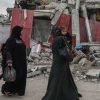
Collapse of Gaza Ceasefire and its Devastating Impact on Women and Girls
The end of the tenuous ceasefire in Gaza is having disastrous consequences for women and girls. From 18 to 25 March—in just those 8 days, 830 people were killed—174 women, 322 children, with 1,787 more injured.
A Chance for Sisi to Follow Sadat’s Vision and Courage
On March 26, Israel and Egypt celebrated the 46th anniversary of their peace treaty, which has upended the very nature of the Arab-Israeli conflict. Egypt remains pivotal in the search for Israeli-Palestinian peace, especially now in the wake of the Israel-Hamas war.
Israel Ends Ceasefire in Gaza as Strikes Resume
On March 18, the Israeli Defense Forces (IDF) launched an attack on the Gaza Strip, effectively terminating the Israel-Hamas ceasefire agreement. This comes after a pause in ceasefire operations when Israel continued its blockade on humanitarian aid in the enclave and demanded the release of additional hostages.
Why “Pro-Israel, Pro-Peace” Advocates Cling to Genocide Denial
Israel’s renewed assault on Gaza comes several months after both Amnesty International and Human Rights Watch issued reports concluding without equivocation that Israel was engaged in genocide. But very few members of Congress dare to acknowledge that reality, while their silence and denials scream out complicity.
Trashing Jewish Values Risks Israel’s Survival as We Know It
77 torturous years of the Israeli-Palestinian conflict, punctuated by intense violence and wars, successive Netanyahu-led governments have shattered Jewish values to the core—values that have sustained and preserved Jewish lives for centuries and provided the moral foundation on which Israel was built.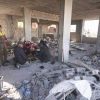
Energy is a Catalyst for Peace Between Israel and Gaza
Israel’s decision to suspend electricity supplies to Gaza has far-reaching consequences for daily life of Palestinians as well as Gaza’s reconstruction. Managing Gaza’s energy crisis will require the development of alternative supplies, which are found in off-shore natural gas fields that can be developed off the coast of Israel and Gaza in the Eastern Mediterranean (EastMed).
Tensions Between Israel and Hamas Threaten Second Phase of Gaza Ceasefire
On March 1, the first phase of the Israel-Hamas ceasefire was scheduled to end. However, as Israel continues to block humanitarian aid from entering Gaza, and Hamas declining to release more hostages until the second phase goes into effect, the long-term feasibility of the ceasefire agreement is uncertain. Additionally, U.S. President Donald Trump’s recent inflammatory comments surrounding the conflict between the two parties might put further strain on the already fragile ceasefire agreement.
Öcalan’s Letter: Between Dismay and the Kurds’ Need to Believe
"The PKK (Kurdistan Workers' Party) should dissolve. I make this call and take historical responsibility," read the letter from Abdullah Öcalan, the imprisoned leader of the Kurdish guerrilla, on Thursday, 27 February.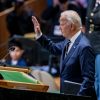
DAWN Calls on ICC to Investigate U.S. Officials for War Crimes in Gaza
On February 24, the human rights organization Democracy for the Arab World Now (DAWN) called on the International Criminal Court (ICC) to investigate former U.S. President Joe Biden, Secretary of State Antony Blinken, and Secretary of Defense Lloyd Austin, among other U.S. government officials, for aiding and abetting Israeli war crimes that deliberately infringed on human rights in the Gaza Strip. This poses significant implications for the future of U.S. foreign policy and the role of impunity in world conflicts.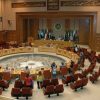
The Arab States Must Stop Trump– and Netanyahu– in Their Tracks
When the Arab states convene an emergency session in Egypt to address Trump’s/Netanyahu’s plans to take over Gaza and exile the Palestinians, they must warn Trump that acting on this plan will usher in a catastrophic conflagration that could engulf the entire Middle East.« Previous Page — Next Page »


The Week with IPS

NEXT STOP - SDGs
Tracking global progress towards a sustainable world
Tracking global progress towards a sustainable world
