Languages
Sunday, November 22, 2026



News and Views from the Global South
North America
POLITICS-US: Symbolic Vote Rejects Permanent Bases
A bill that would ban permanent U.S. military bases in Iraq overwhelmingly passed the House of Representatives on Wednesday.
FILM-US: A Blurry Line Between Propaganda and News
A shocking thing happens midway through Norman Solomon's documentary film "War Made Easy".RIGHTS-US: Congress Moves to Protect Native Women from Assaults
Acting in major part on a recent report by Amnesty International and Native American activists, the U.S. Congress is moving to provide additional funding to protect Native American women who suffer disproportionate levels of rape and other sexual abuse.POLITICS: South Sceptical of North Korean Assurances
When the six-party talks on the denuclearisation of North Korea ended last week, there was plenty of scepticism in neighbouring South Korea: to what extent can the reneging North be trusted to keep its pledges and promises in the future?RELIGION: U.S. Evangelicals Approach Muslim Envoys
That it happened at all was a major feat. That not much was resolved was not surprising. That those involved are determined to meet again is fascinating. That it was organised by a controversial faith healer has made it that much more noteworthy.
HEALTH-US: Tiny Town Demands Justice in Dioxin Poisoning
A U.S. health agency has made research subjects of people in tiny Mossville, Louisiana by repeatedly monitoring dangerously high levels of dioxin in their blood while doing nothing to get the community out of harm's way, residents say.MIDEAST: Dubious EU Support to U.S. Challenged
The European Union's foreign policy supremo Javier Solana this week declared himself "fully behind" the call for an international conference on the Middle East made recently by U.S. President George W. Bush. But is it time for the EU to cease being guided on the Israeli-Palestinian question by the United States, which as the main supplier of weapons to the Israeli military is partisan by definition?POLITICS-US: Bush Line Distorts Iran's Real Interest in Iraq
As U.S. and Iranian diplomats met in Baghdad Tuesday for a second round of talks on Iraq, the domestic U.S. political climate appears decidedly more supportive of an aggressive U.S. posture toward Iran than just a few months ago, reflecting the apparent triumph the George W. Bush administration's narrative on Iran's role in Iraq.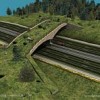
BIODIVERSITY: “Wildways” Would Bridge a Fractured Continent
Before deforestation and sprawl fragmented North America's wilderness into isolated islands of bio-homogeneity, the largest of carnivores and smallest of rodents roamed the expansive continent at will.FRANCE: For Jazz Musicians, a Paris Tradition Continues
On a quiet side street in the Paris suburb of Louise Michel, jazz musician Bobby Few from the United States sits at his 120-year-old Gabriel Gaveau piano and reminisces about what he has seen come to pass in his nearly 40 years in France.FINANCE-US: OPIC Extension Tied to Terror and Environment
The U.S. House of Representatives extended funding until 2011 for the Overseas Private Investment Corporation (OPIC), a government agency that backs U.S. corporations in developing nations, in an act that prohibits investment in "terrorist nations" and requires more rigorous human rights and environmental standards.
HEALTH-US: Vets Sue Gov’t for “Shameful Failures”
Two veterans' groups sued the U.S. Department of Veterans Affairs (VA) in federal court in San Francisco Monday for alleged "shameful failures" to help tens of thousands of Iraq and Afghanistan war veterans who suffer from post-traumatic stress disorder, or PTSD.CARIBBEAN: Canada Looks Far South
As he winged his way back to Ottawa, Canadian Prime Minister Stephen Harper was no doubt satisfied that his six-day trip to the Americas, especially the Caribbean, was worth it.POLITICS-US: Candidates Hop Aboard the Iran Sanctions Bus
Last Thursday afternoon, in a tightly packed press room of the U.S. Capitol building, Jennifer Laszlo Mizrahi stood at the podium and smiled heartily as she pointed to two columns of U.S. postal boxes stacked behind her.INDIA/US: Nuke Deal – Breakthrough or Bad Bargain?
After tortuous negotiations spread over four days in Washington, the United States and India have reported "substantial progress" on a bilateral agreement on civilian nuclear cooperation, but said they would now "refer the issue to our governments for final review."POLITICS: Young Hmong Americans Confront a Dark History
The Hmong American community was catapulted into the national spotlight when, on Jun. 4, 11 California residents were arrested for plotting to overthrow the government of Laos.
DISARMAMENT: Will U.S. Finally End Cluster Bomb Exports?
At the end of June, a few members of the U.S. Congress made a discreet move to limit this country's exports of cluster bombs, a weapon that has been used around the world since the Second World War to devastating humanitarian consequences.
POLITICS-US: Partisan Lines Harden in Iraq Debate
After a week and a half of Senate debate, including an all-night session Tuesday, the possibility that legislation to de-escalate U.S. military intervention in Iraq soon could be adopted by a strong bipartisan majority appears to have receded, at least until mid-September, if not well into next year.POLITICS: Pakistani al Qaeda a Real Threat – US Intelligence
The United States intelligence community’s latest assessment of al Qaeda and the threat it poses to the homeland appears to have both renewed questions about the wisdom of invading Iraq and returned the spotlight to an increasingly strife-ridden Pakistan.FINANCE-US: Fed Chief Downplays Effect of Yuan on Deficit
U.S. Federal Reserve Chairman Ben Bernanke told the U.S. Congress Wednesday that the global economy was growing at a strong pace bolstered by rising consumerism and demand, but the U.S. trade deficit with the world remained at a high level despite a sliding dollar.POLITICS-US: Congress Pushes Sanctions on Iran
As the United States and its United Nations allies plan to push for stiffer economic sanctions on Iran over its refusal to halt its nuclear programme, an Iran sanctions bill making its way through Congress includes several key measures that may threaten U.S. diplomacy towards Tehran and split key allies on the issue, including Russia.« Previous Page — Next Page »





The Week with IPS

NEXT STOP - SDGs
Tracking global progress towards a sustainable world
Tracking global progress towards a sustainable world
