Languages
Friday, November 20, 2026



News and Views from the Global South
Human Rights
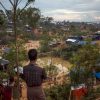
UN Migration Agency Warns of Trafficking, Labour Exploitation, Sexual Abuse of Rohingya Refugees
Human trafficking and exploitation are rife among Rohingya refugees who have fled Myanmar to seek safety in Cox’s Bazar, Bangladesh, according to interviews and community focus groups conducted in the district’s makeshift settlements by IOM, the UN Migration Agency.
The Harsh Plight of 152 Million Child Labourers
While trillions of dollars are being spent on exploring remote galaxies, Planet Earth is still home to harsh realities that could be easily –and much less expensively—resolved. One of them is that worldwide 152 million children are currently victims of child labour.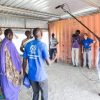
The Second Global Migration Film Festival Gets Underway
From Guyana in South America to Makati in the Philippines (and many other places in between) filmmakers from around the globe will soon showcase their skills as cinematographers at the Global Migration Film Festival. Organized by the UN Migration Agency, IOM and supported by UN Information Centers worldwide and with the financial support of DHL, the festival will take place in over 100 countries from 5 to 18 December 2017.
Aid Groups Sound Alarm on DRC Crisis
The Democratic Republic of the Congo (DRC) is on the brink of a humanitarian crisis and the international community must step in before it worsens, humanitarian agencies warn.
Aid Groups Condemn Yemen Blockade, Warn of ‘Catastrophic’ Famine
If aid deliveries are not resumed, Yemen will experience the worst famine the world has seen in recent decades.
Hostile Terrain Slows Delivery of Lifesaving Aid to Rohingya Refugees
Since 25 August, an estimated 613,000 Rohingya refugees have arrived in Cox’s Bazar, Bangladesh, fleeing violence in Myanmar. The total refugee population in the area is now over 826,000.
UN Migration Agency Relocates 698 Displaced Households from Unplanned Camp in CAR
This week IOM, the UN Migration Agency, completed the relocation of 698 internally displaced households from the impromptu camp that formed around MINUSCA’s (Multidimensional Integrated Stabilization Mission in the Central African Republic) base following the 2016 attacks in Kaga Bandoro, Central African Republic (CAR). Over 20,000 people settled around the base after ex-Séléka members attacked the Evêché IDP camp, the Prefect’s office and the MINUSCA camp on 12 October 2016.
Ambassador Jazairy: “Myanmar’s Rohingyas are denied the right to have rights”
The Executive Director of the Geneva Centre for Human Rights Advancement and Global Dialogue (hereinafter “The Geneva Centre”) Ambassador Idriss Jazairy emphasized - during a lecture on 10 November at the Oxford Centre for Islamic Studies - that the denial of equal citizenship rights to the Rohingya population is breeding radicalization and inter-communal violence in Myanmar.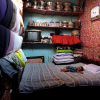
Nations without Nationality – An ‘Unseen’ Stark Reality
Here’s another ‘unseen’ stark reality—that of millions of people around the world who are deprived of their identity, living without nationality. Their total number is by definition unknown and their only ‘sin” is that they belong to an ethnic, religious or linguistic minority in the country where they have often lived for generations.
Soviet Revolution’s Impact
The 100th anniversary of the October Revolution fell on Tuesday (according to the Gregorian calendar) and was duly observed. The several meetings organised in Karachi and Lahore in this connection caused quite a flutter in many hearts, especially those belonging to older people.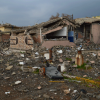
The Illusion of Justice: When Will Reparations be Served to Iraq’s Victims?
It is difficult to spend any time in Iraq without being struck by a sense of profound injustice. After successive decades of war and occupation, violence has become the rule rather than the exception in the country, with each phase of conflict outdoing the previous in terms of brutality and capacity to shock the conscience.
“Refugees Are Nothing but Commodities”
As countless refugees arriving on Italy’s shores report torture, extortion and forced labour in Libyan detention centers, many say they never intended to make the journey to Europe until the chaos in Libya left them no other choice.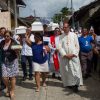
Victims of El Salvador’s Civil War Demand Reparations
Among the sea of names of victims of the Salvadoran civil war, engraved on a long black granite wall, Matilde Asencio managed to find the name of her son, Salvador.
UN Statement on Rohingyas
The UN Security Council has once again dropped plans, in the face of likely Chinese veto, to adopt a resolution demanding an end to the violence against the Rohingyas. What we have instead is a formal statement calling upon Myanmar to ensure no further excessive use of military force in Rakhine State, to restore civilian administration and apply the rule of law, and to take immediate steps in accordance with their obligations and commitments to respect human rights. This relieves the mounting pressure on the Myanmar government. But where does this leave the Rohingyas? According to the UN, more than 600,000 Rohingyas have been driven out of their homes, and who must be taken back, as the world body has also stated. And conducive conditions must be created for them to go back.
Climate Change Summit a Step Further, Yes… But Where To?
The UN Climate Change Summit in Bonn is a step further, most experts say. Fine, but towards what?
The Weinstein effect: The Global Scourge of Sexual Harassment & Exploitation
When the United Nations Population Fund (UNFPA’s) Goodwill Ambassador Ashley Judd, detailed an incident involving the Hollywood mogul Harvey Weinstein for The New York Times in their eyepopping investigation into decades of alleged sexual harassment, it came as a shock to many.
‘Never Again’: Investing in Prevention and Early Action
After the Rwandan genocide, the United Nations promised ‘never again.’ But has the international community kept their word? From Mexico to Myanmar, conflicts and humanitarian crises have multiplied.
Mounting Illicit Financial Outflows from South
Although quite selective, targeted, edited and carefully managed, last year’s Panama Papers highlighted some problems associated with illicit financial flows, such as tax evasion and avoidance. The latest Global Financial Integrity (GFI) report shows that illicit financial outflows (IFFs) from developing countries, already at alarming levels, continue to grow rapidly.
UN Member States, With Exceptions, Pay Lip Service to Women & Peacekeeping
A UN Security Council (UNSC) resolution adopted on 31 October 2000, underlying the role of women in peacekeeping, has long been described as both historic and unprecedented.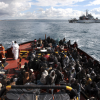
A New Global Compact on Safe, Orderly and Regular Migration
At this crucial juncture of international migration, where numerous push and pull factors have engendered unprecedented migration flows across the globe, the ongoing discussions at the United Nations must lead to meaningful and practical outcome.
Slave Labour, Another Setback for the Government of Brazil
The wave of conservativism is testing its limits in Brazil, as reflected by a Labour Ministry decree that seeks to block the fight against slavery-like working conditions, which has been provisionally revoked by the justice system.« Previous Page — Next Page »


One world, one humanity, now one court to defend its rights. Another step towards universal human rights, but not remotely a step far enough. The United Nations adopted the Universal Declaration of Human Rights more than half a century ago, but that has done little to stop violations the world over, just as the Geneva Convention has not protected prisoners of war enough. Democracy itself and the freedom it presupposes has not been protective enough. This is the century to move from politicisation of human rights towards humanising political ways. IPS keeps an eye on that difficult path.

The Week with IPS

NEXT STOP - SDGs
Tracking global progress towards a sustainable world
Tracking global progress towards a sustainable world
