Languages
Friday, November 20, 2026



News and Views from the Global South
Human Rights

Latin American Development Depends On Investing In Teenage Girls
Latin America’s teenage girls are a crucial force for change and for promoting sustainable development, if the region invests in their rights and the correction of unequal opportunities, according to Luiza Carvalho, the regional head of UN Women.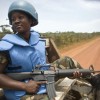
Time for tough action to stop sexual exploitation by UN peacekeepers
"Gentlemen, there are no bad soldiers, only bad officers", said Napoleon Bonaparte to his military staff after they complained that the poor quality of soldiers was inhibiting success on the battlefield. We as former Army officers, totally believe in the sage words of Napoleon.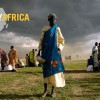
Human Security a Must in a Chaotic, Confused World – Japan
The question is simple and the answer, short: does eating more mean being better nourished?... Not Necessarily!
Girls in Rural Bangladesh Take Back Their Futures
Four years ago, Farzana Aktar Ruma, now 18, was almost married off without her consent.
Talking Openly – The Way to Prevent Teenage Pregnancy
In plain and simple language, an Argentine video aimed at teenagers explains how to get sexual pleasure while being careful. Its freedom from taboos is very necessary in Latin American countries where one in five girls becomes a mother by the time she is 19 years old.
International Is out and National Is Again Back
A sign of the time is that Germany is raising a revolt against the President of the European Commission, Jeam-Claude Juncker, whom Chancellor Angela Merkel imposed in 2014 after a strong fight with David Cameron, then a powerful British PM. The group of Visograd, , formed by Poland, Hungary, Slovaquia and the Czech Republic, which resurged from ashes, to become an anti Brussels voice, has requested to bring back the Commission under the authority of the States. When Merkel organized a meeting of the leaders of the six original founders of the EU, in Berlin, she invited Donald Tusk, the President of the Council, but not Jean-Claude Juncker, who is the President of the Commission. And Wolfgang Schauble, the German minister of Finance, has launched an appeal: “it is time to bring back Brussels under the control of the states. “
Closing the Gaps in Sexual Education for People with Disabilities
From forced sterilisation to sexual abuse, young women and men with disabilities are much more likely to have their sexual and reproductive health rights violated than other people.
Is Federalism Pro-poor?
Poverty, according to the United Nations, is “a denial of choices and opportunities, a violation of human dignity. It means lack of basic capacity to participate effectively in society. It means not having enough to feed and clothe a family, not having a school or clinic to go to, not having the land on which to grow one’s food or a job to earn one’s living, not having access to credit. It means insecurity, powerlessness and exclusion of individuals, households and communities. It means susceptibility to violence, and it often implies living in marginal or fragile environments, without access to clean water or sanitation.”
Murder in the Name of Faith
A wave of terrorist attacks — from Istanbul to Bangladesh and Iraq to Saudi Arabia — has shaken the Muslim world. The deadly week has left hundreds of people dead and wounded. The militant Islamic State group (IS) has claimed responsibility for some of the attacks and others clearly seem to be inspired by the group that has now established itself as the most lethal terrorist network with global reach.
The UN and Global Economic Stagnation
When the financial crisis preceding the Great Recession broke out in late 2008, attention to the previously ignored UN Secretariat’s analytical work was greatly enhanced. This happened as the UN and the Bank of International Settlements (BIS) had been almost alone in warning, for some years, of the macroeconomic dangers posed by poorly regulated financial sector developments.
Is a Referendum a Valid Tool for Democracy?
William Shakespeare would have loved to witness the Brexit. Many of his themes are evidently present: friendship and treason; truth and lies; deception and betrayal.How Russia Will Use Brexit to Fight Sanctions
FORECAST EU sanctions against Russia are all but guaranteed to remain in place through 2016, but Moscow will work in the second half of the year to get them eased in 2017. Russia will capitalize on divisions in the European Union, which will only widen in the wake of Brexit, to oppose sanctions. Moscow will step lightly, however, to avoid provoking its European rivals ahead of the next sanctions vote.
Terror Will Not Define Us
“Everything will be alright in a few days again”, I said to my friend in a half hearted attempt to console her as I left her apartment. It was her answer which consumed me for the rest of the day. Motherly in nature and genuinely bereaved, she looked back at me and said “why should it be, why should we forget”.
Elites, Expats and Enclaves
At the end of a hot and exacting month of fasting, Eid-ul-Fitr this year arrives on the heels of a ghastly number of terrorist attacks. In the week gone by, travellers have perished in Istanbul, diners in Dhaka, shoppers in Baghdad, and several people in three separate blasts in the kingdom of Saudi Arabia the other day.
Five Years After Independence South Sudan Faces Myriad Challenges
South Sudan, the world’s newest country faces myriad problems five years after achieving independence, aid agencies warned this week.Farage: Populist who Pushed Britain to Brexit
London: Nigel Farage devoted his career to campaigning for Britain to leave the European Union, a goal that once seemed impossible but which he helped achieve with an unashamedly populist message.
When Kids Become Monsters
We have been attacked as never before. The facts do not need to be repeated. The savagery with which 20 hostages were slaughtered need not be retold. Islamic terrorism has arrived in Bangladesh with a bang and it has shaken us to our foundations. The relative peace we lived in while the world around us disintegrated in the face of onslaught by extremist outfits such as the Islamic State (IS) and Al Qaeda and other similar outfits across the length and breadth of all continents is now not news anymore, merely a fact of life.
Crisis of the Left
Over the last few years, quite a few countries have witnessed the rise of social movements against inequality, xenophobia, and fiscal austerity. The most notable of these are the Occupy movement and Bernie Sanders’ campaign in the US, Syriza and Podemos in continental Europe, and the rise of Jeremy Corbyn and the Momentum campaign in Britain’s Labour party.
Global Battlefield
Recently, Mullah Akhtar Mansour was killed in a US drone strike in Balochistan. In response, Pakistan expressed deep concern, terming the attack as “crossing a red line” because it was the first time that a drone strike had been conducted outside Fata, hundreds of miles away from any region in Pakistan, currently experiencing internal conflict.
A Night of Terror
So, a night of absolute terror preceded the glorified Night of Power this Ramadan. And it has left Dhaka in a stupor; in a dazed state of disbelief and heartbreak. There is talk of vengeance in the air; and there is the call to patience. There are defenses of creed and vilification of entire traditions. There is evaluation of the response time and criticism of the PR spin on casualties. There are subtle attempts to claim some connection to the tragedy, by professing either geographic or personal proximity to the place, or the people involved. But what is missing is clarity. 'Why did this happen? Why us?'
How Rulers Affect Migration Measurement of Life
Will a Duterte administration change the migration pattern of Filipinos searching for a level playing field and a better life? IF career criminals are stopped dead on their tracks, literally or otherwise—not just petty thieves, drug lords instead of drug users, criminal coddlers as opposed to only small-time hoods, plunderers and not just frontline government bribe takers;« Previous Page — Next Page »


One world, one humanity, now one court to defend its rights. Another step towards universal human rights, but not remotely a step far enough. The United Nations adopted the Universal Declaration of Human Rights more than half a century ago, but that has done little to stop violations the world over, just as the Geneva Convention has not protected prisoners of war enough. Democracy itself and the freedom it presupposes has not been protective enough. This is the century to move from politicisation of human rights towards humanising political ways. IPS keeps an eye on that difficult path.

The Week with IPS

NEXT STOP - SDGs
Tracking global progress towards a sustainable world
Tracking global progress towards a sustainable world
