Languages
Friday, October 30, 2026



News and Views from the Global South
Religion
AFRICA: Millions of Children Falling Through the Cracks
A significant proportion of the world's 2.2 billion children, many of whom are victims of violence, sexual abuse, labour exploitation and preventable diseases, are from the crisis-plagued African continent.RELIGION-US: Pope's Visit Highlights Fault Lines in the Church
The visit of Pope Benedict XVI to the United States this week may have inspired renewed devotion in many Catholic faithful, but progressive church organisations here say that it's time for the Vatican to rethink its more rigid stances on issues like women priests, contraception and homosexuality.IRAQ: Chaos Hardening Sectarian Fiefdoms
There are an estimated 2.7 million Iraqis who have been displaced within their own country. No house; no food; no security. Who do they turn to for help? The international community's humanitarian organisations? The occupying United States government? The central Iraqi government based in Baghdad?
Q&A: "I Will Give the Big Boys a Run For Their Money"
She's made her mark in the history books by becoming one of only three women to contest the presidency in Kenya; but, Nazlin Umar won't be taking up residence in State House, at least not during the current political term.TURKEY: ‘Secular Fundamentalism’ Fights ‘Moderate Islam’
Turkey is locked in a do-or-die duel between its secular "fundamentalism" and "moderate" Islam. The outcome is likely to bring profound changes at home, and may affect its controversial bid for European Union membership.
INDIA/BANGLADESH: Rail Link Revived After 43 Years
It was a trip down memory lane for old timers who travelled from Dhaka to Kolkata by train on Monday. The last time they could do this was 43 years ago.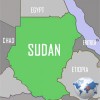
POLITICS-SUDAN: The Census Saga Continues
Sudan's crucial national census has been delayed by a week over concerns that displaced persons living in the north have still not been repatriated to the south, something which could seriously affect the results of the count.POLITICS-US: Religious Right – Growing Pains, or Death Throes?
During a recent appearance at the National Religious Broadcasters conference, Dr. James Dobson, the founder of Focus on the Family, expressed deep concern about the future of the conservative Christian movement he helped build and define.
Q&A: Somalia Recalls the Old Ways for Peace
Somalia has been torn apart by civil war for nearly two decades. Several attempts at finding a peaceful resolution to the conflict have unravelled, leaving the country without a functioning central administration for well over a decade.BALKANS: Religious Differences Go To School
When parents of today's school children went to school, religion was a private matter, something talked about at home or among friends and relatives in communist former Yugoslavia.RIGHTS-PAKISTAN: Harsh Colonial Law Set To Change
In May 2007, officials sealed a multi-storey shopping plaza belonging to three brothers from the Federally Administered Tribal Areas (FATA) because their tribesmen were reported to have abducted two former employees of the Pakistan Tobacco Company.CULTURE: Martyrs and Scholars Meet in the Middle
In an age when suicide bombings and religious and ethnic riots comprise the bulk of the evening news, it seems as though compassion and compromise are more elusive than ever.
LEBANON: Fleeing a Refugee Camp for Refuge
Music resonates down the rundown streets of Beddawi, an overpopulated suburb of Tripoli. People have moved into garages and covered the entrance with bed sheets in a feeble attempt at privacy.MEXICO: Church Uproar Over Drug Traffickers’ ‘Good Works’
A senior Catholic bishop’s acknowledgement that drug traffickers contribute money and buildings to their communities, and occasionally seek out priests to redeem themselves, was merely a restatement of old news. The novelty here was the angry reactions from within the Church, experts say.MIDEAST: Disputes Surface in Israel Over Bread
Prime Minister Ehud Olmert's latest headache has nothing to do with the Palestinians, or with Syria, or Iran, or even Hezbollah. It has to do with leavened bread.BOSNIA: Kosovo Pushes Up New Ethnic Issues
Kosovo's unilateral declaration of independence has provoked new divisions in Bosnia and Herzegovina over the past few weeks.CHINA: Minority Outbursts – More Than Bad Olympics PR
As the outburst of anger among China’s restive ethnic minorities spreads, the danger for Chinese communist leadership is more than a a public relations fiasco ahead of the all-important Beijing Olympic games but a serious threat to its mandate, analysts here say.
Q&A: "A World 'Unfit' for 2.2 Billion Children"
As the United Nations plans to commemorate the 20th anniversary of its landmark Convention on the Rights of the Child next year, the world's 2.2 billion children continue to suffer the consequences of growing poverty, rising illiteracy, increasing sexual abuse and widespread military conscription in conflicts worldwide.CHINA: Olympic Torch Rolls Despite Tibet Trouble
China has invoked the authority of a legendary emperor, revered as the ancestor of all Chinese people, to bless the Beijing Summer Olympics and emphasise national unity. But lingering tensions in Tibet and a choppy passage for the Olympic torch detract from the lavish rites planned for the Yellow Emperor.RELIGION-CENTRAL ASIA: Modernity Via Islam
The Fergana Valley in the heart of Central Asia has a reputation for instability, violent conflict, and Islamic fundamentalism. The three countries whose borders intersect in this densely populated mountainous region - Uzbekistan, Tajikistan, and Kyrgyzstan - have struggled to build modern states in the wake of the collapse of the Soviet Union. This process has indeed been tumultuous.RELIGION: Dutch Anti-Islam Film Goes Public
Dutch lawmaker Geert Wilders finally posted his 16-minute film against Islam on the web Thursday evening. The film 'Fitna', long controversial ahead of its release, appears less incendiary than expected, commentators say, but can be seen as provocation nonetheless.« Previous Page — Next Page »





Religion plays a big and in some cases growing role in the socio-political dynamics within countries and often is a factor in civil and cross-border conflict, conflict resolution and peace building. From Burmese monks' marches to the role of religious fundamentalism, this dedicated site gathers IPS stories about how religion affects our world, from daily life to geo-politics.

The Week with IPS

NEXT STOP - SDGs
Tracking global progress towards a sustainable world
Tracking global progress towards a sustainable world
