Languages
Sunday, November 1, 2026



News and Views from the Global South
Religion

LATIN AMERICA: ‘Christians Should Take Poverty and Justice Seriously’
Brazilian theologian Leonardo Boff arrived in El Salvador on Easter Sunday, the eve of the 28th anniversary of the assassination of Monsignor Oscar Romero by a sniper on Mar. 24, 1980, while he was celebrating mass.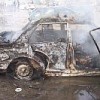
POLITICS: U.N. Remains Wary of Debate on Suicide Bombings
When the Security Council adopted a resolution last week extending the U.N.'s mandate in Afghanistan through March 2009, it expressed its "strong concern" over a growing new phenomenon in the politically-troubled South Asian nation: the increased use of children as suicide bombers.RELIGION: Unease Rises Over Anti-Islam Film
In announcing the release of his anti-Quran film, Geert Wilders, a member of the Dutch parliament, has generated a swell of media attention in the Netherlands in the past months. Politicians have urged him not to go ahead with the release of the film 'Fitna' because they say its controversial content may lead to national and international unrest.LEBANON: Children Learn That Religion Excludes
From East to West, the Arab region is afflicted with mounting religious divides that are increasingly affecting the well-being of the region's children. Lebanon's constitution, which splits power equally between Muslims and Christians, is no exception to this growing chasm.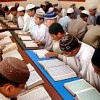
EDUCATION-PAKISTAN: Religious Schools – Boon or Bane?
Mehboob Illahi, 15, cannot wait to leave Pakistan and the Jamia Binoria, the largest madrassa (religious school) in Karachi, forever.LEBANON: Hopes of Peace from Lords of War
The pages of Lebanon's history are drenched in blood. And, more than 30 years after the start of the 1975 civil war, Lebanese factions are still pitted against each other in a confrontation with a recurring sectarian dimension amidst a volatile regional context.SERBIA: Russians Rediscovered as Old Friends
In the world of politics there is much talk now of the "traditional friendship between Russia and Serbia", meaning Russia's support to Serbia over the Kosovo crisis. But close ties go back much further - Serbia became home to thousands of Russians who fled communism 90 years ago.THAILAND: Islamic Teachers Blamed For Violent Separatism
As Thailand’s new government searches for fresh options to quell an escalating insurgency in the country’s south, its stance towards the region’s pondoks (Islamic schools), will be keenly watched.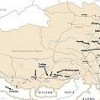
CHINA: Under Pressure to Rethink Tibet Policy
As continuing Tibetan protests testify to the failure of China’s policy of accelerated economic development with harsh political controls in the Himalayan region, pressure on Beijing to begin dialogue with the Dalai Lama, the exiled Tibetan leader, is growing.TURKEY: Ruling Party Risks 'Closure'
After four military interventions since 1960, another elected Turkish government risks being overthrown - this time by the judiciary.
CULTURE-US: In Hot New Comics, Capes Are Out, Koran Is In
Some visitors who arrived recently at a New York airport caused quite a stir - and no wonder. They were using their superpowers to stop two planes from colliding.
RELIGION: Beyond Tolerance, Togetherness
She was the white Christian woman who rose to preach in a mosque - the Malcolm Shabazz mosque in Harlem, New York – addressing close to 3,000 mostly Afro-American Muslims. Ten years later, about 40,000 people of all faiths, and many religious leaders from around the world, gathered in Rome to say 'thanks' to Chiara Lubich, who dedicated her life to the ideal of unity between nations, religions and races.
Q&A: "The Issue of Humiliation Is Tricky"
Launched by the United Nations in 2005, the Alliance of Civilisations (AoC) works to improve understanding and strengthen cooperative relations among nations and peoples across cultures and religions worldwide.POLITICS-US: Future Hazy for Bush’s Faith-Based Initiative
With the days of his administration numbered, President George W. Bush is working to shore up what was intended to be the centrepiece of his domestic policy agenda, his faith-based initiative.
RIGHTS-CHINA: Tibet Protests Won't Slow Olympic Torch
A crackdown on Tibetans protesting against Chinese rule over their Himalayan homeland - in the ancient capital of Lhasa and other Tibetan cities - is beginning to parallel the brutal suppression of the 1989 Tiananmen pro-democracy demonstrations.RIGHTS-NORWAY: That Question Again, Terrorists or Freedom Fighters?
Charges against three Somalis in Oslo of providing "support to terrorism" have outraged many Somalis in Norway. The charges are that the Somalis may have sent money to rebels in Somalia, but their defenders say they were supporting freedom fighters.TURKEY: Headscarves Become a Headache
Female students wearing headscarves are now admitted to the campus of Turkey's Sakarya University, some 200 km from the main metropolis Istanbul. They have benefited from recent constitutional amendments lifting the ban on the headscarf at universities, in place since 1988.RIGHTS-IRAN: Int’l Women’s Day Celebrations on Mute
Suppression of women’s movements and refusal to allow women to rally in public places by Iran’s hard line rulers kept celebrations of this year’s International Women’s Day confined to small gatherings in private residences.LEBANON: The Lights Are Going Out in Beirut
Sporadic gunfire erupts, breaking the silence of the night. A few police cars speed up, heading east. Their lights flashing in the dark and their sirens echoing across the shanty neighbourhoods, they rapidly cross the run down metallic Basta bridge in the direction of the shootout.POLITICS-MALAYSIA: Voters Go Secular, Snub Ruling Coalition
Malaysia's ruling National Front (NF) coalition has suffered its biggest setback in five decades of unbroken power, losing five state governments and the two-thirds majority it enjoyed in national parliament.
RIGHTS-PAKISTAN: Women Push For Political Space In Patriarchy
Saeeda Anwar is a 38-year-old Pakistani schoolteacher. She works in a school here in the capital of the North West Frontier Province (NWFP), but she is not allowed to exercise her franchise.« Previous Page — Next Page »





Religion plays a big and in some cases growing role in the socio-political dynamics within countries and often is a factor in civil and cross-border conflict, conflict resolution and peace building. From Burmese monks' marches to the role of religious fundamentalism, this dedicated site gathers IPS stories about how religion affects our world, from daily life to geo-politics.

The Week with IPS

NEXT STOP - SDGs
Tracking global progress towards a sustainable world
Tracking global progress towards a sustainable world
