Languages
Wednesday, October 28, 2026



News and Views from the Global South
Small Island Developing States

The AI Revolution – A Way Forward
Artificial intelligence (AI) is rapidly changing our world. It has helped a few companies in developed countries set record-breaking profits. Last month, Nvidia, a leading US AI company, hit a market value of USD 5 trillion.
Poor Countries Welcome Loss and Damage Fund’s Call for Requests, Warn It Falls Short of Needs
Least Developed Countries have hailed the debut call for proposals for the Loss and Damage Fund, which was launched on 11 November at the United Nations climate summit known as COP30 in Belem, Brazil.
Indigenous Knowledge Holders Want to Be Acknowledged
Generational lived experiences are key to confronting and living with a changing climate, say Indigenous knowledge holders and activists at the UN Climate Conference (COP30). As the first COP to be held in the Amazon region, in Belém, representatives of Indigenous communities reiterated the importance of generationally transferred knowledge and skills to adapt to and mitigate the threats posed by climate change.
Two-Thirds of Climate Funding for Global South are Loans as Rich Nations Profiteer from Escalating Climate Crisis
New research by Oxfam and the CARE Climate Justice Centre finds developing countries are now paying more back to wealthy nations for climate finance loans than they receive—for every USD 5 they receive, they are paying USD 7 back, and 65 percent of funding is delivered in the form of loans.
Weaving Wisdom and Science: Pacific Voices Call for Ocean Protection
In the packed conference hall of the Heritage Hotel, the sound of Pacific voices filled the air—not just through speeches, but in song, rhythm, and poetry. The Dreamcast Theatre Performing Arts group opened the Second Pacific Island Ocean Conference with an evocative performance, reminding leaders and practitioners why they had gathered: to listen. To listen to science. To listen to communities. To listen to the ocean itself.
Saving the Ocean – Act Now!
Like so many problems besetting the world, the existential threats facing small island states are all too obvious. Island nations are surrounded by the sea, and they depend on it for their livelihood and for their security. The sheer power of the sea can never be tamed but islanders have learnt to work with it and in doing so, there has always been a productive balance. But this balance, however, has been cast aside - the relationship has broken down. Our mighty ocean is in poor shape.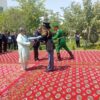
Why the Awaza Declaration Could Rewrite the Future for the World’s Landlocked Nations
The theater of diplomacy can be more revealing than the speeches. Under a scorching Caspian sun in Awaza, two marines lowered their flags with the precision of a ballet. The green silk of Turkmenistan, folded into a neat bundle before the UN’s blue-and-gold standard, fluttered briefly and vanished into waiting hands.
AfDB Commits 11 Billion Dollars To Support Early Warning Systems, Food Security in Rural Africa
As increasingly frequent droughts and devastating floods are affecting agricultural productivity, leaving millions of people food insecure in Africa amid a lack of climate finance, the African Development Bank (AfDB) has committed USD 11 billion to support various climate-resilient and infrastructure projects in rural areas.
Boosting Trade in the World’s Least Developed Countries – The Power of Technology
Artificial intelligence and the use of frontier technologies are already transforming trade and boosting prosperity, particularly for developed and some developing countries. This ranges from the digital exchange of documents, the digitalisation of trade processes and leveraging online platforms to fast-track cross-border trade.
Fiji’s Truth and Reconciliation Commission Aims To Restore Trust and Peace After Decades of Political Crises
Fiji, a nation located west of Tonga in the central Pacific, is renowned for its natural beauty and beach resorts. But for 38 years it has endured a political rollercoaster of instability with four armed coups that overturned democratically elected governments and eroded human rights.
Landlocked Developing Countries to Start ‘New Decade of Delivery’
As the Third United Nations Conference on Landlocked Developing Countries (LLDC3) concludes today (Friday, August 8) in Awaza, Turkmenistan, with the adoption of the Awaza Political Declaration and the formal endorsement of the Awaza Programme of Action (2024–2034), there is optimism that LLDCs are finally at the dawn of a new era.
Women From Landlocked Developing Countries Set Sights on Open Horizons
“Progress towards gender equality and equity remains uneven and far too slow. One in four women in landlocked developing countries (LLDCs) live in extreme poverty, and this is nearly 75 million women,” said Rabab Fatima, Secretary-General of the Third United Nations Conference on Landlocked Developing Countries or LLDC3 ongoing in Awaza, Turkmenistan.
Landlocked Developing Countries’ Group to Negotiate Way Out of Agricultural Catastrophe
Agriculture is a critical sector in landlocked developing countries, as more than half (55 percent) of the population is employed in the agriculture sector – significantly higher than the global average of 25 per cent. As such, the deterioration of food security in landlocked developing countries (LLDCs) is an unfolding catastrophe.
UN Chief Hails Turkmenistan’s Quiet Diplomacy as Launchpad for Landlocked Solidarity
In the glass-panelled hallway straddling Buildings 2 and 3 at the Awaza Congress Centre, two smartly dressed young Turkmens stood behind an ornate national pavilion—anxious, alert, and surprisingly eloquent.
How One Caribbean Country Is Changing the Face of Debt
The beauty of the majestic Piton mountains, vibrant culture, dazzling beaches and lush landscapes of Saint Lucia are invaluable assets. The country also takes pride in having two Nobel laureates, which is remarkable for a nation with a population of over 180,000.
Equal Footing: Building Pathways for Landlocked Developing Countries to Participate in Global Economy
Heads of State, ministers, investors and grassroots leaders are gathered in Awaza on Turkmenistan’s Caspian coast for a once-in-a-decade UN conference aimed at rewiring the global system in support of 32 landlocked developing countries whose economies are often ‘locked out’ of opportunity due to their lack of access to the sea.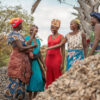
For LLDCs, the Next Decade Must be About Unlocking the Untapped Potential
As the world’s youngest and fastest-growing nations, LLDCs are home to immense untapped potential, yet remain cut off from the currents of international commerce and opportunity. Imagine being surrounded by opportunity, yet separated from it by mountains, borders, and vast distances from the nearest port—this is the daily reality for the world’s landlocked developing countries (LLDCs).
Spotlight on Landlocked Developing Countries Ahead of Third UN Conference
Landlocked developing countries face a unique set of challenges. Without coastal ports, they rely on transit nations, causing higher trade costs and delays.
Climate Change An Existential Threat To Humanity, Urges Action – ICJ
The case was “unlike any that have previously come before the court,” President of the International Court of Justice Judge Yuji Iwasawa said while reading the court's unanimous advisory opinion outlining the legal obligations of United Nations member states with regard to climate change.
Regaining Progress on Birth Registration Is Critical to Child Protection
Registering the birth of a newborn, which is taken for granted in many countries, has profound lifelong repercussions for a child’s health, protection, and well-being. But after initially increasing this century, the global birth registration rate has declined in the past ten years, with some countries in the Pacific and Sub-Saharan Africa facing significant challenges. Embracing new registration technologies, increasing political will, and increasing parents’ understanding of its importance are paramount to reversing the trend.
Atoll Nation of Tuvalu Faces Climate Existential Crisis, Frustration With Slow Funding
Prime Minister of Tuvalu, Feleti Teo, describes himself as an optimist—despite the existential crisis his atoll nation faces with climate change-induced sea level rise and frustration with existing international financial mechanisms to fund adaptation and mitigation.« Previous Page — Next Page »





The Week with IPS

NEXT STOP - SDGs
Tracking global progress towards a sustainable world
Tracking global progress towards a sustainable world
