Languages
Saturday, October 17, 2026



News and Views from the Global South
Arabs Rise for Rights

Libya’s “Other” Victims
Suleyman and Rasool have come to the University of Bani Walid, in western Libya. If they are lucky they might find some chemistry notes and, perhaps, a computer that works. Unfortunately it is not likely, since NATO reduced the campus to rubble.
EGYPT: First Woman Candidate Begins Campaign
When post-revolution Egypt holds presidential elections next year, Buthaina Kamel is set to become the first woman in the country's modern history to run for the highest office. Although she knows her chances of winning are slim to none, she says she's doing it out of principle.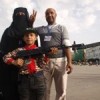
LIBYA: After Gaddafi, Unease Rules
"The war is over and Gaddafi already buried. What else could we possibly ask for?" says Adnan Abdulrafiq at his busy street restaurant in Omar Mukhtar street in downtown Tripoli. But troubles may not have ended with the war.Yemeni Women Burn Veils to Protest Killings
Hundreds of Yemeni women have set fire to traditional female veils in protest against the government's brutal crackdown on the country's popular uprising, as overnight clashes in the capital and another city killed 25 people, officials said.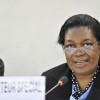
Attacks on Human Rights Defenders Cast Wide Shadow
A chair stood empty at the launch here Monday of a report on the repression of human rights defenders, a physical reminder that its would-be occupant - Ales Bialiatski, president of Human Rights Centre Viasna in Belarus – has been languishing in prison since August.EGYPT: Mubarak Men Begin to Resurface
Members of the regime of ousted dictator Hosni Mubarak have demanded to be allowed to run in upcoming elections and warned of violence if legislation to prohibit their political ambitions is passed.LIBYA: Hatred Divides Libya After Gaddafi
The long-time dictator who ruled Libya for nearly four decades with an iron fist may be gone, but racial hatred surfaces increasingly now by the day.TUNISIA: Women Seek to Set Their Stamp
Nine months after a popular election toppled the dictatorship of former Tunisian president Zine Abidine Ben Ali, voters headed to the polls Sunday to cast their ballots for fresh leaders to rewrite the laws of the country's political system.EGYPT: Bumpy Ride to a New Human Rights City
The upheaval of the Arab Spring has provided fertile ground to plant the seed of a new framework for human rights that moves beyond monitoring violations. Rights advocates want to integrate human rights into the fabric of daily life and are working at the community level to establish the first Human Rights City in the Middle East.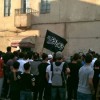
TUNISIA: Islamist Violence Rises Ahead of Elections
Violent and increasingly common protests organised by far right Islamists are shocking and dividing the nation, and potentially threatening stability in the birthplace of the Arab spring.U.S.-LIBYA: Obama Claims Vindication
The death of former Libyan leader Col. Muammar Gaddafi was hailed here Thursday by both the administration of President Barack Obama and some of his Republican foes as the latest in a series of victories for U.S. foreign policy.Rights Groups Demand General Assembly Action on Syria
A coalition of 29 international human rights organisations is appealing to the 193-member General Assembly to act "immediately" to help halt the unbridled violence in Syria which has claimed the lives of over 3,000 people, mostly civilians, since the political protests began last March.As 2012 Polls Loom, Caution’s the Word for Obama Foreign Policy
U.S. presidents seeking a second term are not known for taking risks in foreign policy in election years.
OP-ED: A Long and Winding Road to the End for Gaddafi
I came across an anti-Gaddafi demonstration for the first time in February 2011 in Baghdad's Tahrir square.LIBYA: Muammar Gaddafi Killed as Sirte Falls
Muammar Gaddafi has been killed after National Transitional Council fighters overran loyalist defences in Sirte, the toppled Libyan leader's hometown and final stronghold.Doubts Shadow Egyptian Election
Egypt's interim government has begun accepting candidacy applications for parliamentary polls slated to begin Nov. 21. But as the country prepares for its first post-Mubarak elections, a number of political parties say they are considering boycotting the contest.Rights Groups Praise U.S. Hold on Bahrain Arms Sale
A State Department announcement that it will delay the shipment of 53 million dollars in new arms to Bahrain pending the results of an international commission investigating alleged abuses by the kingdom's security forces earlier this year has evoked mixed reactions from human rights groups here.Syrian National Council Seeks Legitimacy At Home and Abroad
As the death toll from more than six months of popular unrest climbs past the 3,000 mark, the opposition to the government of President Bashar al-Assad is intensifying efforts to present a unified face to both the outside world and the Syrian people.
Young Gather to Show Their Power
With young people spearheading the revolutionary movements in the Middle East and other regions, the seventh Youth Forum taking place here this week has particular relevance, participants say.
TUNISIA: Islamists Rise Uncertainly After Repression
Aggressively repressed and forced underground by the recently deposed dictator Zine Abadine Ben Ali, the Tunisian Islamist party Ennahda is poised to become the dominant force in Tunisian politics.TURKEY: In Border Province, Syrian Refugees Live in Limbo
Four months ago, the international media were replete with reports of Syrian civilians fleeing Bashar al-Assad's regime into southern Turkey. Today, media both in and outside of Turkey appear to have forgotten the plight of these refugees.« Previous Page — Next Page »





The Arab Spring has changed the Arab seasons that have followed; it had to. The struggle continues in Syria; in Tunisia, Egypt, Libya and in countries that did not change that dramatically, such as Bahrain and Yemen, the political world, and the tone of society itself has changed. IPS has not left these countries with the headlines that accompanied cataclysmic changes. We continue to track changes closely, always keeping in our sights first the rights of peoples, and then reporting changes from fresh, newsy and human perspective.

Middle East & North Africa


