Languages
Friday, September 18, 2026



News and Views from the Global South
Arabs Rise for Rights
LIBYA: Conflicting Interests Cloud Military Intervention’s Objectives
Conflicting national and electoral interests as well as clashing military and political objectives and potential are jeopardising the U.S.-Europe led military mission to implement the no-fly zone over Libyan territory, as stipulated by U.N. Security Council resolution 1973.
Regional Support Erodes for Air War on Libya
When the United Nations Security Council Resolution (UNSCR) imposing a no-fly zone in the airspace of the Libyan Arab Jamahiriya passed Thursday by a predicted 10-0, no one stopped to ask what ends the means of military force hoped to achieve.Top Army Commanders Defect in Yemen
Several top Yemeni army commanders have declared their support for anti-government protesters seeking the resignation of the country's president, Ali Abdullah Saleh.EGYPT: Revolutionary Youth Give Clinton The Cold Shoulder
U.S. Secretary of State Hillary Clinton last week paid a highly-publicised visit to Cairo's Tahrir Square, the epicentre of Egypt's recent popular uprising. But young leaders of the revolution declined an invitation to meet with her, citing Washington's tepid support for anti-government protesters over the course of the 18-day rebellion.LIBYA: Uprising Revives Entrenched Racism Towards Black Africans
Libyan President Muammar Gaddafi's use of African mercenaries to quell the uprising against his autocratic regime has revived a deep-rooted racism between Arabs and black Africans.Syria Protesters Torch Buildings
Crowds have set fire to the courthouse and other buildings on a third straight day of demonstrations in the southern Syrian city of Daraa.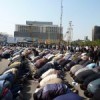
Muslim Brotherhood Goes Mainstream in Egypt
Egyptians voted in a nationwide referendum yesterday on proposed amendments to the constitutional articles that govern the electoral process. But regardless of the outcome, political analysts are certain that the Muslim Brotherhood, outlawed throughout the 30-year rule of ousted president Hosni Mubarak, remains poised to be an electoral force to be reckoned with.High Turnout Marks ‘Orderly’ Egypt Vote
Long lines, orderly queues and a mostly calm and jubilant atmosphere marked Egypt's first nationwide vote since a popular uprising forced Hosni Mubarak, Egypt's long-time president, to step down in February, leaving the country without a constitution and under the control of an unelected military council.LIBYA: Broad German Consensus Against a ‘Risky War’
The decision by the German government not to support the U.N. Security Council resolution adopted last Thursday to establish a "no-fly zone" in Libyan airspace expresses a widespread concern in Germany against military interventions abroad.LIBYA: Obama Threatens Military Action if Attacks Resume
U.S. President Barack Obama issued an ultimatum to Libyan leader Muammar Gaddafi on Friday, less than 24 hours after the United Nations Security Council passed a resolution to "take all necessary measures" short of deploying an "occupation force".
Deep Divisions Over Egypt’s Referendum
Egyptians go to the polls Saturday to vote on a package of constitutional amendments which, in some ways, mirrors the longtime demands of the Egyptian opposition.
Libya Declares Immediate Ceasefire
Libya's government has announced it will halt all military operations in the country hours after the United Nations Security Council backed a no-fly zone over the country.U.S. Congress Weighs Aid Package to Post-Mubarak Egypt
As Egypt braces for Saturday's vote on constitutional amendments in its first referendum since the revolution, lawmakers here are seeking to address the North African country's economic situation in addition to immediate political developments, by introducing legislation that seeks to stimulate foreign direct investment (FDI).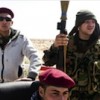
U.N. Body Authorises Military Intervention in Libya
As Libyan leader Muammar el-Gaddafi's fighter planes and helicopters continue to mercilessly pound civilians and rebel groups inside Libya, the U.N.'s most powerful political body voted to militarily intervene in the besieged North African country in an attempt to prevent and neutralise the attacks.Palestinian Protests Mark ‘March 15 Day of Rage’
Tens of thousands of Palestinians from across the political spectrum took to the streets throughout the West Bank and Gaza on Tuesday to mark 'March 15, the day of rage' to protest the political division between Hamas and Fatah.Military Intervention in Libya May Already Be Irrelevant
As the White House and its partners in the international community inch closer to a decision over military action in Libya, while Muammar Gaddafi's forces advance steadily into rebel-controlled territory, some analysts argue that the intervention debate is nearing irrelevance after raging unabated for almost a month.
BANGLADESH-LIBYA: Garment Industry Pledges to Employ Evacuated Labourers
Bangladesh's garment factories and overseas recruiting agencies have pledged to employ a substantial number of Bangladeshi expatriates returning from politically volatile Libya, following the violent crackdown on opposition forces by Muammar Gaddafi's regime there.Deadly Crackdown on Bahrain Protesters
At least two people are dead and hundreds injured after security forces in Bahrain drove out pro-democracy protesters from the Pearl Roundabout in the capital, Manama.BAHRAIN: Saudi Intervention Likely to Bring Regional Blowback
Saudi Arabia's incursion into neighbouring Bahrain is a risky move that could further inflame domestic unrest in both countries and give a propaganda boost to Tehran's campaign to cultivate the Arab street.Bahrain Imposes State of Emergency
The king of Bahrain has declared a state of emergency for three months on the island following weeks of anti-government protests, as deadly clashes continued across the country.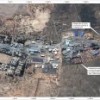
LIBYA: Satellite Technology to Help the Displaced
Analysis based on satellite images and maps is helping to identify the flows of people fleeing the political violence in Libya to neighbouring countries.« Previous Page — Next Page »


The Arab Spring has changed the Arab seasons that have followed; it had to. The struggle continues in Syria; in Tunisia, Egypt, Libya and in countries that did not change that dramatically, such as Bahrain and Yemen, the political world, and the tone of society itself has changed. IPS has not left these countries with the headlines that accompanied cataclysmic changes. We continue to track changes closely, always keeping in our sights first the rights of peoples, and then reporting changes from fresh, newsy and human perspective.

Middle East & North Africa


