Thursday, October 22, 2026



News and Views from the Global South
Integration and Development Brazilian-style
Belo Monte Dam and Hunters Endanger Amazon Turtles
Luiz Cardoso da Costa was horrified as he watched the Amazonian manatee, a large docile beast, bleeding out from the knife wound he had dealt it, yet greedily gulping down grasses as if eating could somehow stave off death.
BRAZIL: Boycott of Dam Hearing Shows ‘Radical’ Foreign Policy Shift
Activists opposed to the construction of the Belo Monte hydropower dam in the Amazon jungle say the Brazilian government's decision to boycott an Inter-American Commission on Human Rights hearing represents a "radical" shift in the country's foreign policy.BOLIVIA: Native Protesters Celebrate Law Cancelling Rainforest Road
With victory cheers and predictions of future campaigns in defence of their ancestral territory, indigenous protesters from Bolivia's Amazon jungle region celebrated the new law that banned the construction of the road through their rainforest reserve.
BRAZIL: Costly Water for the Poor Northeast
The visual impact is harsh: flattened hills, valleys full of mud, and kilometres and kilometres of bulldozed land - the modification of nature in Brazil's semiarid Northeast region is disturbing due to the enormous dimensions involved.
BRAZIL: Shark Attacks Attest to Environmental Sins of Suape Port
The Suape port complex may be eternally absolved of its environmental sins for ushering in unprecedented prosperity in the impoverished northeastern Brazilian state of Pernambuco, and for having been built before stricter requirements were introduced.
BRAZIL: Suape Port Complex, the Locomotive of the Northeast
Silvio Leimig was 18 years old and had just earned his driver's licence when he visited Suape, a port 40 km from his home in Recife, the capital of the state of Pernambuco in Brazil's Northeast region, in the early 1980s.BRAZIL: Water Mega-Project for the Thirsty Agreste
The development of one part of Brazil's semiarid Northeast, the Agreste region in the state of Pernambuco, could begin with the construction of canals that will bring in water diverted from the São Francisco River.BOLIVIA: General Strike Protests Crackdown on Native March
Bolivia's main trade union declared a 24-hour general strike Wednesday to protest Sunday's police crackdown on indigenous demonstrators who were protesting the construction of a road through a pristine rainforest preserve.
BRAZIL: Logistics Drives Tardy Industrialisation in Northeast
The steel and oil industries are still finding new frontiers for expansion. In Brazil's impoverished semiarid Northeast the key is not, like in China, cheap labour power or abundant raw materials, but logistical advantages.CLIMATE CHANGE-BRAZIL: Farmers “Have Good Reason to Worry”
Bananas are harvested where apples used to grow; cassava, a traditional crop, is disappearing from the Northeast; and the southeast is losing the fragrance of good coffee. This is the science fiction of a new distribution of crops in Brazil, South America's agricultural powerhouse.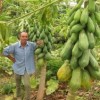
BRAZIL: Every Raindrop Counts
Brazil is considered a country rich in water resources, with its enormous underground aquifers and mighty rivers. But recognition of the vital importance of rainwater begins where it is most scarce: in the semiarid interior of the northeast.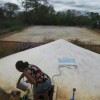
BRAZIL: Beating Drought in Semiarid Northeast
Violent clashes looked inevitable when some 1,500 desperately hungry peasants poured into this small Brazilian town. Riot police were staked out to prevent looting. It was the year 1993, and millions of people in Brazil's impoverished semiarid Northeast had been forced to the brink of starvation by three years of drought.
BOLIVIA: Rainforest Road Will Have Environmental and Cultural Impacts
A richly biodiverse rainforest the size of 3,000 soccer fields in central Bolivia will be the first victim of the road planned to run through the Isiboro Sécure Indigenous Territory and National Park (TIPNIS), say environmental activists.
BRAZIL: Rainforest Defenders Marked for Death
Raimundo Francisco Belmiro dos Santos, a defender of the Amazon jungle, has requested urgent protection from the authorities in Brazil after reporting that a number of hired gunmen are looking for him, because landowners in the northern state of Pará have offered a 50,000 dollar contract for his death.
BOLIVIA: Morales Clashes with Native Protesters over Road through Tropical Park
The lack of regulations for consulting indigenous communities in Bolivia on initiatives that affect their territories is at the heart of a dispute over a road to facilitate traffic from Brazil, which would run through an enormous tropical national park self-governed by indigenous communities.
BRAZIL: Industrial-Port Complex Fuels Growth in Desolate Northeast
The port of Pecém in Brazil's impoverished Northeast region received a large order to unload and store cement factory equipment imported from China. The port authorities were unable to accept the original order, as the cargo would have occupied 40,000 square metres of storage space, nearly half the total available.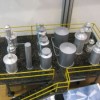
BRAZIL: Biofuel Production – Local Development or Social Breakdown?
Biofuels are an alternative energy source that can drive local development by generating jobs, know-how and technology. But they can also cause social damage, as locals fear in the case of industrial-scale exploitation of babassu palm trees, which grow abundantly in the wild in central and northern Brazil.BOLIVIA: Amazon Road Plan Has Native People on the March Again
Indigenous people in the eastern lowlands of Bolivia are again preparing to make the long march to La Paz, 21 years after their first such protest. They have vowed to make the trek in defence of their lands, which they say are threatened by plans for a highway to be built with the backing of the Brazilian government.
BRAZIL: Soy Boom Drives Westward Expansion of Railroads
Despite challenges like high interest rates and high household electricity tariffs, the Brazilian economy has been growing at the highest rates seen in decades. Another problem that, although it has not stood in the way of growth, must be overcome is the costly use of roads for transporting farm products – an issue that is being addressed by the expansion of railway networks.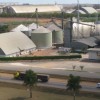
BRAZIL: Family Farms Fight for Survival in Sea of Soy
A bullet to his shoulder forced him to spend seven days in the hospital. In another attempt on his life, he was shot at three times, but miraculously escaped unscathed. "I will never sit next to a window again," says Brazilian rural activist Walter Moura.
ENERGY-BRAZIL: Small Dams, Big Problems
Several rivers in the western Brazilian state of Mato Grosso are likely to become chains of artificial reservoirs feeding small hydroelectric plants (SHP), sometimes with larger power stations in between.« Previous Page — Next Page »





South American imperialist power, or integrationist power? The role currently played by Brazil is perhaps located midway between these two extremes. On the other hand, there is no doubt about the dynamic nature of its economy or the influence of its corporations in Latin America. Wherever infrastructure, energy or the extraction of natural resources transcend borders in the region, Brazil tends to be a key player. What are the risks? What is the potential? What kind of development do dams and other major projects underway foment? What effect will they have on the population, and on nature? What will the new geopolitical order that is taking shape look like? With the support of the Mott Foundation, IPS is launching a series of investigative reports by Brazilian correspondent Mario Osava and a team of outstanding journalists in other key parts of the region, to produce a picture of the new course Brazil is taking in Latin America.

The Week with IPS

Tracking global progress towards a sustainable world