Monday, October 26, 2026



News and Views from the Global South
Integration and Development Brazilian-style
PERU: Dam Project Temporarily Suspended to Calm Protests
The outgoing government of Peruvian President Alan García has suspended construction of the Inambari hydroelectric complex, part of an energy deal with Brazil. But activists say the move is merely aimed at calming tempers among local people opposed to the dam, while handing the problem on to García's successor, president-elect Ollanta Humala.
Hydropower Dams Hurt Amerindians in Brazil and Canada
Michael Lawrenchuk, a Cree political activist from Canada, was given a standing ovation at the International Hydropower Association congress held in this Brazilian border town, after depicting the suffering of his people since dams began to be built on rivers across their land.CUBA: South-South Diplomacy Props Up Economic Modernisation
The diplomatic offensive undertaken by Cuba in recent weeks is propping up the most important medium-term development programmes implemented as part of what the Raúl Castro government describes as the "updating" of the economic system without abandoning socialism.
BRAZIL: Amazon Dams Mean Progress for Some, Lost Livelihoods for Others
The Amazonian town of Mutum-Paraná, in the northern Brazilian state of Rondônia, is disappearing. Its last remaining buildings must be dismantled before it is flooded by the construction of the Jirau hydroelectric dam on the Madeira River.ARGENTINA-PARAGUAY: Giant Dams Touted as Development
The Yacyretá hydroelectric dam run by Argentina and Paraguay is fully operational, supplying the energy it was designed to provide when it was built 40 years ago. But critics complain about severe social and environmental impacts.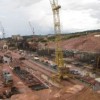
BRAZIL: Megaprojects Revive Class Struggle
The rage was proportional to the size of the crowd cornered between the jungle and the wall that will dam up the Madeira River in northwest Brazil. Over the space of three days, workers set fire to some 50 buses and other vehicles, work installations and even their own lodgings, which were built to house 16,000 people.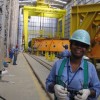
BRAZIL: Women Break Down Barriers in Heavy Construction
They represent just seven percent of the workers building the Santo Antonio hydroelectric dam on the Madeira River, which cuts across the Amazon jungle in northwest Brazil. But the women workers total 1,200, and many of them have had to break down barriers to jobs seen as the preserve of men.
BOLIVIA: Dam Spells Hope and Fear for Small Jungle Town
Arturo Sánchez, 72 years old and nearly blind, dreams of bringing ecotourism to Cachuela Esperanza, a Bolivian town of 1,336 people on the Beni river, and hopes the construction of a huge hydroelectric dam will give a boost to his dreams.BRAZIL: From Development Aid Recipient to Donor
Although Brazil's international development funds are still small compared to those of the industrialised world, the South American giant's foreign aid has grown considerably in the last eight years, and the country has gone from beneficiary of development assistance to donor.
Emerging Powers Harnessing Neighbours’ Hydroelectricity
Emerging countries like Brazil and China are building numerous hydroelectric dams at home and abroad to help drive their economic growth. But while in Latin America the phenomenon is touted as an integration process, in Asia it has generated tension over the shared use of rivers.
BRAZIL: Sugar Cane Fields Turned into Industry in Sertãozinho
"A disappointment" was his first impression of his new city. It was small, half the size of his hometown of Barretos, and had "weak lights," says Marcelo Pelegrini, remembering his family's move to this southern Brazilian city when he was nine years old, after his father got a job transfer.
BRAZIL: Belo Monte Dam Faces Endless Hurdles and Controversies
The Xingu river flows around small isles and islands and across rapids and waterfalls in Brazil's Amazon jungle, and has a dramatically reduced flow during dry season. Navigating it presents constant hurdles and risks.
BRAZIL: Women Workers Determined to Ride the Wave of Mechanisation
"She's crazy" said most of the husbands and other family members of the 34 women who decided to become operators of sugarcane harvesters in the southern Brazilian state of São Paulo, attracted by the opportunity of better pay and encouraged by the growing mechanisation of the industry.
Sugar Cane and Ethanol Boom Drives Development in Southern Brazil
The roads are exceptionally good and numerous here, in contrast with other parts of Brazil, but the monotony of the landscape is not inviting to tourists. Sugar cane fields stretch to the horizon along a 400-km stretch of highway to the north of São Paulo.
China and Brazil Inundate Latin America with Dams
The growing presence of Chinese and Brazilian capital in Latin America's energy sector is facilitating the construction of hydroelectric complexes, but is also the fuelling nationalist stances that are adding to the environmental criticisms of those major projects.
BRAZIL: “Don Quixote” of River Transport Starting to Win Battles
It is mere ignorance that stands in the way of Brazil having a broad network of navigable waterways and leads to the wasted potential of the country's great rivers, laments José Alex de Oliva, superintendent of inland navigation at Brazil's national waterways transport regulator (ANTAQ).
BRAZIL: Oil Palm Plantations Expand on Degraded Land in Amazon
Brazil hopes to eventually become a major producer of palm oil, thanks to the expansion of this new exotic monoculture crop in the eastern Amazon jungle, where eucalyptus plantations are also mushrooming on broad swaths of already deforested land.
BRAZIL: Mitigating Impacts of Progress in Amazon Jungle
"We want real compensation," said Luis Nascimento de Freitas, a fisherman from Vila Teotonio, a ramshackle town on the banks of the Madeira River that will be flooded when the Santo Antonio hydroelectric plant is completed.Brazil Keeps a Grip on Bolivia’s Natural Gas Industry
Brazil's state-owned oil company Petrobrás maintains a solid and vigorous presence in natural gas production within Bolivian territory, even with the nationalisation of petroleum and gas in 2006 led by Bolivia's left-wing President Evo Morales.
BRAZIL: Link to the Pacific: Road, Rail or Ship?
A land route to the Pacific, long coveted by Brazil, would not reduce the cost of transporting Brazilian exports to China and other markets in Asia and would not make them more competitive, as advocates of paving roads and building bridges through the Amazon jungle argue.
Brazil’s Capitalist Invasion Builds Socialism ‘a la Venezuela’
Bridges, railroads, petrochemicals, steel mills, electricity, aqueducts, agriculture, meat-processing plants, ship building and even cable cars: Brazil's powerful entrepreneurial arm is reaching towards the Caribbean, via Venezuela, where the Hugo Chávez government is working to build what it calls "21st century socialism."« Previous Page — Next Page »





South American imperialist power, or integrationist power? The role currently played by Brazil is perhaps located midway between these two extremes. On the other hand, there is no doubt about the dynamic nature of its economy or the influence of its corporations in Latin America. Wherever infrastructure, energy or the extraction of natural resources transcend borders in the region, Brazil tends to be a key player. What are the risks? What is the potential? What kind of development do dams and other major projects underway foment? What effect will they have on the population, and on nature? What will the new geopolitical order that is taking shape look like? With the support of the Mott Foundation, IPS is launching a series of investigative reports by Brazilian correspondent Mario Osava and a team of outstanding journalists in other key parts of the region, to produce a picture of the new course Brazil is taking in Latin America.

The Week with IPS

Tracking global progress towards a sustainable world