Monday, October 19, 2026



News and Views from the Global South
Integration and Development Brazilian-style

Brazil Shores Up Industry to Keep Its Place as Emerging Power
The recovery of industry in Brazil, in the face of the global economic crisis that has accentuated the loss of competitiveness against manufactured products from abroad, is a high-priority task for the government in its attempt to keep the economy on a growth path.
Small Dams – from Heroes to Villains in Brazil
A recent Brazilian court decision to suspend construction of small hydroelectric dams along the Paraguay River has highlighted the doubts raised about a growing alternative source of energy that until recently was considered one of the most environmentally-friendly sources.
Indigenous Consultations in Peru to Debut in Amazon Oil Region
Peru will debut a new mechanism for prior consultation with indigenous peoples by seeking their approval for a new stage of oil drilling operations in the infamous Lot 1AB in the northeastern Amazon region of Loreto.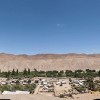
Ruling Against Thermoelectric Plant Sparks Debate
A Chilean Supreme Court decision ordering a halt to the construction of the Castilla thermoelectric power plant has sparked a debate over the country’s energy security.
In Uruguay, the Answer Is Blowing in the Wind
Uruguay needs to reinforce and expand its electric power grid to absorb the 1,200 megawatts of wind energy that it plans to generate by 2015.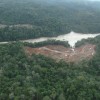
Hydropower Dam to Flood Sacred Amazon Indigenous Site
The Sete Quedas or “seven waterfalls” on the Teles Pires River, which runs through the Amazon rainforest states of Mato Grosso and Pará in central Brazil, are a spiritual oasis venerated by several indigenous groups.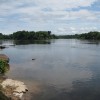
Belo Monte Dam Can No Longer Ignore Native Communities
A judicial order to halt construction of the Belo Monte dam in Brazil’s Amazon rainforest may be just one more battle in a long-drawn-out war in the courts over the controversial hydroelectric project.
Small-scale Fisherfolk in Rio de Janeiro – a Vanishing Species
"My sons will be anything, but never fishermen,” said 32-year-old Maicon Alexandre, the youngest of the leaders of Ahomar, a union of small-scale fisherpeople on the outskirts of Rio de Janeiro.
Americas Team Avoids Paraguayan Rights Groups
Paraguyan rights groups are disappointed at being denied access to a delegation of the Organisation of American States (OAS) sent in this week to discover the facts behind the impeachment and removal of President Fernando Lugo on Jun. 22.
Paraguay’s Isolation Grows
Paraguay’s isolation, following the impeachment and ouster of President Fernando Lugo 11 days ago, has grown thanks to slender recognition for the new government and souring diplomatic relations with the neighbours.
Venezuela’s Mercosur Entry Sparks Dissension
By simultaneously admitting Venezuela into its fold and suspending Paraguay’s membership, Mercosur has sparked dissension within the trading bloc that threatens the future legal architecture of the Southern Common Market.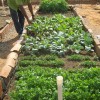
Cilantro Spices Up Coexistence with Drought in Brazil
Many grow lettuce, tomatoes, carrots, beets and other vegetables. But cilantro is ever-present in the gardens that are helping rural families weather the lengthy drought that is once again wracking Brazil’s impoverished Northeast.
Brazil Closes Symbol of Environmental Degradation, Ahead of Rio+20
As Rio de Janeiro prepares to host the United Nations Conference on Sustainable Development, which will discuss the green economy, the Brazilian city has put an end to one of its worst environmental sins: the enormous Jardim Gramacho garbage dump on Guanabara Bay.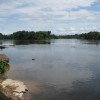
Belo Monte Dam Hit by Friendly Fire
Those who made the final decision on the design of Brazil’s Belo Monte hydroelectric dam will face legal action in the future for the damages caused. This is the kind of warning one would expect from environmentalists, but in this case it comes from a surprising quarter: staunch supporters of hydropower.
Brazil Drives Energy Integration in South America
Energy integration in South America will be a reality "in the medium to long term," driven by hydropower and drawing on Brazil’s experience, predicts Altino Ventura Filho, secretary of planning in this country’s Ministry of Mines and Energy.Energy: Chilean Community Wins First Round Against Brazilian Billionaire
Plans to build a massive thermoelectric power plant complex near an area of rich marine biodiversity has sparked fierce opposition from the small northern Chilean farming town of Totoral, which has now scored its first victory in court.
Tense Tug-of-War over Peru-Brazil Energy Agreement
Brazil is keen to move ahead quickly with the construction of hydropower plants in neighbouring countries to supply its demand for electricity. But Peru is still stalling on an agreement between the two countries, due to a number of conflicting interests and demands.
Brazil, Emerging South-South Donor
The Brazilian government is stepping up South-South aid, to strengthen the South American giant’s status as a donor country and its international clout. It now provides assistance to 65 countries, and its financial aid has grown threefold in the last seven years.
BRAZIL: A Curse on Hydropower Projects in the Amazon?
"Perhaps it's the curse of Rondônia," joked Ari Ott, referring to teething troubles with the first turbine of the Santo Antônio hydroelectric plant which was intended to kick off a new cycle of huge power projects in Brazil's Amazon jungle region.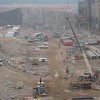
Brazil’s Construction Boom Eases Integration of Haitians
Pierre was in the next-door country of Dominican Republic when the January 2010 earthquake destroyed half of Port-au-Prince and killed at least 200,000 of his fellow Haitians, including his wife and his mother.
Not Everyone on Board with Mesoamerica Development Plan
Ten years after its launch under a different name, the Mesoamerica Project, which involves major investments in energy, telecommunications, housing, health and other areas, is moving ahead slowly and continues to face scepticism that it will have a real impact against poverty.« Previous Page — Next Page »





South American imperialist power, or integrationist power? The role currently played by Brazil is perhaps located midway between these two extremes. On the other hand, there is no doubt about the dynamic nature of its economy or the influence of its corporations in Latin America. Wherever infrastructure, energy or the extraction of natural resources transcend borders in the region, Brazil tends to be a key player. What are the risks? What is the potential? What kind of development do dams and other major projects underway foment? What effect will they have on the population, and on nature? What will the new geopolitical order that is taking shape look like? With the support of the Mott Foundation, IPS is launching a series of investigative reports by Brazilian correspondent Mario Osava and a team of outstanding journalists in other key parts of the region, to produce a picture of the new course Brazil is taking in Latin America.

The Week with IPS

Tracking global progress towards a sustainable world