Wednesday, October 7, 2026



News and Views from the Global South
Integration and Development Brazilian-style

Brazil Promotes a Freer Global Biofuels Market
Holding this year's presidency of the Group of 20 (G20) large industrial and emerging economies is allowing Brazil to push forward the dream of creating a global biofuels market without the current trade barriers.
Mexican Cooperative Promotes Energy Transition on Indigenous Lands
What began as a search for fair prices for indigenous handicrafts in 1985 has evolved into a women's organisation in Mexico that promotes climate justice while advocating for land and environmental rights.
Solar Energy Saves Dairy Cooperative in Brazil’s Semi-Arid Region
“Ixe! If it wasn't for solar energy, we would have closed down, you can be sure. We had to stop due to the pandemic on 15 March 2020, but the energy costs were fixed,” said Erika Cazuza, administrative and financial manager of the Brazilian Cooperative of Rural Producers of Monteiro (Capribom).
Small Farmers Reap Growing Benefits From Solar Energy in Chile
The production of solar energy by means of panels installed on small farmers' properties or on the roofs of community organisations is starting to directly benefit more and more farmers in Chile.
Biogas, a Circular Energy, Advances in Brazil Thanks to Local Arrangements
“I don't know of a more sustainable technology for the transformation of society than biogas,” said Professor Alex Enrich-Prast, an activist for this energy alternative with a highly diversified and decentralised expansion in Brazil.
Solar Panels Aim to Protect Mexican Family Farming
Verónica Molina, an indigenous Comcaac woman, first came into contact with solar energy in 2016, when she travelled to India for training on communal photovoltaic facilities. This later enabled her to take part in the installation of the first solar systems and family vegetable gardens in her community, Desemboque del Seri, in northern Mexico.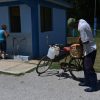
A Cuban Town Improves Water Quality Through Desalination
Overnight, hundreds of people in the rural community of Las Mangas, located in Granma province in eastern Cuba, realised something they had already suspected: that the water they had been drinking for decades was not exactly crystal clear, but rather “salty”, as they say.
Clean Energy Boosts Autonomy for Brazilian Women Farmers – VIDEO
 A community bakery, family production of fruit pulp, and the recovery of water springs are some of the initiatives of the Energy of Women of the Earth, organised since 2017 in the state of Goiás, in central-western Brazil.
Micro-Dams, a Solution to Water Shortages in Rural Brazil
Water shortage is over, springs have emerged or become perennial, small ponds with fish have formed and pastures have become greener and more permanent, all thanks to the ‘barraginhas’, the Portuguese name given in Brazil to micro-dams that retain rainwater and infiltrate it into the soil.
Hydrogen from Renewables or Fossil Fuels? The Panamanian Question
In 2021, the Panama Canal welcomed a French experimental ship on a world tour, the Energy Observer, the first electric vessel powered by a combination of renewable energies and a hydrogen production system based on seawater.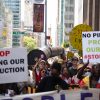
Sportwashing Allegations at Africa’s Top Football Tournament
Following the recent Africa Cup of Nations (AFCON) tournament in Ivory Coast, a continent-wide campaign has emerged on social media challenging the tournament's main sponsor, TotalEnergies, over its involvement in the East African Crude Oil Pipeline (EACOP).
Life or Energy: The Hydroelectric Dilemma in Amazonian Brazil
The decade-and-a-half-long battle for life in the so-called Volta Grande (Big Bend) of the Xingu river, a stretch of the river dewatered by the Belo Monte hydroelectric power plant in the Brazilian Amazon, has a possible solution, albeit a partial one.
Belém Improving to Host 2025 Climate Summit in Brazil
Hotels and other amenities may be lacking for participants at the 30th Conference of the Parties on Climate Change (COP30), in this northern Brazilian city in late 2025, but the bottom line is they will have a unique experience in the Amazon.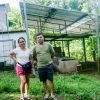
Rural Communities in El Salvador Get Their Water Supply from the Sun
Setting up a community water project with a solar-powered pumping system was an unlikely idea for the peasant families of a Salvadoran village who, despite their doubts, turned it into reality and now have drinking water in their homes.
Megaport in Brazil Makes No Contribution to Local Development
With barely 10 years in operation, the port of Açu is now the second in Brazil in cargo transport and seeks to become an industrial and energy transition hub. But so far it has contributed little to local development, causing environmental and social damage.
Mexico Struggles to Cut Emissions from its Ports
The port of Pichilingue, in northwestern Mexico, faces challenges in decarbonising its activities, as do other maritime infrastructures in the country, while its polluting emissions are increasing.
A River’s Contrasts and Inequalities in the Arid Lands of Brazil
Osmir da Silva Rubez refuses to join the drip system, and is the only one among the 51 families living in the Mandacaru Public Irrigation Project in Juazeiro, a municipality in the state of Bahia, in the Northeast region of Brazil, to maintain the furrows that carry water to their crops.
Solar Energy, Vetoed as a Source of Income for the Poor in Brazil
“I feel like a mother who lost her son to drugs, to vice, destroying himself,” says Lucineide da Silva, 56, mother of eight children and grandmother of 11.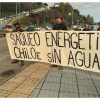
Rainy Chiloé, in Southern Chile, Faces Drinking Water Crisis
The drinking water supply in the southern island of Chiloé, one of Chile's rainiest areas, is threatened by damage to its peatlands, affected by sales of peat and by a series of electricity projects, especially wind farms.
Using Industrial Waste to Fight Pollution in Brazil
Biogas sounds like redemption, the conversion of the sinner. Its production involves extracting energy from filth, from the most disgusting environmental pollution, and at the same time avoiding the worsening of the global climate crisis.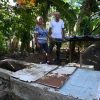
Cuban Family Harnesses Biogas and Promotes its Benefits
Just to obtain a good fertilizer it was worth building a biodigester, says Cuban farmer Alexis García, who proudly shows the vegetables in his family's garden, as well as the wide variety of fruit trees that have benefited from biol, the end product of biogas technology.« Previous Page — Next Page »





South American imperialist power, or integrationist power? The role currently played by Brazil is perhaps located midway between these two extremes. On the other hand, there is no doubt about the dynamic nature of its economy or the influence of its corporations in Latin America. Wherever infrastructure, energy or the extraction of natural resources transcend borders in the region, Brazil tends to be a key player. What are the risks? What is the potential? What kind of development do dams and other major projects underway foment? What effect will they have on the population, and on nature? What will the new geopolitical order that is taking shape look like? With the support of the Mott Foundation, IPS is launching a series of investigative reports by Brazilian correspondent Mario Osava and a team of outstanding journalists in other key parts of the region, to produce a picture of the new course Brazil is taking in Latin America.

The Week with IPS

Tracking global progress towards a sustainable world