Languages
Saturday, October 24, 2026



News and Views from the Global South
Nuclear Energy - Nuclear Weapons
US: Increased Focus and Growing Pressure on Pakistan
While President Barack Obama’s announcement last week that he will "surge" 30,000 more U.S. troops into Afghanistan has received all of the attention here over the past week, Pakistan appears to be looming larger than ever in Washington’s strategic calculations and concerns.Q&A: ‘Nuclear Energy Is Not a Solution to Climate Change’
As the threat of nuclear weapons looms large over the very existence of life on earth, Dr Sue Wareham, International Campaign to Abolish Nuclear weapons’ (ICAN) Australian board member, is calling for a speedy abolition of these weapons and the rejection of nuclear power as a solution to climate change.POLITICS-ASIA: Inter-religious Forum Calls for Nuclear Abolition
For the global religious community, the use of nuclear arms is an overwhelmingly important ethical issue for the human family. Thus, nothing less than the immediate abolition of such weapons is needed from the highest levels, said speakers at the Parliament of the World’s Religions currently underway in this Australian city.US-IRAN: Moving Again Toward Confrontation
Iran's announced intention to build 10 new nuclear enrichment plants has been deemed "unacceptable" by the administration of President Barack Obama, which warned Monday of increased pressure on Tehran if it does not soon accept Western proposals to curb its nuclear programme.INDIA: Indo-U.S. Nuclear Deal on Track, But Kinks Remain
As Indian Prime Minister Manmohan Singh wound down his state visit to the United States, Indian analysts say a major achievement has been ensuring that the civilian nuclear agreement between the two countries is on track.US-INDIA: State Visit by Singh Could Smooth Bumpy Relations
The close of U.S. President Barack Obama's trip to Asia this week brought rampant speculation about what a new U.S.-China relationship will look like, but next week's state visit by Indian Prime Minister Manmohan Singh will broaden the focus on the rising powers which Obama must balance during his administration.U.S.: Obama Returns to Greater Middle East Mess
As Barack Obama arrives home from his weeklong tour of East Asia, he confronts a growing list of ever more urgent problems in the Greater Middle East that he inherited from George W. Bush's "global war on terror".POLITICS: Iran Began Preparing for U.S. Bombing in 2002
The International Atomic Energy Agency (IAEA) published new evidence Monday that Iran had been building "contingency centres" in the event of a U.S. bombing attack as early as 2002, years before it began building the second enrichment facility at Qom.POLITICS: Big Breakthroughs May Elude Obama’s Asia Trip
U.S. President Barack Obama arrives in Tokyo Thursday for the first stop of his four-nation trip to Asia, but an ongoing disagreement over realignment of U.S. forces in Japan, new roadblocks to a free trade agreement (FTA) with South Korea, and continuing tussles over climate change, trade and currency issues with China have led the White House to downplay goals for the northeast Asian legs of the trip.MIDEAST: Lessons from the Karine A -Deja Vu All Over Again
As Israeli Defence Forces munitions experts sorted through 300 tonnes of weapons found on a German-owned, Cypriot-operated cargo ship flying the Antiguan flag, Israeli politicians were sifting through the various talking points that could be offloaded from the vessel.POLITICS: On Nuke Disarmament, It’s Still “You First”
Is the ongoing controversy over Iran's nuclear programme helping to advance the United Nations' agenda on nuclear disarmament? To a number of diplomats and experts who have participated in past U.N. discussions on the spread of nuclear weapons, the answer is, yes – although not necessarily for the expected reasons.MIDEAST: ‘France, U.S. Pushing Arabs Into Nuclear Race’
The decision by the oil-rich United Arab Emirates to build nuclear reactors has unleashed frenetic, politically backed competition between giant corporations from France, the U.S., Japan and South Korea to win contracts estimated at more than 40 billion dollars.POLITICS: NIE Reveals Qom Facility Followed 2007 Bush Threats
The Barack Obama administration claims that construction of a second Iranian uranium enrichment facility at Qom began before Tehran's decision to withdraw from a previous agreement to inform the International Atomic Energy Agency (IAEA) in advance of such construction. But the November 2007 U.S. intelligence estimate on Iran's nuclear programme tells a different story.U.S.: Clinton Calls for Strengthened IAEA Powers
U.S. Secretary of State Hillary Clinton Wednesday called for strengthening the authority of the International Atomic Energy Agency (IAEA) to inspect suspected nuclear-related facilities and ruled out lifting sanctions against North Korea until it took "verifiable and irreversible" steps toward denuclearisation.US-IRAN: Congress Begins Pressing Sanctions Legislation
As the administration of U.S. President Barack Obama prepares for a critical series of talks about the fate of Iran's nuclear programme, Congress has begun moving long-pending legislation to impose new unilateral sanctions against the Islamic Republic.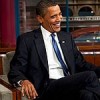
POLITICS: Obama (and Everyone Else) "Surprised" by Nobel
Friday's announcement that U.S. President Barack Obama had been awarded this year's Nobel Peace Prize barely nine months into his presidency drew an outpouring of formal congratulations from around the world, amid scepticism and speculation over whether the prize would ultimately prove an asset or liability.U.S.: Public Sceptical and Hawkish on Iran
Despite strong support for diplomatic engagement with Iran, most U.S. citizens believe such efforts will ultimately fail and that Washington should be prepared to use military force to prevent Tehran from obtaining a nuclear weapon, according to a new poll released here Tuesday by the Pew Research Centre for the People and the Press.POLITICS: Leaked Iran Paper Based on Intel that Split IAEA
Excerpts of the internal draft report by the staff of the International Atomic Energy Agency (IAEA) published online last week show that the report's claims about Iranian work on a nuclear weapon is based almost entirely on intelligence documents which have provoked a serious conflict within the agency.NORTH KOREA: China Seeks to Jumpstart Stalled Nuke Talks
North Korean leader Kim Jong-Il's decision to personally greet Chinese Premier Wen Jiabao at the Pyongyang airport Sunday is being taken as a positive sign that North Korea may be willing to restart talks on nuclear disarmament.US-IRAN: Geneva Talks Seen as Potential Breakthrough
While experts here are being deliberately tentative in their assessments of Thursday's meeting in Geneva between Iran and the five permanent members of the U.N. Security Council and Germany (P5+1), there appears to be a growing sense that the results could lay the basis for a long-sought diplomatic breakthrough.POLITICS: U.N. Session Marked by Highs and Lows
The two-week long high-level segment of the U.N. General Assembly, which concluded last week, was characterised by historic moments, political controversies, and at times, routine boredom.« Previous Page — Next Page »





At first it was the United States. Then came Russia, China, Britain and France. Everyone wanted their own atomic bombs and atomic energy. While Israel quietly nurtured its nuclear programme, in Asia, rivals India and Pakistan, and most recently North Korea, joined the global nuclear club. Are nuclear weapons stockpiles adequately safeguarded? Is nuclear energy worth the risk? Read IPS.

The Week with IPS

NEXT STOP - SDGs
Tracking global progress towards a sustainable world
Tracking global progress towards a sustainable world
