Languages
Sunday, September 6, 2026



News and Views from the Global South
Nuclear Energy - Nuclear Weapons
INDIA: Uneasy About Obama Victory
Unlike the rest of the world, which has welcomed the election of Barack Obama as president of the United States, Indian policymakers have misgivings, rooted in his campaign statements on Kashmir, nuclear non-proliferation and business process outsourcing from the U.S. to India.POLITICS-US: Pundits Debate the Inevitability of a Nuclear Iran
It wasn't U.S. relations with an Arab country on the tips of many tongues at this year's National Council on U.S.-Arab Relations meeting in the last week of October. Rather, much of the focus was on the Arab Middle East's ethnic Persian neighbour to the east: Iran.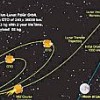
INDIA: Reaching for the Moon on a Shoestring Budget
With the successful launch of its maiden, unmanned mission to the moon, India has signalled growing confidence as an emerging Asian space power, ready to rub shoulders with Japan and China.JAPAN/NORTH KOREA: Abductees Issue Traded Over Nuclear Deal
With Washington removing North Korea from its list of state sponsors of terrorism, Japan finds itself isolated over the issue of its nationals abducted by the reclusive communist state, during the cold war, to be trained as spies.
POLITICS-US: Bush Set to Go With a Whimper, Not a Bang
With only three months left in office, U.S. President George W. Bush appears increasingly determined to calm the international waters he so vigorously churned up, especially during his first term.ISRAEL: Up Against the Red Light on Attacking Iran
Israeli Prime Minister Ehud Olmert will travel to Moscow next week for talks that will focus largely on Iran's nuclear programme at a time when there seem to be growing signs that the U.S. is unenthusiastic about the idea of an Israeli military strike on Iran's nuclear facilities.INDIA/US: N-Deal Wins Congress Vote – Problems Remain
While the United States-India civilian nuclear cooperation deal has cleared its final and toughest legislative hurdle, the U.S. Senate, and will soon be turned into law by President George W. Bush into law, New Delhi is not yet celebrating in a full-throated fashion.INDIA/US: Senate Passes Nuke Deal Over Escalation Fears
While the U.S. Senate's approval of a controversial nuclear deal with India was hailed by the White House Thursday as a major advance in Washington's "strategic relationship" with the South Asian giant, weapons experts warned that it dealt a serious blow to more than 30 years of U.S. and international non-proliferation efforts.U.S.: Iran Resolution Shelved in Rare Defeat for “Israel Lobby”
In a significant and highly unusual defeat for the so-called "Israel Lobby", the Democratic leadership of the House of Representatives has decided to shelve a long-pending, albeit non-binding, resolution that called for President George W. Bush to launch what critics called a blockade against Iran.
IRAN: Ahmadinejad Open to U.S. Talks, Denounces Threats
At a press conference following his speech to the U.N. General Assembly Tuesday, Iranian President Mahmoud Ahmadinejad said he would welcome discussions with the U.S. presidential candidates, but added that "the condition is that our meeting should be open so that all media know what happens."INDIA/AUSTRALIA: Sticking to Uranium Export Ban – For Now
The Rudd government has reiterated its refusal to sell uranium to countries which have not signed up to the Nuclear non-Proliferation Treaty (NPT), such as India, despite supporting the decision by the Nuclear Suppliers Group (NSG) to back the United States-India nuclear cooperation agreement.
POLITICS: Iranians Hope for Temperate President at the U.N.
When Iran's President Mahmoud Ahmadinejad attends the 63rd session of the General Assembly next week in New York, many Iranian academics and political activists hope he will avoid the kinds of controversial statements that have hurt Iran's international image since he was elected to the office in 2005.
US/MIDEAST: Obama Advisor Stresses Carrots Over Sticks
Dr. Susan Rice, senior foreign policy advisor to Democratic presidential nominee Barack Obama, says the U.S. would make every effort to avoid resorting to a military attack on Iran under an Obama administration.INDIA/US: Nuclear Waiver – Blow to Non-Proliferation
The special waiver granted to India by the Nuclear Suppliers' Group (NSG) from its nuclear trade rules is being seen as a massive setback to the cause of global nuclear non-proliferation and disarmament.INDIA/US: Lawmaker’s Disclosure May Torpedo Nuke Deal
Chances of the United States-India nuclear deal being completed have greatly receded with the release by a key U.S. lawmaker of a so-far-secret Bush administration document which says Washington will not sell sensitive nuclear technologies to India and will terminate nuclear commerce with it if India conducts a test.INDIA/US: Nuclear Deal Headed for Fiasco
As the tortuous negotiations for the United States-India nuclear deal enters its final stage, it becomes clear that India seriously underestimated the discomfort and opposition the agreement would arouse in many countries because of the special privileges granted to India, largely on New Delhi's terms.POLITICS: Iran Could Reap Benefits of U.S.-Russian Tensions
Iran could emerge as a big winner, at least in the short term, from the rapidly escalating tensions between the United States and Russia over Moscow's intervention in Georgia, according to analysts here.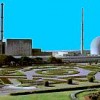
INDIA/US: Suppliers' Group Stalls Nuclear Deal
Dashing hopes that the United States-India nuclear cooperation deal would sail through the Nuclear Suppliers' Group (NSG), a two-day meeting in Vienna of the 45-nation association has failed to produce a consensus on a U.S. drafted text.POLITICS: Bush Covered up Musharraf Ties with Qaeda, Khan
Pakistani President Pervez Musharraf's resignation Monday brings to an end an extraordinarily close relationship between Musharraf and the George W. Bush administration, in which Musharraf was lavished with political and economic benefits from the United States despite policies that were in sharp conflict with U.S. security interests.
Q&A: 'China Is Capitalist, Not Communist'
As one of the nuclear physicists behind the Manhattan Project, Joan Hinton commands awe. But she chucked it all to go to China in 1948 and take part in the Communist Revolution. Now 86, she works on a dairy farm near Beijing, her sense of humour unaffected by a stroke suffered 10 years ago.POLITICS-US: Success of Attack on Iran's Nuclear Programme Doubtful
A military attack on Iran's major nuclear facilities by the United States or Israel would likely result only in a delay - and not a particularly significant one at that - in Tehran's ability to produce the fuel necessary to build a nuclear weapon, according to a report released here Friday by an influential think tank on nuclear proliferation issues.« Previous Page — Next Page »


At first it was the United States. Then came Russia, China, Britain and France. Everyone wanted their own atomic bombs and atomic energy. While Israel quietly nurtured its nuclear programme, in Asia, rivals India and Pakistan, and most recently North Korea, joined the global nuclear club. Are nuclear weapons stockpiles adequately safeguarded? Is nuclear energy worth the risk? Read IPS.

The Week with IPS

NEXT STOP - SDGs
Tracking global progress towards a sustainable world
Tracking global progress towards a sustainable world
