Languages
Sunday, September 6, 2026



News and Views from the Global South
Nuclear Energy - Nuclear Weapons
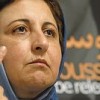
Q&A: "Neglecting Democracy Is More Dangerous Than Nuclear Weapons"
While the United States and Britain are talking about tougher sanctions on Iran, including sanctions on its gas and oil industry - Tehran's major source of revenue - Shirin Ebadi, the 2003 Noble Peace Prize laureate and international human rights defender, argues that this tactic has not weakened the government, but the Iranian people.
Q&A: “Grand Bargain With Iran Was a Missed Opportunity”
Last week, the European Union offered Iran an incentives package to stop enriching uranium in order to initiate negotiations with the West. Mere days later, and before Tehran had responded, British Prime Minister Gordon Brown announced that the Europeans planned to freeze the assets of Iran's largest bank in a bid to discourage Tehran from developing "nuclear weapons".ENERGY: Only Nuclear Dreams Mushrooming
The proposal by the Paris-based International Energy Agency for more than 1,400 nuclear power plants to be built over the next 40 years is unfeasible, environmental activists say.
IRAN: Ahmadinejad Faces Heavyweight Foe in Larijani
This week, Iran's new speaker of Parliament, Ali Larijani, proposed forming two joint committees of the legislative and judiciary branches in an effort to reconcile new legislation with the Islamic penal code.MIDEAST: Remark Raises Oil Price, and Temperatures
As Transportation Minister, one might have expected that Shaul Mofaz would have given greater consideration to the impact his comments would have on the already galloping price of a barrel of crude oil. Maybe he did. But with the scent of elections in the air in Israel, the international ramifications of his comments were apparently not uppermost on his mind. Far more narrow political calculations clearly were.US/IRAN: Larijani’s Election Can Boost Congressional Diplomacy
Iranian Nobel prize laureate Shirin Ebadi has long argued that the United States and Iran need to have a dialogue with each other at three different levels: between their executive branches, between their civil societies and between their legislatures.UKRAINE: Nuclear Power Seen As the Answer to Russia
Ukraine is embarking on a costly and inefficient path of nuclear development, hoping it will halt its energy dependence on Russia.US/IRAN: Necessity Is the Mother of Negotiation
Republican presidential aspirant John McCain's recent criticism of Democratic frontrunner Barack Obama's foreign policy platform exposes contradictions with the George W. Bush administration's own actions.EUROPE: New Safety Concerns Raised Over Nuclear Plants
Some international organisations and governments in industrialised countries are pushing for further development of nuclear power, but amidst growing doubts over the safety of several nuclear installations.IRAN: Can P5+1 Offer Break the Nuclear Stalemate?
The P5+1 - the permanent members of the U.N. Security Council and Germany - will present Tehran with a secret incentive package in the next few days to convince Iran to suspend its enrichment programme and enter negotiations.INDIA/US: Nuke Deal Set to Time Out
Faced with continuing domestic opposition to the United States-India nuclear cooperation deal, the Indian government has launched 'one last push' to complete negotiations before the window of opportunity slams shut.INDIA/IRAN: Course Correction
Relations between India and Iran, which deteriorated over the past three years from traditional friendship and warmth into mutual suspicion and tension, have started looking up again.US/IRAN: Changing of the Guard Key to Talks
A week after Senator Hillary Clinton's harsh remarks that if hardliners in Tehran were to launch an attack on Israel, it would result in the "total obliteration" of Iran, a Republican member of the House Select Committee on Intelligence, Peter Hoekstra, suggested on CNN that "engaging in a full-court diplomatic press with Iran is a good thing to begin the process" of reaching out to Tehran.CHILE: Environmentalists Withdraw Backing from Government
Twenty-three environmental groups in Chile withdrew their support from President Michelle Bachelet, complaining that she had failed to live up to an agreement they had signed with her during her election campaign.MIDEAST: Israel Sees Iran Threat Recede
In the clearest indication yet that Israel now believes Iran's nuclear aspirations will be curbed, Prime Minister Ehud Olmert has said that efforts being undertaken by the international community will ensure that Tehran does not acquire nuclear capability.IRAN: Nuclear Crisis – No Progress at Shanghai
Tehran’s defiant position on its nuclear programme has precluded any significant progress at talks among the five permanent members of the United Nations Security Council and Germany on how to resolve the Iranian nuclear crisis.POLITICS-ASIA: Talking Peace, Preparing for War
Northeast Asia heaved a sigh of relief at the latest news of a breakthrough in the nuclear negotiations with North Korea. The prospects of integrating North Korea into the international community and constructing a peace and security structure for the region have never been rosier.
US/IRAN: Tough New Sanctions Could Backfire, Experts Warn
In the more than five years since the George W. Bush administration's misdirected adventurism in Iraq, the fundamental balance of power in the Middle East has shifted.POLITICS: Iran’s Engineered Elections
The results of Iran's eighth parliamentary elections were never meant to be a cliffhanger - the hard-line camp of fiery President Mahmoud Ahmadinejad came out on top; moderate conservatives maintained their stake; reformists were demoralised.POLITICS: Iranian Public Sees Reduced U.S. Threat
While still distrustful of U.S. intentions, the Iranian public believes that the threat posed by Washington has diminished over the past year and favours increased exchanges between the two countries, including direct talks on stabilising Iraq and other issues, according to a major new survey released here Monday by WorldPublicOpinion.org (WPO).POLITICS-US: North Korean Nuclear Deal at Risk?
Growing tensions between North Korea and the new, more hawkish South Korean government are spurring concern among U.S. experts that already halting progress toward implementation of a denuclearisation deal with Pyongyang could unravel.« Previous Page — Next Page »


At first it was the United States. Then came Russia, China, Britain and France. Everyone wanted their own atomic bombs and atomic energy. While Israel quietly nurtured its nuclear programme, in Asia, rivals India and Pakistan, and most recently North Korea, joined the global nuclear club. Are nuclear weapons stockpiles adequately safeguarded? Is nuclear energy worth the risk? Read IPS.

The Week with IPS

NEXT STOP - SDGs
Tracking global progress towards a sustainable world
Tracking global progress towards a sustainable world
