Languages
Saturday, October 17, 2026



News and Views from the Global South
Projects
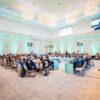
GEF Council Welcomes New Green Pledges, Highlights Old Access Barriers
The 71st Council meeting of the Global Environment Facility (GEF) opened today amid a sharp divide, with donor nations urging broader and increased funding commitments, while developing countries called for more equitable and accessible pathways to environmental finance.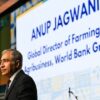
Connecting the Dots: Quality Seed, Resilient Food Systems and Good Health
It is often said that the quality of seed determines the quality of the produce and, consequently, the sustainability of the entire agricultural value chain, influencing everything from crop yields to nutritional value.
UN General Assembly Votes for Resolution on ICJ Advisory Ruling on Climate Obligations
Member states this week (May 20) deliberated over a draft resolution on states’ obligations in respect of climate change following the advisory opinion from the International Court of Justice (ICJ). The General Assembly agreed to take measures to uphold the ICJ’s advisory opinion for member states to meet their existing obligations to climate justice under international law and multilateral frameworks.
‘Do More With Less’: GEF CEO Claude Gascon on Speed, Scale and Reform
As governments prepare for the Eighth Assembly of the Global Environment Facility (GEF) – scheduled to be held from May 30 to June 6 in Samarkand, Uzbekistan – the stakes are unusually high.
UN Weather Agency Warns of Escalating Climate Extremes Across Caribbean and Latin America
Faster-than-average sea level rise, intensifying hurricanes, extreme heat and worsening swings between drought and flooding are increasing pressure on Latin America and the Caribbean, according to a new report released Monday, May 18 by the World Meteorological Organization (WMO).
Food Systems and Policies Undermining Food Security
Transnational agribusinesses increasingly shape food policies worldwide. Claiming to best address recent food security concerns, they seek to profit more from innovations in food production, processing, and distribution.
Empowering Youth Is the Fastest Path to Transforming Least Developed Countries
The future of the world’s least developed countries (LDCs) will be shaped by a critical choice they make today- strategic investment in their youth. Rich in human potential, the young people in LDCs embody ingenuity, resilience and ambition. With the right opportunities, they can transform challenges into opportunities and put their countries strongly on track to sustainable development.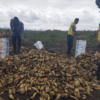
Cleaning Up the Fields: Across Africa and Asia GEF is Helping Farmers Rewrite Their Pesticide Story
For decades, pesticides have been a quiet pillar of Malawi’s agriculture, guarding crops against pests, improving yields, and sustaining millions of livelihoods. But beneath this success story lay a troubling reality: weak regulation, unsafe handling practices, and growing threats to human health and the environment.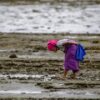
Pacific Ocean Under Pressure — Now a Region Finally Armed With Evidence
For generations, Pacific people have understood the ocean not as a resource but as identity, sustenance, and survival. Today, that relationship is being tested in ways science is only just beginning to fully capture.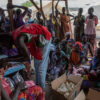
Famine in South Sudan Projected to Worsen Without Humanitarian Intervention
In 2026, the humanitarian situation in South Sudan has taken a considerable turn for the worse, with widespread food shortages, ongoing disruptions to food production systems, and rising rates of malnutrition affecting over half of the population. Compounded by the vast scale of needs and an overwhelming lack of access to basic services, humanitarian experts warn that nationwide levels of hunger are projected to worsen to catastrophic levels if urgent intervention is not secured.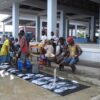
Pacific Islanders Combat Mercury Poisoning of the Environment
It is an invisible contaminant that has been found in fisheries, an essential part of the food chain for many Pacific Islanders. Mercury, emitted from fossil fuel power generation and other industrial processes around the world, has now penetrated marine ecosystems in the Pacific Islands with detrimental consequences for people’s health and wellbeing.
Seychelles’ Blue Bond: Turning Ocean Vision into Action
As the world prepares for the Global Environment Facility (GEF) meeting in Samarkand next month, Seychelles’ pioneering blue bond offers a compelling lesson in practical ocean finance.
American-Israeli War on Iran Risks Fuelling the very Nuclear Proliferation it Claims to Prevent
As delegates from 191 countries, including the five permanent members of the UN Security Council, gathered Monday at UN headquarters for a month of diplomacy at the Review Conference of the Nuclear Non-Proliferation Treaty (NPT), the stakes could hardly be higher.
Inside GEF-9: What it is and Why it Could Define the Next Four Years of Environmental Action
The gap between global environmental ambition and real-world progress is widening, with less than five years left to meet key climate and biodiversity targets.
Trump’s Apocalyptic Rhetoric Echoes Nuclear Annihilation
It is hard to exaggerate the dire implications of Trump’s April 7 post on Truth Social, stating that a civilization will die tonight, never to be brought back again,” if no deal is reached with Iran. Such a damning statement implies that he would use ‘weapons of mass destruction,’ i.e., nuclear, to execute his threat.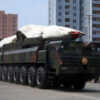
The Middle East War Triggers a Move to Boost North Korea’s Nuclear Arsenal
The ongoing military conflicts in the Middle East—involving the US, Israel, Palestine, Iran and Lebanon—have indirectly bolstered North Korea’s plans to expand its nuclear arsenal.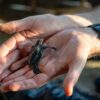
Guardians of the Sea: How GEF Small Grants Program Enables Young Volunteers Take the Lead in Sea Turtle Conservation
Every winter thousands of sea turtles come ashore at Cox’s Bazar, in the Bay of Bengal, Bangladesh, to lay eggs.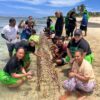
Bridging Knowledge Systems: How Pacific Communities Are Reclaiming Climate Solutions Through Nature
Climate change is no longer a distant threat. Across the Pacific, it is a daily reality reshaping coastlines, livelihoods, and the delicate balance between people and the environment. But in a region long defined by resilience, solutions are not being invented from scratch. They are being remembered, strengthened, and scaled.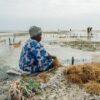
Explainer: How the GEF Funds Global Environmental Action
The Global Environment Facility, widely known as the GEF, plays a central role in financing environmental protection across the world. It supports developing countries in tackling climate change, biodiversity loss, land degradation, pollution, and threats to ecosystems.
Informal Settlements Grapple With Climate Extremes in Pacific Islands
A rising cycle of poverty and extreme weather threatens many towns and cities, especially those situated on coastlines, in the Pacific Islands. Urban centres in the Pacific have grown at an unprecedented rate this century, rapidly straining national resources for urban planning. But governments are now making progress on improving people’s lives in the informal settlements that dominate the urban sprawl in some of the region’s largest cities.
Nations pledge $3.9bn to Global Environment Facility as Race to Meet 2030 Goals Tightens
With just four years left to meet a series of global environmental targets, governments are committing to shore up one of the world’s main environmental funds, the Global Environment Facility (GEF), with a $3.9 billion pledge.« Previous Page — Next Page »





The Week with IPS

NEXT STOP - SDGs
Tracking global progress towards a sustainable world
Tracking global progress towards a sustainable world
