Languages
Sunday, November 8, 2026



News and Views from the Global South

Ecobreves – VENEZUELA: Art-Fest for Water
Painting, sculpture, photography, music, literature and performance are part of the Festival of Water, under way Jun. 17-23 in 11 municipalities of the southeastern Venezuelan state of Bolívar.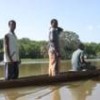
Civil Resistance Aimed at Saving Colombian Jungle
In the Darién Mountains, near Colombia's border with Panama, some 3,000 Afro-Colombians are working to restore their crops and recover their land, from which they were forcibly expelled 10 years ago.
Floating House Made of Garbage – Art or Eyesore?
The Rio de Janeiro authorities have wavered on whether to ban a floating house made of garbage pulled from Guanabara Bay or to declare it a museum.Ecobreves – CUBA: War on Dengue
A campaign to clean up streets and homes across Cuba was aimed at eliminating breeding grounds for the Aedes aegypti, the mosquito that carries dengue.Ecobreves – BRAZIL: Beyond the Tropical Image
"To understand the climate changes in Brazil it is essential to abandon the tropical country myth and look also at the other regions," warns paleoclimatologist Jefferson Cárdia Simões, of the Brazilian Antarctic Program.Ecobreves – HONDURAS: Less Forest Burned
Honduras has lost 27,000 hectares of forest to fire in the past 12 months, but it is far less than the annual average of 50,000 hectares of forest destroyed by fire for the last five years.Ecobreves – MEXICO: Trees for the Capital
Some 100,000 trees of native species will be planted in the next couple months as part of a reforestation program for the Mexican capital.Ecobreves – ARGENTINA: Environmental Film Series
Argentina's Environmental Secretariat has launched a film series and a screenplay competition centered on the environment.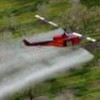
New Studies Reveal DNA Damage from Anti-Coca Herbicide
Scientific studies have collected evidence of the negative effects of the glyphosate-based herbicide Roundup on human and animal health. The chemical is used in aerial spraying to eliminate illicit coca crops in Colombia.
Chile's Biggest Freshwater Reserve Left Unprotected
Mining is the main threat to Chilean glaciers, followed by global warming.Ecobreves – VENEZUELA: Tourists and Fishers on the Tail of the Orcas
The Venezuelan ecological society Vida Marina has called on tourists and fisherfolk to help track the killer whales coming from the North Atlantic Ocean and arriving in the South Caribbean Seas.Ecobreves – CUBA: A Windy Hand from India
A Cuban program for developing wind energy is among the beneficiaries of a broad cooperation agreement signed in Havana by India's minister of renewable energy, Vilas B. Muttemwar, and Cuba's Ministry of Science, Technology and Environment.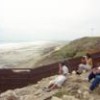
Emigration a Blessing for Biosphere Reserve
Mexico's Sierra Gorda Reserve embodies the paradox of the emigration of the poor: nature benefits from a smaller human population, while remittances from family members abroad are the main source of income for those who remain.Ecobreves – CHILE: Environmental Opinions from the Poor
Ninety-seven percent of the low-income residents of the capital say the city's environmental quality is "mediocre" or "very poor", 77.7 percent believe "environmental problems are not important to the politicians", and 86.2 percent think the environment is neglected due to "lack of education".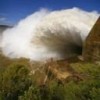
Tapping Hydroelectric Dams for Methane Gas
The greenhouse gases held in hydroelectric reservoirs can be captured to generate more energy, preventing them from turning into climate-changing emissions, according to Brazilian scientists.Ecobreves – LATIN AMERICA: Airports as Source of Solar Energy
A project for airports to generate solar energy is the upcoming initiative of the new Institute for the Development of Renewable Energy in Latin American (its Spanish acronym is IDEAL).Ecobreves – BRAZIL: Expedition to Identify Amazon's Birthplace
Brazilian researchers are in the Peruvian Andes to determine where the Amazon River begins, and to collect local geographical and environmental data.Ecobreves – CENTRAL AMERICA: Financing Micro-Enterprise to Protect Environment
The United Nations Development Program and the Central American Bank for Economic Integration will provide support to the tune of 27.9 million dollars to micro-business in the region that protect the environment.Ecobreves – ARGENTINA: Claims Against Shell for Oil Spill
Eight years after an oil spill along the Rio de la Plata coast, Argentine residents who were affected are demanding that the transnational Shell Oil company clean up the river and pay for damages.Ecobreves – MEXICO: Database for Assessing Water Services
Academics are preparing the first database in Mexico to analyze the performance of public and private suppliers of water services.
Brazilian Agro-Power Heats Up
The Brazilian Ministry of Agriculture is already restricting planting of some farmland in the southern part of the country, the most affected by climate shifts in recent years.« Previous Page — Next Page »





Tierramérica is the main communications platform on sustainable development and the environment in Latin America and the Caribbean. It is produced by IPS Noticias, the agency’s Spanish-language service, which created it jointly with the United Nations Development Programme (UNDP) and the United Nations Environment Programme (UNEP), with later support from the World Bank. The weekly editions of Tierramérica are published in Spanish, Portuguese and English and are picked up and printed by dozens of media outlets in the region. Follow us on Facebook and Twitter.

From the Frontline of Environment
Supported by

Tierramérica en Español

Terramérica em Portuguese

