Languages
Sunday, November 8, 2026



News and Views from the Global South

Ecobreves – GUATEMALA: Ban on Leatherback Turtle Sales
From Oct. 15 to Apr. 15, 2007, a ban is in place on collecting and selling the eggs of the leatherback turtle (Dermochelys coriacea), imposed by the Guatemalan government's National Council on Protected Areas (CONAP).
Answer to Energy Crisis? Waste Not, Want Not
To fight climate change, it is not enough to produce alternative sources -- we must promote the idea of consuming less, warn experts.Ecobreves – HONDURAS: El Tigre Hydroelectric Dam Loses Support
The Honduran Parliament voted last week to ask the Executive Branch to "detain" construction of El Tigre hydroelectric dam, on the Honduras-El Salvador border, until the diplomatic conflict between the two countries is resolved.Playing for Our Lives
Governments of the world will gather in Kenya in November to discuss new ways to help the South adapt to climate change.Ecobreves – BRAZIL: Cultivating 'Clean' Tomatoes
Brazil can already produce tomatoes without agro-chemical residues, through Tomatec, a production technique that was tested in the planting of 12,000 tomato plants in Sao José do Ubá, near Rio de Janeiro.Ecobreves – CHILE: No' to Road Through Pumalín Park
Ecologists and residents oppose the Chilean government’s decision to build a 60-kilometer road through the center of Pumalín Park nature sanctuary, in the country's 10th region, instead of along its coastal border -- which is the cheaper option and would have lesser environmental impacts.Ecobreves – VENEZUELA: Veto Continues Against DDT
Venezuela rejects use of the insecticide DDT (dichloro-diphenyl-trichloroethane) that was used to fight malaria-carrying mosquitoes a half-century ago, "adopting the criteria that it is toxic, non-biodegradable and accumulates in animal tissue," said Jesús Toro, director of environmental health at the Ministry of Health.Ecobreves – URUGUAY: A Push for Biotech
The Pasteur Institute of Montevideo, which will officially open its doors Dec. 8, is trying to give a boost to biotechnology in the countries of Mercosur (Argentina, Brazil, Paraguay, Uruguay and Venezuela) and Chile, says executive director Guillermo Dighiero.Ecobreves – CARIBBEAN: Fewer Hurricanes Predicted, But Risk Persists
The influence of the climate phenomenon known as El Niño Southern Oscillation (ENSO) makes it less likely that tropical cyclones will form in the North Atlantic, but the risk is not eliminated, warn Cuban meteorologists.
Keep Chiloé Free of Transgenics, Say Activists
The Chilean island is a birthplace of the potato, and ecologists say there are about 200 varieties that must be protected from genetic contamination from transgenic varieties of the tuber.
Bolivia's Challenge Blocks Dams in the Amazon
Environmentalists in La Paz warn that one of the hydroelectric dams that Brazil is planning to build on the Madeira River could flood Bolivian territory. They are calling for a binational agreement.Pacific Island Gives Clues to Tropical Biodiversity
Around 100 new species have been classified in just a month on the island of Espiritu Santo island in the South Pacific, which faces biodiversity devastation as a result of global climate change.
At the Gates of the Polar Year
The Argentine city of Ushuaia is preparing to welcome hundreds of scientists who will study the South Pole beginning in March 2007.
Elephant Overpopulation Keeps Cull Debate Simmering
Local communities participate in elephant management in Zimbabwe. But the authorities aren't ruling out the possibility of returning to culling to control the herd size -- a practice that was abandoned 17 years ago.Ecobreves – BRAZIL: Opposition Rises Against Amazon Dams
The potential negative effects of hydroelectric dams have strengthened opposition against the Brazilian government's plan to build two on the Madeira River, the largest tributary of the Amazon and which starts in the Bolivian Andes.Ecobreves – ARGENTINA: Residents Reject Sulfuric Acid Factory
Residents of the city of Palpalá, in the northwestern Argentine province of Jujuy, are protesting the operations of Sulfhaar, a sulfuric acid factory that already has approval from government authorities.Ecobreves – GUATEMALA: Exchanging Debt for Forest
The United States has forgiven 24 million dollars of Guatemala's bilateral debt, with the condition that it be used to preserve tropical forests over the next 15 years.Ecobreves – VENEZUELA: New Alert on Toxic Sludge
The waste ponds used by the state-run metals company Bauxilum, which contain red sludge (silica sands, caustic soda, iron oxides and aluminum oxides), "are at the limit of their capacity and could filter into the surroundings," says the Aluminum Workers' Syndicate in southeastern Venezuela.Ecobreves – URUGUAY: Observatory for Renewable Energy Proposed
The United Nations Industrial Development Organization (UNIDO) is planning to open a regional observatory in the Uruguayan capital to promote renewable energy.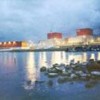
Nuclear Energy Reborn
Argentina, Brazil and Mexico have announced construction of new atomic reactors for generating electricity. Environmentalists warn about safety risks.Ecobreves – GUATEMALA: Lake Amatitlán Clean-Up Continues
Guatemalan environmental authorities will complete construction in November of the second water purification plant on the Villalobos River, which carries some 500,000 tons of sediment to Lake Amatitlán, 35 km south of the capital.« Previous Page — Next Page »





Tierramérica is the main communications platform on sustainable development and the environment in Latin America and the Caribbean. It is produced by IPS Noticias, the agency’s Spanish-language service, which created it jointly with the United Nations Development Programme (UNDP) and the United Nations Environment Programme (UNEP), with later support from the World Bank. The weekly editions of Tierramérica are published in Spanish, Portuguese and English and are picked up and printed by dozens of media outlets in the region. Follow us on Facebook and Twitter.

From the Frontline of Environment
Supported by

Tierramérica en Español

Terramérica em Portuguese

