Languages
Sunday, November 8, 2026



News and Views from the Global South

Ecobreves – VENEZUELA: Love for the Mangrove
The exposition "For Love of the Mangrove", organized by the National Center for Improvement of Science Education, will run through August at the Lía Bermúdez Art Center in the western Venezuelan city of Maracaibo.Ecobreves – CHILE: Clean Release of the Last Oil-Contaminated Penguins
The Chilean government's National Forest Corporation (CONAF) has completed the recovery project for penguins contaminated with petroleum, rescuing 54 of these birds living in the extreme southern region of Magallanes, 3,000 km south of the capital.Ecobreves – HONDURAS: Organic Tilapia for Export
- The private company Aquafinca Saint Peter Fish, established in northern Honduras, will export to the United States more than 11,000 kg monthly of organic tilapia fish filets beginning in August.Ecobreves – CUBA: Summertime Accidents
The intense summer heat, vacations and the need to get into the Caribbean water wherever and however has sounded the alarm in Cuba, where drowning is the third leading cause of accidental death.
Gold Fever Strikes Again in Central America
Multinational corporations are interested in developing more than 250 projects in the region. The affected communities are mobilizing and demanding their right to information.
Italian Eco-Friendly Valley Is Model for Europe
In the last 14 years, the residents of Varese Ligure have brought into practice an ingenious way of life and development based on respect for the environment.Ecobreves – BRAZIL: Innovative Hydrogen Buses
Five buses fueled by hydrogen will circulate in Sao Paulo and four neighboring cities beginning in 2007, with innovations similar to those in industrialized countries.Ecobreves – GUATEMALA: Mangroves in Danger
Five-hundred hectares of mangroves are destroyed each year in Guatemala, which could devastate 40 percent of the country's mangrove ecosystems, says Carlos Albacete, of the organization Trópico Verde (Green Tropics).Ecobreves – BRAZIL: Copaíba as Anti-Inflammatory
A study conducted by University of Sao Paulo's Ribeirao Preto science department has certified the anti-inflammatory properties of the copaíba plant (Copaifera officinalis).
Argentine Water Supply Faces Uranium Threat
Water intended for human consumption may have been contaminated by the Ezeiza Atomic Center. Experts from the International Atomic Energy Agency, the World Health Organization and local authorities will conduct a new assessment.
Caribbean Beaches and Marine Ecosystems in Danger
Stricter laws are needed to protect beaches and prevent the degradation process. There is an imbalance in investment in the tourism industry and the national programs for sustainable tourism.
Ecobreves – COLOMBIA: Border Closed to Toxic Waste
Colombia will not import toxic or nuclear waste, according to a resolution by the Environment Ministry.Ecobreves – MEXICO:: Marine Fauna Contaminated
- The international environmental watchdog Greenpeace has asked Mexico's health authorities to respond to the contamination of marine fauna that poses a threat for human consumption.Ecobreves – ARGENTINA: Demands for Ecological Integration
Argentine environmentalists have proposed that the countries of Mercosur (Southern Common Market) take a regional focus for drafting policies that involve their shared natural resources.Ecobreves – VENEZUELA: Chávez Aims to Divert Sewage from River
Venezuelan President Hugo Chávez predicted the day will soon come when he can swim in the emblematic Guaire river, which flows eastward through Caracas for 53 of its 70 kilometres, picking up residential and industrial waste along the way.Ecobreves – CUBA: Mass Disappearance of Bats Skews Ecological Balance
Between 250,000 and half a million bats have disappeared from the Gato Jíbaro cave in the Cuban province of Matanzas, east of Havana, threatening area plant life, warn specialists.
Mega-Project Scrapes the Bottom of the Oil Barrel
Extracting oil from Alberta’s tar sands generates greenhouse gas emissions and destroys forests and wetlands. The activity’s health and social impact is one of Canada’s most pressing environmental issues.Ecobreves – HONDURAS: Green Schools Look to the Future
The Honduran government, backed by the business community, has introduced the “Green Schools” project to recover and preserve the main watersheds near Tegucigalpa.
100 Million Trees for Venezuela
Over the next five years, a reforestation project aims to replace a total of some 140,000 hectares of woodlands -- the number of trees logged in Venezuela each year.Ecobreves – CHILE:: State-Run Mining Company Faces Investigation
Chile’s Chamber of Deputies voted unanimously to investigate the state-owned National Copper Corporation (Codelco), to determine its responsibilities in polluting the capital’s Carén estuary.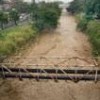
Ecobreves – GUATEMALA: Deforestation Spreading
- In Guatemala, an average of 73,148 hectares of forest disappears each year. The figures come from a Forest Cover Dynamics map created by the state-run National Forestry Institute (INB) and National Protected Areas Council and the private University del Valle.« Previous Page — Next Page »





Tierramérica is the main communications platform on sustainable development and the environment in Latin America and the Caribbean. It is produced by IPS Noticias, the agency’s Spanish-language service, which created it jointly with the United Nations Development Programme (UNDP) and the United Nations Environment Programme (UNEP), with later support from the World Bank. The weekly editions of Tierramérica are published in Spanish, Portuguese and English and are picked up and printed by dozens of media outlets in the region. Follow us on Facebook and Twitter.

From the Frontline of Environment
Supported by

Tierramérica en Español

Terramérica em Portuguese

