Languages
Wednesday, November 11, 2026



News and Views from the Global South

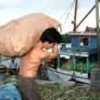
Specter of Pesticide Returns
Nearly 40 years later, workers on banana plantations in Central America are mobilizing for reparations for the problems caused by the pesticide Nemagon, including cancer and sterility.
“The loggers offer me bullets”
Deforestation claims 80,000 hectares of trees annually in Honduras. The fight to save this resource means confronting death, depredation and destruction, says activist Bertha Oliva in an exclusive conversation with Tierramérica.The Sea's Inhabitants Will Not Forget the 'Prestige'
Bird, fish, mollusk and crustacean populations have been devastated by the "black tide" caused by the massive oil spill off the coast of northwest Spain and will take years to recover, say experts.
Pesticides
Chemical pesticides represent an age-old human desire to live free of the plagues that complicate daily life. But in contemporary times, we are aware of the other face of these substances: they are dangerous to human health and the environment.Ecobreves – MEXICO: Indigenous Women's Summit
Indian women from across the Americas are meeting in Mexico to share experiences, set up information networks and hammer out strategies for defending their rights.Ecobreves – ARGENTINA: Rampant Parasitosis
Eighty percent of the children in northwest Argentina suffer intestinal parasitosis, an illness related to the lack of clean water and sanitation, and hits poorly nourished children the hardest, reports the Ministry of Health.Ecobreves – HONDURAS: Seismology Network Planned
A network for determining the intensity and location of tremors and earthquakes, based on cutting-edge technology, is slated for set up in June 2003 in Honduras, the only Central American country that lacks a system for monitoring this source of natural disasters.Ecobreves – CHILE: Hiking Route Advances
By March 2003 more than 200 km of the Path of Chile will be complete. The hiking route will ultimately extend the length of the country's varied geography along the Andes mountains, running from Collacagua, in the extreme north, to Cerro Bandera, near Strait of Magellan in the south, say officials.Ecobreves – CENTRAL AMERICA: Protecting Wetlands
Central America is the first region in the world to adopt a unified policy for the conservation and sustainable use of its rich wetland ecosystems.Ecobreves – GUATEMALA: Funds to Eradicate Landmines
The Italian government will donate 250,000 dollars to an Organization of American States (OAS) program to detect and destroy anti-personnel mines in Guatemala and other Central American countries.Reclaiming Antarctica's Frozen Heritage
Experts are restoring cabins, shelters and science stations used by intrepid explorers on the white continent dating back to the 19th century.
Voracious Tourism Threatens Damas Island
Environmentalists warn that nutria, penguins and dolphins, as well as other species populating this natural Chilean paradise, are in danger.
Wind Energy Promoted in Central America
With a 66-megawatt production available, Costa Rica is the leading Latin American wind energy producer.Ecobreves – EL SALVADOR: Forest Inventory
The government of El Salvador is to conduct a national inventory of trees to establish the number, variety and coverage of each species, using techniques ranging from satellite images to on-the-ground inspections.
The Environment as Military Target
Officials and activists are demanding an end to war practices that harm the environment, such as the burning of oil wells, bombing of factories, placing of landmines and the use of depleted uranium in weapons.Crocodiles Are Better Off than Ever
The populations of two endangered species of this reptile are expanding in Cuba thanks to crocodile farms, conservation policies and the control of exports, although poaching continues, motivated by domestic demand.Central American-Caribbean Games Shun the Environment
The organizers of the regional sports competition will not take responsibility for gathering the tons of garbage that will be left behind by 6,500 athletes and 20,000 spectators.Cod Caught on a Snag
The Antarctic cod, or icefish, is victim of its own popularity. The high demand for this fish in kitchens and restaurants around the world maintains intense fishing activity that could threaten the species very survival. But this argument has not been enough to win greater international legal protections for the cod.Ecobreves – MEXICO: Debate on Border Waters
Some 100 scientists and academics from around the world are meeting in Monterrey, Mexico this week to study the challenges of managing water resources along the borders of 50 countries.Ecobreves – PERU: Saline Soils Reclaimed
Rice growers in the northwestern city of Lambayaque, on Peru's northern coast, have launched a program to reclaim soils that have high saline content as a result of inappropriate irrigations systems used in the past.
The Kyoto Protocol and Its Deserters
The multilateral treaty for controlling climate change is looking increasingly weak in the wake of the latest global meeting on the issue, held in India. The appeal issued in the final declaration for more ratifications of the treaty was not enough to compensate for the profound disagreements between governments.« Previous Page — Next Page »





Tierramérica is the main communications platform on sustainable development and the environment in Latin America and the Caribbean. It is produced by IPS Noticias, the agency’s Spanish-language service, which created it jointly with the United Nations Development Programme (UNDP) and the United Nations Environment Programme (UNEP), with later support from the World Bank. The weekly editions of Tierramérica are published in Spanish, Portuguese and English and are picked up and printed by dozens of media outlets in the region. Follow us on Facebook and Twitter.

From the Frontline of Environment
Supported by

Tierramérica en Español

Terramérica em Portuguese

