Languages
Saturday, November 7, 2026



News and Views from the Global South

Ecobreves – HONDURAS: Environmentalists Join Forest Authority
Groups united in the Olancho Environmentalist Movement (MAO), led by Catholic priest Andrés Tamayo, won inclusion in a temporary commission that will design the policies of the recently created Forest Conservation Institute of Honduras.
Cooperatives Turn Idle Landed Estates Green
A small dairy cooperative is harvesting its first achievement in the middle of the savannah in Venezuela, a country dependent on food imports.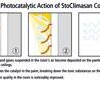
Paint that Purifies the Air
German scientists have developed an interior paint that, through a process that imitates photosynthesis, breaks down and eliminates toxic materials from the air.Ecobreves – ARGENTINA: Danger for Hake Fish
The Wildlife Foundation of Argentina warns that the common hake fish (Merluccius hubssi), the country's main fishing resource, is on the verge of collapse due to over-fishing.Ecobreves – BRAZIL: Families Paid to Take Care of Jungles
The Family Forestry Grant, an innovative program of the northwestern Brazilian state of Amazonas, will benefit 2,000 more families by December, paying 50 reais (29 dollars) per month to those who help preserve the forest.Ecobreves – HONDURAS: A Bid to Curb Contaminants
Citizen groups and public and private organizations in Honduras have agreed to search for ways to regulate the trans-border movement of toxic pesticides.
Tobacco Regulations as Solid as Smoke
Widespread cigarette advertising and the freedom to smoke in public -- including in hospitals and schools -- continue in most Latin American countries.
Titicaca Truths Revealed
A binational effort, with the backing of the UN Environment Program, is expected to shed light on the scope, origin and possible cures for the contamination of Lake Titicaca on the Peru-Bolivia border.
Green Standards Proposed for Biofuel Production
The world is beginning to debate the need for environmental rules to govern production of agriculture-based biofuels.
For a Tobacco-Free Youth
Most smokers begin the habit before reaching their 18th birthday, and a quarter of those began smoking before age 10, writes Mirta Roses, director of the Pan-American Health Organization, in this exclusive column for Tierramérica.Ecobreves – MEXICO: Connecting a Brain to a Computer
Researchers in Mexico are working on an invention that connects the brain of a disabled person to a computer, which it can give orders just by thinking.
Climate Change Casts Marine Science Adrift
Ocean science lags far behind atmospheric research, mostly due to lack of funding, warn researchers.
Biological Patents Yield Unequal Benefits
The existing patent system does not require the petitioner to document the origins of his or her knowledge or innovation, which experts say is a boon to biopiracy.
The Divorce of Agriculture and Biodiversity
Latin America's vast biological diversity has contributed little to the region's commercial agriculture, despite being the birthplace of two of the world's four most widely consumed food crops: maize and potatoes.Ecobreves – GLOBAL: Tierramérica Wins International Zayed Prize
The weekly news service on the environment and development, Tierramérica, was awarded the Zayed International Prize in the category of Environmental Action Leading to Positive Change in Society, granted by the United Arab Emirates.Ecobreves – CHILE: Government Against All Whale Hunts
One month before the Chilean capital hosts a meeting of the International Whaling Commission, President Michelle Bachelet has repeated her rejection of allowing hunts for scientific purposes.Ecobreves – HONDURAS: Legal Instrument to Protect Forests
The recently created Institute of Forest Conservation (ICF), entrusted with executing and supervising the application of the new Forestry Act in Honduras, is taking form following the arrival of its new director, Suyapa Otero.Ecobreves – VENEZUELA: Annual Rite with Crocs and Turtles
Venezuela released some 900 young Orinoco crocodiles (Crocodylus intermedius), hatched in nurseries and biological research stations of the Environment Ministry.Ecobreves – CUBA: More Control over Energy and Environment
The Cuban National Assembly of Popular Power created a special commission made up of 32 deputies to reinforce government control over efficient energy use and environmental protection.Ecobreves – HONDURAS: Hot Weather Feeds Fires
Honduras is facing an intense heat wave that is causing an average of six forest fires per day and a dense layer of smoke that has meant the temporary closing of the main airport terminals and rescheduling of flights.Ecobreves – LATIN AMERICA: Rice Revolution Calls for Improved Varieties
The use of improved rice varieties and better cultivation practices will be at the core of a technological revolution proposed by rice growers in Latin America.« Previous Page — Next Page »





Tierramérica is the main communications platform on sustainable development and the environment in Latin America and the Caribbean. It is produced by IPS Noticias, the agency’s Spanish-language service, which created it jointly with the United Nations Development Programme (UNDP) and the United Nations Environment Programme (UNEP), with later support from the World Bank. The weekly editions of Tierramérica are published in Spanish, Portuguese and English and are picked up and printed by dozens of media outlets in the region. Follow us on Facebook and Twitter.

From the Frontline of Environment
Supported by

Tierramérica en Español

Terramérica em Portuguese

