Languages
Wednesday, October 14, 2026



News and Views from the Global South
Africa
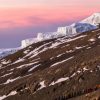
Glaciers Of The SADC Region – A Wake-Up Call For Climate Action
World Water Day calls us all to promote the essential element of life: water. But we must also look this year at the rapidly vanishing sources of freshwater that we depend on, especially glaciers. Although glaciers may be remote for many of us, they are an essential component of the water cycle, nourishing rivers and lakes that are important for millions of people around the world. As precious resources with sources under threat, glaciers in the Southern African Development Community (SADC) region are an area of focus.
Epilepsy Patients in Africa Fight Stigma and Neglect
When Angela Asemota’s son began having seizures at six years old in 1996, people gossiped that he was possessed by evil spirits, leading her to seek healing from native healers and religious clerics. He underwent several traditional rituals and drank various concoctions, but the seizures persisted. It was not until his fourth year in secondary school in 2004 that she took him to a hospital, where he was diagnosed with epilepsy and began taking medication.
Pioneering Sustainable Energy Solutions in Africa
The 12th Sankalp Africa Summit, held on Feb 26-27 in Nairobi, brought together a pivotal cohort of start-up innovators, investors, entrepreneurs and policymakers to accelerate the innovation needed to enhance Africa’s energy transition.
Activists Fear Kenya Forests Threatened Due to Government Development
After the controversial lifting of a six-year moratorium or temporary ban on logging activities in public and community forests by the Kenyan government in July 2023, trucks ferrying tree logs are frequently seen on major highways in total disregard of environmental concerns.
Addressing the Scars of Abuse: A Global Call to Protect Girls and Secure Their Futures
In March 2000, 15-year-old Binta Manneh was eager to test her skills at an out-of-town interschool sports competition. That night, as she stepped out to buy biscuits from a nearby shop, she encountered paramilitary officers – men sworn to protect the nation.
Developing a Thriving e-vehicles Value Chain in Africa
African countries should join hands to make the most of their own resources and build a formidable electric vehicle ecosystem that could help fast-track realisation of SDGs.
International Women’s Day, 2025
In Zanzibar, Women Turn the Tide with Sponge Farming
In the early morning, as the tide pulls away, Zulfa Abdallah ties her scarf tightly around her head. She adjusts her goggles, places a snorkel across her forehead, and wades into the chest-deep waters off Jambiani village in Zanzibar. The Indian Ocean is her livelihood now, its waves offering a lifeline to women like her who confront challenges of poverty and climate change. 
Tanzanian Speaker Calls for Urgent Investment in Youth to Harness Demographic Dividend
Speaker of the Tanzanian Parliament and President of the Inter-Parliamentary Union (IPU), Tulia Akson, has called for bold and immediate investments in young people to unlock the demographic dividend and accelerate sustainable development across Africa and Asia.
African Leaders Challenged To Unite Against Energy Transition Mineral Oppressors
Renewable energy and climate change activists have challenged African heads of state to take a united stance to safeguard essential mineral resources, particularly in the Democratic Republic of the Congo (DRC) and other parts of the continent, which are selfishly exploited by foreign miners with disregard for poverty-stricken local communities.
Life-Changing Quarry Mining Shatters Lives in Zimbabwe
On Christmas Day in 2022, 27-year-old Thabani Dlodlo’s eight-year-old son drowned in a flooded pit dug up by quarry miners in the vicinity of Pumula North, a high-density suburb in Bulawayo, Zimbabwe’s second-largest city. As if that was not enough, just a week after New Year’s Day the following year, Dlodlo’s neighbor, 36-year-old Sethule Hlengiwe, also lost her six-year-old daughter after she drowned in another pit flooded with rainwater near her home in Bulawayo.
Humanitarian Groups Face Challenges in Reaching the Sudanese Displaced Population
In the final quarter of 2024 ,there has been an escalation in the Sudanese civil war, with armed clashes between the Rapid Support Forces (RSF) and the Sudanese Armed Forces (SAF) having grown in brutality. Heightened insecurity has pushed millions of people into displacement, hunger, and poverty. Additionally, the continued hostilities have made it difficult for humanitarian organizations to scale their responses up.
How Tanzania’s Farmers, Pastoralists Paid the Price for a World Bank Project
A hush had fallen over Mbarali District, but it was not the quiet of peace—it was the silence of uncertainty. Just months ago, the rolling plains were gripped by fear as government-backed rangers, dressed in olive green fatigues, roamed through villages, seizing cattle, torching homes, and forcing entire communities to the wobbly edge of survival. The REGROW project, a USD 150 million initiative funded by the World Bank to expand Ruaha National Park (RUNAPA), had promised tourism growth and environmental conservation. What it delivered was a brutal campaign of state-sanctioned land grabbing under the guise of protecting nature.
Blamed for ‘Causing’ Droughts: Zimbabwe’s LGBTQI Community Faces Climate Crisis Head-on
Takudzwa Saruwaka is hoeing weeds in a cowpea field in eastern Zimbabwe one morning in February, trying to beat torrential rains threatening from the gray clouds above.
Race Against Time as Hunger, Poverty Rise Amid Growing Global Uncertainties
Nearly one in 11 people in the world and one in five people in Africa go hungry every day, a crisis primarily driven by chronic inequality, climate change, conflict and economic instability. At the current pace, hunger and extreme poverty rates show little sign of drastically receding by 2030.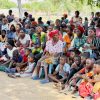
Namibia’s Drought Crisis: Building Resilience for Women and Girls
Communities in the Kavango West region of northern Namibia have firsthand experience of the severe impacts of climate change. The dry, cracked soil and emaciated livestock provide a constant reminder of the lack of access to water in this part of the country.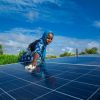
Decoding Africa’s Energy Journey: Three Key Numbers
At night, when the world lights up, large swathes of Africa remain cloaked in darkness—a stark reminder of the continent’s lack of reliable access to electricity.
Tanzanians with HIV Left in Crisis as USAID Funding Ends
At 9 a.m. on Monday, Mariam Msemwa clutched her clinic card tightly as she stood in line at Bagamoyo District Hospital’s HIV Clinic in Tanzania’s coastal region. The 19-year-old had been here many times before, picking up monthly doses of antiretroviral (ARV) drugs that kept her alive. But today was different.When she reached the counter, the nurse flatly told her. “There’s no more free medication, ” she said. “You’ll have to buy it yourself.”
Goma: What Have We Done to God to Deserve All This?
Zawadi Delphine is a soldier's wife and mother of three. She and her family live in Camp Katindo, east of the city of Goma, the provincial capital of North Kivu. Recalling what happened on the night of Sunday, January 26, 2025, she says that her husband had come from the front, north of the city of Goma, visibly angry and in a hurry. Without telling her what was really going on, he had told her that they would only meet again by "divine grace."
‘Reconciliation Will Require Robust Transitional Justice and Accountability Mechanisms’
CIVICUS discusses the ongoing conflict in Ethiopia’s Amhara region with Hone Mandefro, advocacy director at the Amhara Association of America, and Henok Ashagray, PhD candidate and project officer at the Centre for Human Rights at the University of Pretoria.
Benin: An African Pioneer
Benin faced a number of negative spillovers in 2022: a deteriorating regional security situation at its northern border, the lingering scars of COVID-19, and higher living costs amid the war in Ukraine.
Mozambique: Two Presidents, One Divided Nation
No illusions: Mozambique remains in crisis, despite the inauguration of Daniel Chapo as president and the establishment of a new parliament. While the widespread allegations of massive electoral fraud during the elections on 9 October 2024 were the immediate trigger for the unrest, the protests revealed deeply entrenched socio-economic and political grievances.« Previous Page — Next Page » *#*

The Week with IPS

NEXT STOP - SDGs
Tracking global progress towards a sustainable world
Tracking global progress towards a sustainable world
