Languages
Tuesday, November 24, 2026



News and Views from the Global South
Africa
DEVELOPMENT: Signs of Hope for Ethiopia’s Children
Amid the hardship facing Ethiopia's children, there are signs that conditions may be improving and that children's lives are changing for the better.ECONOMY: India, Brazil and South Africa Should Gang Up With China
The India-Brazil-South Africa (IBSA) formation could have enough clout to stand up to the European Union and the U.S. but it needs the help of emerging superpower China. Alternatively it should align with the BRIC (Brazil-Russia-India-China) group.
ZIMBABWE: Transport Costs Ground Workers, Employers
Every evening, Barbara Taruvona, the owner of New Styles Hair salon in Harare has to face a queue of her employees at the entrance to her office for their daily cash allowance for transport.POLITICS-SENEGAL: Ms. Mayor, Ms. Prefect
The Sicap Baobab neighborhood, one of the prettiest in the Senegalese capital, stands out, but not for the most obvious reasons. Not for its well-paved roads, or the number of naturalised immigrants from Cabo Verde, Togo or Benin, not for the hustle and bustle of the formal and informal economies.AFRICA: Research and Tradition Could Save Environment
Africa risks losing up to 50 percent of its indigenous species over the next century due to global warming.
TRADE-EAST AFRICA: Going Bananas to Fight Poverty and Hunger
Arguably one of the world’s most popular fruits, bananas are poorly marketed as a value-added commercial crop in Africa. But that is about to change as a plan is being conceptualised to transform the way Africa produces and sells bananas.KENYA: Predicting Weather With Science and Spider Webs
When the magungu bird flies higher in the sky than usual and seems to float in the air in its passage from south to north, the Abasuba people living on the islands of Kenya's Lake Victoria and on the highlands near the lake know the rains are on their way and that it is time to plant.MADAGASCAR: A Difficult Step For Women
The northern region of Diana is known for the beautiful beaches of the Nosy-Be district and the scent of fields of ylang-ylang flowers. But the political landscape of Diana is as extraordinary as its geography: the region's administrative head is a woman, Anjara Mantasara.POLITICS: Unchecked Arms Trade Fuelling Conflict, Poverty
With 1.3 trillion dollars spent every year on the world's militaries, countries enmeshed in conflict are often flooded by weapons which are then turned against helpless civilian populations, say human rights organisations pushing for an international treaty to closely regulate arms sales.
HEALTH-AFRICA: Renewed Fight Against Old Killer
The key to a new multi-billion dollar strategy to eliminate malaria deaths worldwide by 2015 is to widen availability of existing diagnostic and preventative treatments.POLITICS-KENYA: Broken Bodies, Unbroken Spirit
It was a sad occasion, and an occasion to rejoice. Sad, said Dr Ludeki Chweya, introducing Flora Terah's new book, because her heart-wrenching story shows that physical abuse and torture are a weapon of choice to deter women's participation in electoral politics in Kenya.POLITICS-ZIMBABWE: Jury Still Out On Power Sharing
One would have thought the signing of the power-sharing agreement in Zimbabwe would mean it was safe for 25 Movement Democratic Change supporters to gather in celebration at a shopping centre in Buhera.
POLITICS-NAMIBIA: Gender Equality – Making The Numbers Count
Namibian gender activists applaud the goal of a 50/50 split of women and men in government by 2015, but warn that the real work is only just beginning.ENVIRONMENT-KENYA: Threat to Pastoralists' Way of Life
Ole Kaparo works as a school teacher in Nairobi, though his family still herds cattle in the Masai pastures of the north Rift Valley province. Five years ago, during a prolonged spell of drought, he left this traditional life to seek work in the city./CORRECTED REPEAT*/RIGHTS-RWANDA: Key Genocide Trials Depend On Judicial Reforms
Rwanda is hoping to convince the International Criminal Tribunal to change its mind over refusing to transfer three genocide suspects to face trial at home, paving the way for extradition procedures to start against dozens of others living abroad in freedom.
POLITICS-GUINEA: "Sheep Who Vote?" Women Say No
Long absent from the top posts in the civil service and under-represented in political parties, Guinean women are calling for changes during legislative elections planned for December.DEVELOPMENT-SIERRA LEONE: Living Off Scraps
Each morning, Mariama Kamara and her two teenaged sons walk to Freetown’s main rubbish dump. Their mission: to dig through the mounds of garbage in search of scrap metal.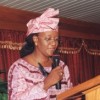
POLITICS-SIERRA LEONE: The Ups And Downs Of Zainab Bangura
Her reputation as a fiery orator is enhanced whenever she takes the podium, her punch softened by her broad smiles and gorgeous attires in West African style.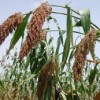
AGRICULTURE-SOUTH AFRICA: GM Sorghum Test Approved
As Africa grapples with the question of food insecurity, biotechnology buffs seem to have an answer: genetically modified crops that could feed a continent vulnerable to famine and food deficits. But environmentalists warn of new dangers.RIGHTS: Rendition Victims "Missing" in Ethiopia
A new report by Human Rights Watch (HRW) accuses the Ethiopian government of detaining at least 10 victims of unlawful rendition incommunicado and without charge since early 2007.
SOUTH SUDAN: Traditional Authority Seeks Its Place
A lion attempted to devour Dinka chief Makom Majong Makom once. It was during the long years of Sudan's north-south conflict that also saw a militia attack nearly destroy his rural South Sudanese community.« Previous Page — Next Page » *#*

The Week with IPS

NEXT STOP - SDGs
Tracking global progress towards a sustainable world
