Languages
Tuesday, November 17, 2026



News and Views from the Global South
Europe
GERMANY: Nuclear Power Fails, And Nobody Notices
Seven German nuclear plants have failed to generate any electricity this month due to technical breakdowns. They have about half the production capacity of Germany's 17 nuclear reactors, but Germany did not suffer any power shortages.EUROPE: Focus Shifts to Trafficking of Males
Governments and third sector organisations must raise awareness of a growing problem with male human trafficking in some of Eastern Europe's poorest countries if its victims are to get the help they need, people trafficking monitors say.GREECE: Zero Tolerance, Zero Concern
Increasing evidence has surfaced that a zero tolerance policy is denying due protection to people fleeing hardship, and condemning them to degrading treatment.
Q&A: EU Stepping Closer to Israel, Regardless
Israel enjoys closer relations with the European Union than almost any other foreign country - and work on deepening ties with Israel continues, even as its oppression of the Palestinian people worsens.MOLDOVA: Opposition Steps Ahead of Communists
After eight years of communist rule, four Moldovan opposition parties won a majority percentage of parliamentary seats during Wednesday's nationwide elections.
RIGHTS-BULGARIA: Two Women Take on Defence Ministry
Two young women are suing Bulgaria's Ministry of Defence over gender discrimination in the mainly ceremonial, National Guard - a case that could go a long way in changing patriarchal social norms.Q&A: EU Stepping Closer to Israel, Regardless
Israel enjoys closer relations with the European Union than almost any other foreign country - and work on deepening ties with Israel continues, even as its oppression of the Palestinian people worsens.MIGRATION: Abandoned Between Two States
Isabelle Caillol, an activist with the Turkish branch of the human rights advocacy group Helsinki Citizens Assembly, sent a mass email to pro-migrant activists in Greece in May seeking help to find the family of Abbas Khavari, a 14-year-old Afghan refugee born in Iran.ENERGY: African Sun may Light up European Homes
Twelve German companies have drawn up ambitious plans to meet at least 15 percent of the European electricity demand by 2020 from solar thermal power plants installed in the North African Maghreb region.KYRGYZSTAN: Election Falls Short for Intl Observers
Several days after what many have called an unfair election in the Kyrgyz Republic, the U.S. has shown its own reluctant agreement.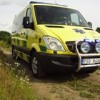
ENVIRONMENT: Swedes Going Green in Emergency
Patients in Stockholm can now be rushed to hospital in an ambulance that runs on processed sewage.CZECH REPUBLIC: Roma Exodus Provokes Diplomatic Conflict
Canada has imposed visas on Czechs following a year of thousands of visa applications from Roma who point to persecution in the Czech Republic. Czech officials and media put the blame on Canada.BOSNIA: Get to be a Country First…
Sooner or later Bosnians will have to abandon their status of quasi-protectorate, and take control of their own state if they ever want to join the European Union.BALKANS: Visas Eased, Except in Muslim Areas
Almost two decades after the break-up of former Yugoslavia, people from some of the new states that emerged have been granted visa-free travel to the European Union (EU) from the beginning of next year.EDUCATION: Not This Romanian Way
One of three students in Romania studies at Spiru Haret University, the largest private university in the country. But more than 100,000 students, recent and older graduates, could be left without their diplomas because the authorities dispute the quality of education provided by the institution.
Q&A: “Too Many People Don’t Want the Truth on CIA Flights to Come Out”
Throughout her varied career as a political leader in Portugal, Member of the European Parliament (MEP) and ambassador, Ana Gomes has been a distinguished and tireless fighter for what she defines as "just causes." The target of her criticism now is the shelving of an investigation in her country into secret CIA rendition flights.DISARMAMENT: N-Britain Goes Uselessly to Sea
Too early yet to call it a victory for anti-nuclear lobbyists, but the British government decision last week to put off an upgrade of its Trident nuclear system is at least denial of immediate victory to those who want newer nuclear weapons.EUROPE: Not the Language to Speak
A controversial new law on foreign languages in Slovakia branded discriminatory and totalitarian by critics is fuelling tensions and destroying trust between Slovaks and ethnic Hungarians, political analysts have warned.MIDEAST: Turkey Gets Boost from Pipeline Politics
The political geography of the modern Middle East has been affected for one hundred years by the appetite of westerners and other outsiders for the region's hydrocarbons.BALKANS: Media Could Be in the Dock Over War Crimes
Journalists are in the dock now for their role in provoking the wars of the 1990s across former Yugoslavia that left more than 100,000 dead.
Q&A: The Threatened Have Some Friends
Declining amphibian populations, dwindling fish stocks, waning ocean biodiversity, loss of forests...All scientists acknowledge that the rate of species loss is greater now than at any time in human history.« Previous Page — Next Page »


The Week with IPS

NEXT STOP - SDGs
Tracking global progress towards a sustainable world
Tracking global progress towards a sustainable world
