Languages
Thursday, November 19, 2026



News and Views from the Global South
Europe
KOSOVO: How a ‘Success Story’ Became Such a Mess
After the unilateral declaration of independence by Kosovo on Feb. 17, ethnic tensions are rising dangerously again in the region, especially in Northern Kosovo and the other Serbian enclaves scattered around the province.BALKANS: Who Knows What Is News
In the face of continuing threats, Serbia's B92 radio and television station has taken its logo off its equipment. Its offices now get police protection.RIGHTS-ITALY: Film Brings the Facts Home
Italy must accept its involvement in at least two proven cases of prisoner renditions, Amnesty International has demanded. The demand follows admission by the British government that a U.S. base on British soil - the island of Diego Garcia in the Indian Ocean - had twice been used by the United States as a refuelling stop for the secret transfer of two terrorism suspects in 2002.RIGHTS-BELGIUM: Bon Voyage, Past That Barbed Wire
Barbed wire is not something most people notice when they take a plane from Brussels International Airport. Yet ominous coils of it surround one cluster of buildings within this vast complex. It is here in Centre 127 that asylum-seekers are welcomed to Belgium with a lock and a key.ALBANIA: Addressing the Image Problem
Albania is stepping up efforts to show the world that its past of obscure communism, poverty-driven migration and a collapsing economy have been definitely put behind.EUROPE: The Closer You Get to NATO, The Less You Like It
Croatia, Macedonia and Albania are hoping to become the newest members of the North Atlantic Treaty Organisation (NATO) in April this year. But the better chances a country has of entering NATO, the less enthusiastic its people seem to be about membership, and sending troops in dangerous missions abroad.ALBANIA: Connecting Itself to the World
Albania's government is engaged in a massive programme to improve transport infrastructure in a move that will integrate the country into the trade and travel routes of the Balkans. But it won't be cheap, or without controversy.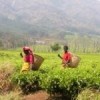
TRADE-MALAWI: Tea Growers Devising Plans to Overcome Low Prices
Low prices continue to haunt Malawian tea on the auction floors, a bitter irony for some producers as the country is regarded as the pioneer of tea-growing in Africa.ELECTIONS-SPAIN: Immigration Hot Issue in Debate
"To keep this from turning into a major problem, we have to establish order and control. We are the second country in the world in terms of the influx of foreigners; this is an avalanche," said Mariano Rajoy, leader of Spain’s rightwing Popular Party (PP).
ALBANIA: Last Outpost Beckons Foreign Capital
Albania aims to become a paradise of foreign investment in the hope its people will be allowed to share in the profits.RIGHTS-EGYPT: EU Criticism Finds Some Unofficial Welcome
The European Parliament adopted a resolution last month censuring Egypt's human rights record, and urging Cairo to embrace substantial political reforms. But while Egyptian officialdom responded angrily to the criticism, reactions among independent political figures have been more ambivalent.TRADE-EU: Deals with Africa a ‘PR Disaster’
Trade talks between the European Union and African countries have been a public relations "disaster" for the Brussels bureaucracy, a high-ranking official confessed Feb. 26.
Q&A: 'Investment in Transport Infrastructure Is the Most Important'
Roads, railways, ports and airports are being upgraded in a country where in spite of the challenges posed by poverty, investment in infrastructure has been dramatically increased.SPAIN-COSTA RICA: “You Are Nobody in This Country”
As European barriers against immigration have become tighter and tighter, the number of Costa Ricans turned back at the international airport in Madrid is steadily growing, even though people from this Central American country do not need a visa to enter Spain.TRADE: EU Aims to Rope in African States Resisting EPAs
The European Union is determined to get those African countries on board which have so far kicked against the economic partnership agreements (EPAs). At the end of 2007, only 35 out of 78 African, Caribbean and Pacific (ACP) countries had initialled EPAs.TRADE-AFRICA: EU Still Pushing Offensive Interests in EPA Talks
The European Union (EU) has an ambitious agenda for the economic partnership agreement (EPA) negotiations. It is pushing for the conclusion of full agreements in the next one to three years, covering everything from services to ‘‘trade-related’’ issues such as investment, competition and government procurement.
TRADE: EPAs Born of EU’s Concern with China in Africa
The European Union (EU) is concerned about competing with China for access to resources and markets in Africa, which partly explains its drive to hook African states into the trade deals called economic partnership agreements (EPAs).TRADE-AFRICA: ''EPAs Are Not About Partnership''
The economic partnership agreements (EPAs) currently being negotiated between Europe and its former colonies in the African, Caribbean and Pacific (ACP) regions are not about equal partnerships but about enabling ‘‘big giant Europe to gain better access to African markets’’.TRADE-AFRICA: International Call for Action Against EPAs
African and international civil society organisations have adopted a call for action, urging the rest of the world to redouble its efforts to stop the European Union's drive to institute economic partnership agreements (EPAs).EUROPE: Heading for a New Security Deal with Israel
The European Union is considering new steps to deepen its cooperation on scientific research with Israel, despite admitting that previous funds earmarked for that purpose have gone to firms operating illegally in the Palestinian territories.KOSOVO: Challenged State Faces an Uncertain Future
As the euphoria over the proclamation of independence slowly dissipates, Kosovars will have to focus on the enormous political and economic challenges corruption, poverty and an angry Serbia will pose to statehood.« Previous Page — Next Page »


The Week with IPS

NEXT STOP - SDGs
Tracking global progress towards a sustainable world
Tracking global progress towards a sustainable world
