Languages
Saturday, November 14, 2026



News and Views from the Global South
Global

Nuclear Arms Control in Crisis While US Exerts Pressure on Treaty Signatories
Responding to a question, Albert Einstein, the German-born physicist who won the 1921 Nobel Prize for Physics, predicted rather ominously: “I do not know with what weapons World War III will be fought, but World War IV will be fought with sticks and stones.”
Reclaiming Africa’s Early Post-independence History
In 1965, Kwame Nkrumah described the paradox of neocolonialism in Africa, in which “the soil continue[s] to enrich, not Africans predominantly, but groups and individuals who operate to Africa’s impoverishment.” He captured what continues to be an essential feature of Africa’s political economy.
$280m ‘Dark Money’ Spent by US Christian Right Groups Globally
US Christian right groups, many with close links to the Trump administration, have spent at least $280m in ‘dark money’ fuelling campaigns against the rights of women and LGBTIQ people across five continents, openDemocracy can reveal today.
Global Data Community’s Response to COVID-19
The world is currently counting more than 42 million confirmed cases of the COVID-19 and over 1 million deaths since the start of the pandemic.1
The Path to Global Food Security
This year, the Nobel Peace Prize recognised the inextricable link between hunger and conflict. With climate change as a further complicating factor, research, investment, and coordination with local farmers are critical for ensuring food security for all.
Finance Covid-19 Relief and Recovery, Not Debt Buybacks
In July, the UN Secretary-General warned that a “series of countries in insolvency might trigger a global depression”. Earlier, the United Nations Conference on Trade and Development (UNCTAD) and the International Monetary Fund (IMF) had called for a US$2.5 trillion coronavirus crisis package for developing countries.
Reaching Remote Women Through Inclusive Technology
The coronavirus pandemic has impacted the way people value working from home, career building, and their overall approach to utilising downtime. It has blurred out the lines between hobby, casual reading, and how time is spent away from work.
Not in Our Name, Never in Our Name: A Conversation with Muslim Faith Leaders Echoing the Wisdom of a Pontiff
As the Grand Imam of Al-Azhar, Ahmed Al-Tayeb said on October 20: “As a Muslim and being the Grand Imam of Al-Azhar, I declare before Almighty God that I disassociate myself, the rulings of the religion of Islam, and the teachings of the Prophet of Mercy, the Prophet Muhammad (pbuh), from such heinous terrorist act and from whoever would embrace such deviant, false thought.
Q&A: Why are Stillbirths still Societal Taboo?
Societal taboo and a lack of understanding about stillbirth can cause the issue to be neglected among health practitioners, according to Dr. Danzhen You, a senior adviser on Data and Analytics at the United Nations Children's Fund (UNICEF).
Can Agroecology Feed the World?
Producing food and ensuring nutrition security, protecting the environment and restoring biodiversity, building sustainable and fair food systems: That’s the promise of agroecology.
Budgeting for a Better Future, for Every Child
2020 has not turned out as planned. As the COVID-19 pandemic continues to impact populations around the world, governments have been forced to take a fresh look at their spending and how to meet additional costs of pandemic response as they expect a fall in revenue. Budget information has become even more critical.
Mahatma’s Non-Violence: Essence of Culture of Peace for New Humanity
I will begin by presenting to you excerpts from the message from UN Secretary-General António Guterres on the International Day of Non-Violence.
A Long, Uneven and Uncertain Ascent
The COVID-19 pandemic continues to spread with over 1 million lives tragically lost so far. Living with the novel coronavirus has been a challenge like no other, but the world is adapting.
Education: Act Now, Don’t Wait for the Bill
School reopening doesn’t mean that education is back on course. For a start, schools remain closed in over 50 countries, affecting more than 800 million students. The poorest ones may never make it back to school, driven by poverty into child labour or early marriage. Distance learning has been out of reach for one third of the 1.6 billion students affected worldwide by school closures. They may disengage altogether if school closures continue.
Limited Liability: Profit Without Responsibility
Limited liability protection for shareholders in joint stock companies was introduced to encourage investments in them. However, it has encouraged irresponsibility, causing much harm while generating profits without responsibility. Limited liability limits responsibility Columbia Law School’s Professor Katarina Pistor has extended her critique of the legal system to emphasize the implications of such limited liability. Limited liability encourages shareholders not to pay attention to the harm corporations they invest in may do.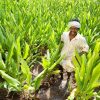
Why Food System Transformation Needs Water
The impact of Covid-19 on supply chains and food security has dealt a blow to the already faltering global development ambition of ending hunger.
Q&A: Food Systems need to Mimic Nature
Despite the World Food Programme (WFP) being awarded the 2020 Nobel Peace Prize for its work in addressing global hunger, sustainable food systems expert Emile Frison believes a lot more needs to be done. This includes the rethinking of approaches to agricultural production, establishing deeper relationships between consumers and producers, and taking a wholistic approach towards socio-economic factors.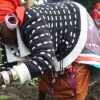
Food Citizenship: Innovative Partnerships for Healthy Food Systems
Food is high on the political agenda. The need to make food systems more resilient to external shocks like climate change and Covid-19 is now well acknowledged among states and other actors. Green, healthy, and inclusive food systems should become the new normal. But to make this happen we need to reshape the entire food system, with citizens driving bottom-up innovations.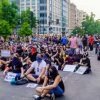
Amid COVID-19, What is the Health of Civic Freedoms?
More than half a year after the World Health Organization declared the COVID-19 outbreak a pandemic, governments are continuing to waste precious time and energy restricting human rights rather than focusing on fighting the virus.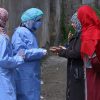
What Developing Countries Can Teach Us About How To Respond To a Pandemic
Nine months into the pandemic, Europe remains one of the regions worst affected by COVID-19. Ten of the 20 countries with the highest death count per million people are European. The other ten are in the Americas. This includes the US, which has the highest number of confirmed cases and deaths in the world.
UN Survives a World Turned Upside Down
As the United Nations plans to commemorate its annual UN Day, come October 24, Secretary-General Antonio Guterres is presiding over a world body which has remained locked down since last March because of the spreading coronavirus pandemic.« Previous Page — Next Page »


The Week with IPS

NEXT STOP - SDGs
Tracking global progress towards a sustainable world
Tracking global progress towards a sustainable world
