Languages
Sunday, October 25, 2026



News and Views from the Global South
Global

Embracing the Innovation Imperative: Tech-Governance at a Crossroads
Technological progress and the course of human history have moved forward together; more recent technological innovations have emerged with unprecedented speed and reach, deeply influencing many areas of human activity.
UN Chief Hails Turkmenistan’s Quiet Diplomacy as Launchpad for Landlocked Solidarity
In the glass-panelled hallway straddling Buildings 2 and 3 at the Awaza Congress Centre, two smartly dressed young Turkmens stood behind an ornate national pavilion—anxious, alert, and surprisingly eloquent.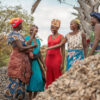
For LLDCs, the Next Decade Must be About Unlocking the Untapped Potential
As the world’s youngest and fastest-growing nations, LLDCs are home to immense untapped potential, yet remain cut off from the currents of international commerce and opportunity. Imagine being surrounded by opportunity, yet separated from it by mountains, borders, and vast distances from the nearest port—this is the daily reality for the world’s landlocked developing countries (LLDCs).
UN Trade and Environment Agencies Target Plastic Pollution through Global Negotiations and Trade Measures
They are lightweight, cheap, and able to be used in every sector of every supply chain. Few materials have revolutionized manufacturing and the global economy as much as plastics have. They are essential in almost everything, however this comes at a cost. A cost of 1.5 trillion annually in environmental damage, and a 75 percent waste ratio of all plastic ever produced.
Belem City Limits: How to Host a Successful Climate COP
There is no question that most climate activists and governments were delighted when Brazil offered to host the 2025 UN Climate Conference taking place this November.
Do Nuclear Tests Still Remain a Future Threat — as World Commemorates the 80th Anniversary of Hiroshima & Nagasaki?
The 80th anniversary of the atomic bombings of Hiroshima and Nagasaki during World War II triggers the question: Is nuclear testing dead or is it still alive--and threatening? The August 6-9 anniversary marks the devastating bombings, which claimed the lives of between 150,000 and 246,000 civilians-- and still remains the only use of nuclear weapons in an armed conflict.
Spotlight on Landlocked Developing Countries Ahead of Third UN Conference
Landlocked developing countries face a unique set of challenges. Without coastal ports, they rely on transit nations, causing higher trade costs and delays.
Climate Reparations are Necessary but Not Sufficient: World Needs Less Growth & More Justice
While recent heat waves were causing thousands of deaths, the Trump administration was busy dismantling policies that regulate greenhouse gases on the theory they don’t harm human health.
Survey by Staff Federation Expresses Disappointment over UN’s Reform Process
The Coordinating Committee for International Staff Unions and Associations of the United Nations System (CCISUA)* staff federation has conducted a quick survey of staff in its member unions of their thoughts on the UN80 initiative.
An Ageing World on a Heating Planet: Why Older People Must Be Central to Climate Policy
I've just returned from the east coast of India, where I saw for myself the harsh challenges that older people in artisanal fishing communities confront daily. I saw how the community elders — the keepers of marine traditions and the coastal environment — are being forsaken by climate policy and their governments.
Historic Inter-American Court Ruling: A Game-Changer for Environmental Defenders?
The Inter-American Court of Human Rights has issued one of the most progressive climate justice decisions of our time. Its historic Advisory Opinion on the climate emergency and human rights, released on July 3, 2025, was unequivocal: States have legal obligations under international human rights law to reduce, prevent, and address climate damage, including reining in big polluters.
Mining on the Rise as Clean Energy Demands Shifts Global Commodity Exports
Two-thirds of the developing world, or ninety-five out of 143 economies, are dependent on commodities for export value, making up 60 percent of their merchandise exports. For the least developed world, this number rises to 80 percent, leaving entire nation's revenue vulnerable to price swings, fiscal shocks, and evolving trade compositions. Hidden behind the numbers lies a deeper transformation, one disrupting fossil fuel trade, triggering a higher reliance on mineral exports, particularly on mining essential for green technologies.
How Clustering Multilateral Environmental Agreements Can Bring Multiple Benefits to the Environment
The UN80 Initiative, unveiled in March by Secretary-General António Guterres, is a system-wide effort to reaffirm the UN’s relevance for a rapidly changing world.
A High-Level Panel of Scientists to Review Deadly Threats from Nuclear Weapons
The rising nuclear threats over Europe and East Asia are increasingly ominous—particularly in the ongoing Russian-Ukraine military conflict and in the North- South political confrontation in the Korean Peninsula. The appointment last week of a 21-member Panel of scientists, following a General Assembly resolution, has been described as “a response to a global environment in which the risk of nuclear war is higher than at any point since the depths of the Cold War”.
To Tackle Microplastic Pollution from Synthetic Textiles, Rebuild Natural Fibre Markets
Plastic pollution has emerged as one of the most pressing environmental challenges of our time. Since the mid-20th century, over 8 billion metric tons of plastic have been produced globally (UNEP, 2021). Shockingly, more than 90% of this plastic waste has not been recycled. Instead, it has been incinerated, buried in landfills, or leaked into the environment where it can persist for hundreds of years, fragmenting into microplastics.
Staff Union Unanimously Declares “No Confidence” in Secretary-General & Head of UN Reform Process
The growing opposition to the UN80 restructuring plan -– which has come under heavy fire from staff unions – has now reached the upper echelons of the world body. A motion, adopted at an Extraordinary General Assembly meeting, held July 24, by the Staff Union Council in Geneva (UNOG), reads “The staff have no confidence in UN80, Secretary-General Antonio Guterres and Under Secretary General Guy Ryder” (who is heading the UN restructuring process).
Funding Cuts by Traditional Donors and the Future of Localization: Power, Paradox, and the Politics of Aid
In recent years, major international donors such as the European Union (EU), the Foreign, Commonwealth & Development Office (FCDO), USAID, and other bilaterals (such as BMZ, Sida, the Netherlands among others) have significantly reduced development funding to global majority countries.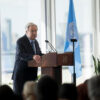
Clean Energy Sources Are Beginning to Overtake Fossil Fuels, But Is It Too Late?
As a result of the worsening climate crisis, extreme weather patterns have disrupted nearly all aspects of human life around the world. With the impacts of fossil fuel reliance being more pronounced than ever before, the United Nations (UN) has implored governments and industries to begin adopting more sustainable, renewable energy sources.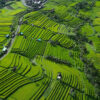
Global Food Demand in Middle-Income Nations is Rising, UN Report Says
As incomes rise in middle-income countries, so does the demand for animal-sourced calories, resulting in large increases to global food production, and raising the importance for sustainable agriculture amidst growing concerns of climate change.
Protect Women’s Rights, Especially in a Time of Equality Backlash, Say Activists
Discriminatory laws and the absence of legal protections impact more than 2.5 billion women and girls worldwide in various ways. Legal reform is paramount to securing gender equality, and the world cannot afford to roll back on decades of progress in women’s rights.
Humans Have Blown Past 6 of 9 ‘Planetary Boundaries’: Governments Alone Won’t Fix This
Nearly ten years after the Paris Agreement — a legally binding commitment to reduce greenhouse gas emissions — the gap between climate goals and government actions remains stubborn.« Previous Page — Next Page »





The Week with IPS

NEXT STOP - SDGs
Tracking global progress towards a sustainable world
Tracking global progress towards a sustainable world
