Languages
Saturday, October 3, 2026



News and Views from the Global South
Middle East & North Africa

Food Crises Intensify in Winter Ravaged War Zones
The days are short with bitterly cold rain in Bucharest, the capital of Romania, the largest Balkan country located south of the Ukraine. Over the border, temperatures in Kyiv will plummet to a daily average of zero in December as the Ukraine war grinds on.
UN Commits to Supporting Syria in Political Transition, Adapting Humanitarian Support
In overthrowing Bashar al-Assad and his regime, Syria reaches the process of re-affirming its sovereignty, a process that the United Nations chief asserts must be led by the Syrian people.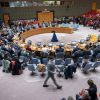
What Does the End of Assad’s Regime Mean for Syria and the Middle East?
The fall of Syrian President Bashar al-Assad came about following a series of coordinated offensive missions spearheaded by the Syrian opposition which resulted in the seizure of the capital city Damascus. In the days following the fall of Assad’s government, the Syrian Civil War has reached a phase of heightened insecurity, plunging Syria into a state of nationwide insecurity.
Israel Continues to Attack Gaza Amid Ceasefire Negotiations
After 14 months of conflict between Israel and Palestine, talks of a ceasefire agreement have headed in a promising direction. The proposed agreement entails the release of hostages in Gaza, the withdrawal of Israeli troops from Palestinian land, and a strategy for displaced Gazans to safely return to their homes in the northern region of the enclave. Despite both Israeli and Palestinian officials expressing optimism over this agreement, hostilities from the Israeli Defense Forces (IDF) continue to endanger the lives and infrastructures of thousands of Gazans.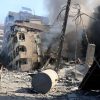
In Times of War: Tough Ethical Questions and Inner Turmoil
Sixty-four days of unrelenting war machine by Israel against Lebanon put my entire beliefs and ethos to a painful test: my sincerity in promoting social justice, human rights, integrity, patriotism, spirituality and, philosophically speaking, universal human values of love, peace and non-violence.
UNCCD COP16 Spotlights Drought But Fails to Agree on a Legally Binding Protocol
The 16th meeting of the Conference of the Parties to the UN Convention to Combat Desertification (UNCCD COP 16) concluded early hours of Saturday with a renewed focus on building drought resilience globally. However, the COP also failed to agree on bringing a legally binding drought protocol. Like the biodiversity and climate change COPs held earlier in the year, COP16 also failed to finish in time and ended by postponing several key decisions to COP17 scheduled to be held in 2026.
Camps of Death, Terror: Syrian Survivors Face Long Road To Recovery
Detained without trial for over three years for trial for allegedly treating "terrorists" (as opponents of former Syrian President Bashar al-Assad were deemed), Alaa al-Khalil, a 33-year-old nurse from the Syrian city of Hama, recounts the agony of her time in a prison cell she shared with at least 35 women.
Intra-Regional Relations the Key To Sustainable Development in the Horn of Africa
The Horn of Africa holds the resources and potential for lasting development and resilience. The countries in the subregion and development partners need to come together to invest in regional cooperation and resource management.
The Fall of The Assad Regime: The Rebels’ Prospect for Success or Failure
The fall of the Assad regime is a historic watershed event that will have significant regional and international ramifications. The question is, will the rebels fulfill their promise to be inclusive and lift the Syrian people out of their misery, and what can the US and Israel do to help shape the trajectory of the new regime?
Israel-Gaza War: Deaths, Injuries and Destruction with No Plan for Peace
After the Hamas-led attack on Israel on 7 October 2023, Israel retaliated with a war in Gaza involving bombings, shootings and blockades but with no explicit plan for achieving peace with the Palestinians.
Climate Finance Not Charity, But Obligation, International Court of Justice hears
Developing nations should not bear the brunt of the climate crisis caused by the industrialized world's historical emissions. This was the resounding message as the Solomon Islands, India, and Iran, among others, presented their cases before the International Court of Justice (ICJ).
Israel-Lebanon Ceasefire Uncertain Amid Repeated Violations
On November 27, Israel, Lebanon, and a host of mediating states agreed upon a ceasefire agreement that would establish a permanent cessation of warfare between the two parties. As of December 3, there have been no reported instances of Hezbollah directing attacks toward Israel that resulted in any casualties. Despite this, there have been numerous reported violations committed by Israel, causing extensive harm to civilian lives and local infrastructure. Many parties have warned for the international community to hold Israel accountable for these violations.
What Does The Ceasefire in Lebanon Entail For Gaza?
On November 27, a ceasefire agreement was agreed upon by officials for Israel, Lebanon, and a host of other mediating parties, including the United States. Yet even with this step towards peace, conflict and suffering continue in Gaza, raising questions of when – or how – a similar outcome can be achieved.
U.S.-Backed Israel-Hezbollah Ceasefire Comes Into Effect
A ceasefire between Israel and Hezbollah comes into effect early on Wednesday morning (November 27). It is hoped that this will mark an end to a 13-month-long period of hostilities between the two parties in Lebanon. News of the ceasefire came from United States President Joe Biden, who made a televised announcement on Tuesday afternoon that an agreement had been reached between the Israeli and Lebanese governments. Biden remarked that the ceasefire was expected to be a “permanent cessation of hostilities” from both sides of the conflict.
Blockages of Aid in Gaza Threatens Survival for 2.2 Million
Following the International Criminal Court’s (ICC) indictment of Israeli Prime Minister Benjamin Netanyahu for deliberate war crimes committed on the people of Gaza, there has been a considerable surge in hostilities, mostly concentrated in the enclave’s northern regions. The humanitarian crisis is expected to deteriorate as the availability of essential resources, such as water, food, fuel, and electricity has significantly dwindled over the past few weeks due to sustained blockages by Israeli authorities. Additionally, levels of civilian casualties and displacements have reached new peaks.
Now it’s Officially the Israeli-American Genocide in Gaza
As of last week, in the wake of the Nov. 21 issuance by the International Criminal Court (ICC) of arrest warrants for Israeli Prime Minister Benjamin Netanyahu and former IDF Defense chief Yoav Gallant, all eyes turned to Washington to see the what the response of Israel’s main backer would be.
International Criminal Court Issues Arrest Warrant for Netanyahu
On November 21, the International Criminal Court issued arrest warrants for Israeli Prime Minister Benjamin Netanyahu, as well as the former defense minister Yoav Gallant. In a statement released by the ICC, both Netanyahu and Gallant are wanted for crimes against humanity and war crimes that spanned from at earliest October 8 2023 through May 20 2024. This coincides with Israel’s respective wars with Lebanon and Palestine, for which there have been extensive damage on civilian infrastructure, thousands of civilian casualties, and repeated blockages of humanitarian aid.
Qatar Committed to Achieving Nationally Determined Contributions by 2030
As global leaders gather at COP29 to address the urgent challenges posed by climate change, Saad Abdulla Al-Hitmi, Director of the Climate Change Department at the Government of Qatar, highlighted the nation’s ambitious goals in an interview with IPS, stressing its commitment to balancing environmental stewardship with economic growth.
Human Rights Watch Condemns Israel’s “Deliberate” Military Offensives in Gaza
A new report from Human Rights Watch (HRW) postulates that Israeli military practices in the Gaza Strip constitutes as war crimes. Released on November 14, the new report details the scale of destruction in the Gaza Strip over a 13-month period, during which time the Israeli Defense Forces’ (IDF) undertook a campaign to enact “deliberate, controlled demolitions of homes and civilian infrastructure” that were conducted to drive millions of Gazans out of their homes and inflict as much damage as possible.
‘Ending impunity for violations of Palestinians’ rights would strengthen global norms that protect all humanity’
CIVICUS discusses the gender dimensions of genocide in Gaza with Kifaya Khraim, International Advocacy Coordinator at the Women’s Centre for Legal Aid and Counselling (WCLAC). Founded in 1991, WCLAC is a feminist organisation that documents Israeli violations against Palestinian women and uses this evidence for international advocacy.
Bombardments in Lebanon Threaten Civilian Safety, Destroy UNESCO Cultural Heritage Sites
As winter approaches, the ongoing airstrikes and bombardments on Lebanon has threatened the lives and livelihoods of civilians across the country and neighboring regions, which has resulted in skyrocketing death tolls and levels of displacement. Since hostilities escalated in September, Lebanon has seen the destruction of a significant amount of critical infrastructure, including historical sites that are integral to Lebanese history.« Previous Page — Next Page »


The Week with IPS

NEXT STOP - SDGs
Tracking global progress towards a sustainable world
Tracking global progress towards a sustainable world
