Languages
Wednesday, November 18, 2026



News and Views from the Global South
Middle East & North Africa
Does it Matter if the Torturer Is Right-Handed or Left-Handed?
Jeanne Kirkpatrick, a former U.S. ambassador to the United Nations, once made the highly-debatable distinction between "friendly" right-wing "authoritarian" regimes (which were mostly U.S. and Western allies) and "unfriendly" left-wing "totalitarian" dictatorships (which the U.S. abhorred).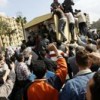
EGYPT: A Million Voices, One Message
Organisers called it Egypt’s "million man march". Whether they achieved that targeted head count is unclear, but their message was unequivocal.EGYPT: A Revolution, Unplugged
Despite the Hosni Mubarak regime's attempts at muzzling communication and dissent, and the reportedly government- sanctioned shutdown of Egypt's last standing Internet service provider to individual users Monday, Egyptians are still managing to get their voices heard and mobilise - both through advanced technical workarounds and older, traditional technologies.
EGYPT: Unrest Spreads to Sinai
A Bedouin youth casually spreads out a piece of cloth before a police headquarters in Sheikh Zwayyed town in Sinai, the vast desert area to the east of Cairo across the Suez. "I will leave when Mubarak leaves," he says.U.S.-EGYPT: Obama Looking Beyond Mubarak
With new anti-government demonstrations expected in Cairo and other Egyptian cities Tuesday, the administration of U.S. President Barack Obama appears to have concluded that the 29- year reign of President Hosni Mubarak is coming to an end.Torn Egypt Resigned to Sudan Split
Egypt, now itself torn by strife, has worked since 2005 to promote the unity of Sudan, Africa's largest country that is its neighbour to the south. But after overwhelming support for independence for southern Sudan, Egyptians are now preparing to accept partition.Headscarf Returns to Trouble Turkey
A ruling by an administrative court banning female candidates for academic posts from being veiled during an admission examination has brought the headscarf back to the front of Turkish politics, and reignited tensions between secularist and religious forces.EGYPT: ‘Planned Anarchy’ Playing Into Mubarak’s Hands
The city squares where protesters battled riot police for four consecutive days were unexpectedly quiet late Sunday night, as Egyptians fighting to topple the Mubarak regime returned home to defend their neighbourhoods from looters and thugs.EGYPT: Endgame Approaches for Mubarak
Egyptian President Hosni Mubarak named a vice-president and agreed to form a new government, but protesters calling for Mubarak’s removal said that they would not let up until the 83-year-old "Pharaoh" stepped down.EGYPT: Army Loyalty to Mubarak Will be Crucial
Columns of tanks and armoured personnel carriers moved in to take up position vacated by weary riot police on Friday night as Egypt’s embattled president attempted to restore order to his nation’s capital.EGYPT-U.S.: Washington Struggles to Catch Up
With tens of thousands of demonstrators still milling around the streets of Cairo and other Egyptian cities Friday night, the administration of U.S. President Barack Obama was struggling to come up with a policy response to an uprising that may be on the verge of ousting Washington's most important ally in the Arab world.
EGYPT: Mubarak to Dissolve Govt in Wake of Mass Protests
After a day in which thousands of protesters called for his ouster and clashed with security forces, Egyptian President Hosni Mubarak announced on state television after midnight Friday that he was dismantling the current government immediately and will announce a replacement cabinet on Saturday.Uncertain Fate for Egypt’s U.S.-Supplied Weapons Systems
Besieged Egyptian President Hosni Mubarak, a former air force officer whose 30-year old authoritarian regime is under attack, presides over a country described as one of the major military powers in the region, ranking next to Israel and Turkey.EGYPT: Eerie Silence Follows ‘Unprecedented Brutality’
Tear-gas and smoke wafted through the air of the Egyptian capital on Friday as police moved swiftly to disperse anti-government demonstrations throughout the city.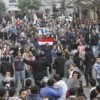
EGYPT: Embattled Regime Cuts Internet Services
Twitter was an early casualty. Then Facebook access became spotty. But when the Internet itself went down, Egyptian pro-democracy activists knew their protests were having an effect.U.S.-MIDEAST: Obama Riding a Tiger
Suddenly faced with an unprecedented number of challenges across the Arab world, the administration of President Barack Obama is scrambling hard to keep up.Global Muslim Population Growing but Slowing
The world's Muslim population will increase by 35 percent in the next 20 years, according to new estimates by the Pew Research Center's Forum on Religion and Public Life.ALGERIA: Civil Society Demands End to State of Emergency
The lifting of the state of emergency that has been in force in Algeria for nearly 20 years has emerged as a rallying point for groups united for democratic change.
MIDEAST: In the Ring, It’s Peaceful Attack
The opening bell resounds through the bomb shelter turned boxing club located in the western part of the city. A Palestinian boxer swiftly jumps from his corner, moves across the ring, trades punches with his Israeli opponent.
EGYPT: Public Noose Tightens Around Mubarak
Demonstrations calling for the ouster of President Hosni Mubarak of Egypt continued for the second day in several Egyptian cities with police cracking down violently, a development that many analysts here say reflects the nervousness of the regime.MIDEAST: PA Could be Too Late for Two States
The credibility of the Palestinian Authority (PA) on the Arab street has been further weakened by the release of the ‘Palestine Papers’, but ironically the release of the explosive documents by Al Jazeera could bolster support for the Palestinian cause internationally.« Previous Page — Next Page »


The Week with IPS

NEXT STOP - SDGs
Tracking global progress towards a sustainable world
Tracking global progress towards a sustainable world
