Languages
Friday, November 20, 2026



News and Views from the Global South
Middle East & North Africa

CHALLENGES 2007-2008: Wounded Vets Trade One Hell for Another
Last year, the United States woke up to the reality of hundreds of thousands of soldiers wounded in Iraq and Afghanistan - and began to grapple with what to do about it.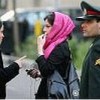
POLITICS-IRAN: Enforcing Islamic Dress Code May Cost Votes
When the government of President Mahmoud Ahmadinejad uncharacteristically denounced the country’s police force for strictly enforcing Islamic dress code (hijab) it was attributed to fears of losing popularity ahead of parliamentary elections in March.
RIGHTS: Afghan Prison Looks Like Another Guantanamo
As the world marked the sixth anniversary of the arrival of the first orange-jumpsuit-clad prisoners at the U.S. Naval Base at Guantanamo Bay, Cuba, human rights groups are attempting to focus public and congressional scrutiny on what some are calling "the other Gitmo".IRAQ: Awoken to a New Danger
The newly formed 'Awakening' forces set up by the U.S. military are bringing new conflict among people.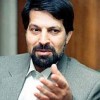
DEATH PENALTY-IRAN: Top Campaigner Harassed, Hangings Increase
Emaddedin Baghi, Iran’s leading anti-death penalty campaigner, is back behind bars in the country’s notorious Evin prison after intense harassment leading to his hospitalisation and concern that he may have suffered a heart attack.IRAQ: Less Violent But Not Less Hellish
U.S. and Iraqi officials claim that security is improving across al-Anbar province and much of Iraq. Security during the last half of 2007 was indeed better than in the period between February 2006 and mid-2007. But this has brought little solace to many Iraqis, because violence is still worse than in 2005 and early 2006.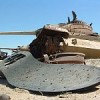
IRAQ: Civilian Deaths Massive by Any Measure
How many Iraqi civilians have lost their lives as a result of gunshots and bombings since the U.S. military invaded that oil-rich Arab nation nearly five years ago?
POLITICS: Canada Ponders its Future in Afghanistan
As the Conservative government of Stephen Harper awaits a panel report on Canada's military role in Afghanistan beyond February 2009, when the current mandate expires, there is widespread unease among analysts on both sides of the North American border that operational decisions are deep-sixing political goals and about the possibility of a widening conflict.
MIDEAST: Iran Looms Large in Bush’s 11th Hour Tour
In the opening days of his trip to the Middle East, U.S. President George W. Bush visited Israel and the Palestinian territories for the first time to spearhead the U.S. role as mediator of the latest push for Middle East peace inaugurated just over a month ago in Annapolis, Maryland.POLITICS-US: On Anniversary, Views of Surge Diverge
Exactly one year after U.S. President George W. Bush announced that he would significantly increase the number of troops deployed to Iraq, the wisdom of his so-called "surge" strategy remains very much in dispute here.
POLITICS-US: Official Version of Naval Incident Starts to Unravel
Despite the official and media portrayal of the incident in the Strait of Hormuz early Monday morning as a serious threat to U.S. ships from Iranian speedboats that nearly resulted in a "battle at sea", new information over the past three days suggests that the incident did not involve such a threat and that no U.S. commander was on the verge of firing at the Iranian boats.MIDEAST: U.S. Seen in Policy Retreat
Recent months have witnessed several notable political reorientations in the Middle East, involving Iran, the Gulf states, Egypt and Lebanon. Several experts say the changes reflect a shift in Washington's regional strategy following recent U.S. policy setbacks.
MIDEAST: In Exclusion, Hamas Counts
As U.S. President George W. Bush began talks Thursday with Palestinian Authority leader Mahmoud Abbas, Hamas supporters in Gaza were determined to make their absence count.
POLITICS: Will Naval Incident Undermine Bush's Iran Message?
It is by now almost routine. With recurring frequency, U.S. leaders tour the Middle East depicting Iran as the region's greatest threat.IRAQ: Fuel Crisis Freezes Life
It's turning out to be about the hardest winter Abu Muslih has known. Too often it's a choice between buying food and medicines, and buying kerosene to keep his children warm.MIDEAST: Pilgrims’ Progress Breaks Gaza Siege
More than 2,000 pilgrims have finally returned to the Gaza Strip via Egypt's Rafah crossing after being stuck on the border for five days. The repatriation followed their staunch refusal to return home via alternate, Israeli-controlled border crossings.IRAQ: Killer of U.S. Soldiers Becomes a Hero
The recent killing of two U.S. soldiers by their Iraqi colleague has raised disturbing questions about U.S. military relations with the Iraqis they work with.UZBEKISTAN: Call to Boycott Slave Children Cotton
A group of civil society activists has called for immediate boycott of Uzbek cotton produced by forced child labour.POLITICS-US: Christian Zionists Gain Israel’s Inner Sanctum
After raising more than two hundred million dollars for various projects in Israel, Rabbi Yechiel Eckstein and the International Fellowship of Christians and Jews (IFCJ), the organisation he founded and is president of, has hit pay-dirt.CHALLENGES 2007-2008: Terror Prosecutions Shed More Heat Than Light
The U.S. government's spotty record in obtaining convictions of people charged with providing "material support" to terrorist organisations is adding new impetus to the efforts of prominent constitutional lawyers to seek substantial changes in the law.POLITICS-US: Rice and Gates Divided over Iran’s Role in Iraq
A State Department official's assertion in late December that Iran had exerted a restraining influence on Iraqi Shiite militia violence signaled a major divergence of views between Secretary of State Condoleezza Rice and Secretary of Defence Robert Gates over how to portray Iran's role in Iraq.« Previous Page — Next Page »


The Week with IPS

NEXT STOP - SDGs
Tracking global progress towards a sustainable world
Tracking global progress towards a sustainable world
