Languages
Saturday, November 21, 2026



News and Views from the Global South
Middle East & North Africa
IRAQ: Government Fragments Further
As sectarian tensions escalate politically, a new fissure is appearing within the already fragmented Iraqi government.POLITICS-MIDEAST: Why Annapolis Is About Iran
It was initially billed as a "peace conference" to decisively address the Palestinian-Israeli conflict. But as President George W. Bush's ambitious Annapolis gathering approached - his most intensive effort to restart peace talks in seven years - any prospect of a comprehensive breakthrough appeared as distant as ever, as Israeli and Palestinian leaders struggled to agree on a joint statement until the last minute.
Q&A: ‘Death Penalty Serves Interests of Despotic Regimes’
Syria strongly opposed the recently passed U.N. resolution calling for an immediate moratorium on executions and end to capital punishment. But Nedal Naeiseh - Syrian writer and journalist - believes the regime is close to the day when it will join the growing number of abolitionist nations.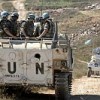
LEBANON: Peacekeepers Tread Lightly in a Wounded Land
"We have to put boots on the ground, but at the same time we want to conquer hearts and minds," exclaims Lt. Col. Nicola Tereano, the young, charismatic base commander for the Italian peacekeepers in Zibqin, south Lebanon.IRAQ: A Tenuous 'Peace' in Al-Anbar
A semblance of calm belies an undercurrent of violence, detentions and fear across Iraq’s volatile al-Anbar province.ECONOMY-MIDDLE EAST: Diversification Follows the ‘Copycat’ Route
At the beginning of the century, there were few reputed airlines, tourist destinations, investment opportunities and educational institutions to choose from in the Gulf region. Those that existed were unique and faced little or no competition.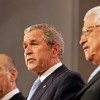
MIDEAST: Much Ado About Annapolis
The Middle East peace conference that began and ended here on this crisp, sunny Tuesday was lean on specifics for a lasting peace deal between Israel and Palestine and the formation of a Palestinian state.
MIDEAST: Christians And Muslims Coexist In Gaza
As Sunday dawns in Gaza City the traditional Islamic call to prayer mingles melodically with church bells.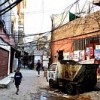
LEBANON: Violent Politics Play Out in Packed Refugee Camps
On the edge of Beirut's suburbs lies Bourj al-Barajneh, a Palestinian enclave located at the heart of a Shiite neighbourhood, traditionally the domain of Iran-backed Hezbollah. Here, 17,000 Palestinian refugees are amassed on a minuscule swath of land, co-existing in a fragile truce among run-down buildings and muddy streets.IRAQ: Detentions Escalate in Diwaniyah
Detentions have become commonplace in Iraq, but now more than ever before people are being detained after being accused of membership in "militias supported by Iran."POLITICS: Soldiers of (Mis)Fortune
The United Nations is increasingly critical of the use of deadly force, including indiscriminate shooting of civilians, by private security guards in some of the world's battle zones.POLITICS-US: Petraeus Sought to Prevent Release of Iranians
Recent statements by the U.S. military that Iran had pledged to stop supplying weapons to Shiite militias in Iraq and that this alleged flow of arms may have stopped in August were part of a behind-the-scenes struggle over whether the George W. Bush administration should make a gesture to Iran by releasing five Iranian prisoners held since January.POLITICS-US: No Second Acts, Except in Iraq
Earlier this decade, Manuel Miranda spent a good deal of time figuring out how to pilfer documents related to the Democratic Party's strategy for dealing with President George W. Bush's judicial appointments.Q&A: ‘U.S. Politics Turning Communities Against Each Other’
"As long as the U.S. troops stay in Iraq there will be violence," warns Gilbert Achcar, professor of development studies and international relations at the University of London’s School of Oriental and African Studies.COMMONWEALTH-PAKISTAN: Suspended, But Not Banished
The headlines over suspension of Pakistan from the Commonwealth conceal some of the nuances of this action. The nuances were born of considerable differences that surfaced within the Commonwealth Ministerial Action Group (CMAG) that finally took the decision.
RELIGION-IRAN: Attack on Sufis Reveals Intolerance of Muslim Sects
The destruction of a monastery belonging to the Gonabadi Sufi order in Boroujerd town of Luristan province, this month, has once again highlighted the hostile environment in which Iran’s many religious minorities and non-conformist sects exist.IRAQ: Executions Not Leading to Reconciliation
The executions of former regime officials are creating greater division, rather than reconciliation, among Iraqis.MIDEAST: Demolition Decimating Palestinian Village
Al Walajeh village was once a quiet but busy place. Just four kilometers from Bethlehem and 8.5 km from Jerusalem, its rolling hills filled with fruit trees, natural forests, and blooming vegetation made it a prime farming location. Easy access to large and consistent markets led its inhabitants to relative economic prosperity. Life was good.MIDEAST: Likudnik Hawks Work to Undermine Annapolis
Despite near-universal scepticism about the prospects for launching a serious, new Middle East peace process at next week's Israeli-Palestinian summit in Annapolis, a familiar clutch of neo-conservative hawks close to the Likud Party leader, former Israeli Prime Minister Binyamin Netanyahu, isn't taking any chances.IRAQ: Infighting Increases Instability
Increasing conflict and finger pointing between leading Shi'ite political blocs are heightening instability in war-torn Iraq.RIGHTS-US: Gitmo Policy Faces Another Supreme Court Test
The George W. Bush administration's legal justification for continuing to hold prisoners without charges at the U.S. naval base at Guantanamo Bay, Cuba will be back in the U.S. Supreme Court - yet again - early next month.« Previous Page — Next Page »


The Week with IPS

NEXT STOP - SDGs
Tracking global progress towards a sustainable world
Tracking global progress towards a sustainable world
