Languages
Wednesday, September 2, 2026



News and Views from the Global South


World Leaders Who Opted to Skip the United Nations
When the high-level segment of the UN General Assembly took place last September, there were several key world leaders missing in action (MIAs)—including, most importantly, leaders of the four of the five permanent members of the Security Council, the most powerful political body at the United Nations.
New Zealand: Māori Rights in the Firing Line
A New Zealand bill that would roll back Indigenous rights is unlikely to pass – but it’s emblematic of a growing climate of hostility from governing politicians. A recent survey shows that almost half of New Zealanders believe racial tensions have worsened under the right-wing government in power since December 2023.
Kenya’s Unanswered Questions About Enforced Disappearances
As the world marked International Day of the Disappeared, Kenya grapples with a shadowy and persistent crisis—enforced disappearances. This harrowing violation of human rights has left countless families in anguish, searching for their loved ones while battling a wall of government denial and indifference.
A Sustainable Future within Reach: The Promise of Digital Transformation
The development paradigm has shifted to ‘digital by default’ as a norm, reshaping societies and economies. As a hub for digitally driven innovations, Asia and the Pacific is well positioned to leverage the transformative potential of digital technologies to accelerate progress towards the Sustainable Development Goals.
US Support of UN Organizations Must Remain Unabated
During Donald Trump's presidency, the United States withdrew from several international organizations. These include the United Nations Relief and Works Agency for Palestine Refugees (UNRWA), the World Health Organization (WHO), the United Nations Educational, Scientific and Cultural Organization (UNESCO), and the United Nations Human Rights Council (UNHRC).
In Tonga the UN Secretary-General Declares a Global Climate Emergency
Three months ahead of the COP29 United Nations (UN) Climate Change Conference, the United Nations Secretary-General, António Guterres, has called for an emergency response from the international community as new data from the World Meteorological Organization (WMO) reveals a critical deterioration in the state of the climate.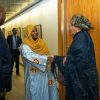
Humanitarian Crisis As Floods, Prolonged Heavy Rains Impact Chad
Since June of this year, Chad has been facing an extended period of heavy rainfall. Major flooding has triggered the onset of a significant humanitarian crisis, as all aspects of Chadian life, including health, food production, and community, have been negatively impacted. Additionally, response plans are severely compromised due to high levels of hostility taking place in neighboring nations.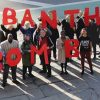
Enough is Enough: End Nuclear Testing Once and For All
In 2009 the United Nations General Assembly proclaimed 29 August the International Day Against Nuclear Tests. This date recalled the official closing of the Semipalatinsk nuclear weapons testing site in today’s Kazakhstan on 29 August 1991; that one site alone having seen 456 nuclear test explosions between 1949 and 1989.
UN Polio Vaccine Campaign in Gaza Will Proceed During Humanitarian Pause
The UN’s multi-agency polio vaccine campaign in Gaza is set to begin this weekend. It will do so under continued constraints on humanitarian operations and mobility, but with the assurance from Israel to pause fighting for the campaign to go ahead.
Climate Assemblies Seek Citizen Participation in Latin American Solutions
Danilo Barbosa had never taken part in political processes until his name was drawn in a lottery to join the climate assembly of the municipality of Bujaru, in the Amazon region of Brazil.
Infection Rates Among Children Show Worrying Increase in Gaza
As the humanitarian crisis in Gaza continues, so does the spread of illness among Palestinian children. Already facing widespread malnutrition, starvation, dehydration, and unhygienic living conditions, hundreds of thousands of children in Gaza face the risk of contracting a multitude of diseases.
VIETNAM: ‘Human Rights Conditions Will Likely Worsen as the Country Descends into a Police State’
CIVICUS discusses recent leadership changes in Vietnam with David Tran, coordinator of the Alliance for Vietnam’s Democracy, a civil society platform that promotes democracy in Vietnam and the region through international cooperation and the strengthening of local civil society.
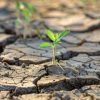
Signs of Progress on Peace-Positive Climate Adaptation
The consequences of climate change are disproportionately impacting fragile and conflict-affected settings (FCS). Climate shocks can exacerbate security risks in FCS, conflict and instability compromise a region’s ability to adapt to climate change, leaving its population ever more vulnerable to future climate shocks.
Is the UN Ready for a Second Trump Presidency?
The Communist Manifesto of a bygone era, authored by Karl Marx and Friedrich Engels, begins with an implicit warning: "A specter is haunting Europe—the specter of Communism." And today another specter is haunting-- this time at the United Nations — the specter of a second Trump presidency.
In the Midst of Hostilities Hunger Escalates in Sudan
The ongoing humanitarian crisis taking place in Sudan, which is a result of the civil war that began last year, continues to escalate as hunger and displacement plague the population, according to spokesperson for the Secretary-General of the United Nations, Stéphane Dujarric, during a press briefing on August 21, 2024.
Struggling at Sea: The Plight of Indian Fishworkers Amid Climate Change and Government Policies
Climate change forces millions of India’s fishworkers to venture beyond the country's exclusive economic zone into the perilous high seas.
Bangladesh Students, Community Moves to Protect Minorities Following Fall of Hasina Government
Immediately after the fall of the Sheikh Hasina government on August 5, 2024, following weeks of deadly demonstrations staged by students, people carried out attacks on the houses and temples of the Hindu community in Dacope of Khulna, about 225 kilometres from Dhaka. They particularly attacked and vandalized the houses of minorities believed to be involved in the politics of the ousted Awami League government.
UN Efforts for a Resilient Iraq
Climate change and water scarcity pose significant threats to Iraq's stability, prosperity, and the well-being of its people. The environmental challenges facing the nation are complex and interconnected, requiring a comprehensive and coordinated response.
Global Poverty Grows as Super-Rich Get Richer Faster
Oxfam expects the world’s first trillionaire within a decade and poverty to end in 229 years! The wealth of the world’s five richest men has more than doubled from 2020, as 4.8 billion people became poorer.
Recovering Bangladesh’s Stolen Wealth
Bangladesh bleeds as over US$3 billion drains from Bangladesh annually through offshore accounts. According to a recent report, close to US$150 billion was siphoned off the country during 15 years of kleptocratic Hasina regime’s mis-rule. Nearly US$50 billion went out of the country in the first six years (2009-2015) of the Hasina regime.
Nicaragua, China, India among 55 Nations Restricting Freedom of Movement
At least 55 governments in the past decade have restricted the freedom of movement for people they deem as threats, including journalists, according to a Freedom House report published last Thursday.« Previous Page — Next Page »


Want to keep up with the latest news and views from the Global South? Sign up for IPS Daily News Report for daily emails with our top stories about international development, climate change, gender and more. (Formerly IPS TerraViva since 1993).

The Week with IPS

NEXT STOP - SDGs
Tracking global progress towards a sustainable world
Tracking global progress towards a sustainable world
