Languages
Friday, August 7, 2026



News and Views from the Global South


South Asian Cities Faced Relentless, Record-Breaking Heatwaves Last Year
From the blistering heat of Delhi’s streets to Colombo’s humid corners, workers in the informal economy are silently enduring the toll of labour on their bodies and livelihoods.
Life Below Water Goes Deep: Our Planet’s Greatest Untold Story
As David Attenborough reflects in his new documentary Ocean, “After living for nearly 100 years on this planet, I now understand the most important place on Earth is not on land, but at sea". We wholeheartedly agree - and urge governments convening at the 3rd United Nations Ocean Conference (UNOC3) in France next month to remember that life below water goes deep.
Abundance of Renewable Energy Attracts Major Data Centers to Brazil
Brazil hopes to soon reap benefits of its largely renewable energy matrix. Data centers, whose demand is growing with the strides made by artificial intelligence, are the new frontier for these still-uncertain investments.[pullquote]3[/pullquote]
Glaciers More Sensitive to Global Warming, Now in Extreme Danger—Study
Almost 40 percent of glaciers that exist now are already in danger of melting even if global temperature stabilized at present-day conditions, a study says. An international study published in the journal Science finds that glaciers are even more sensitive to global warming than previously estimated.
Lawmakers Work to Build Women’s Representation in Politics and the Workplace
Jelena Pekić, MP of the Federation of Bosnia and Herzegovina (House of People) and Deputy Speaker of the Canton Sarajevo Assembly, Lana Prlić, MP of the Federation of Bosnia and Herzegovina (House of Representatives) and Marina Riđić, Assistant Representative, UNFPA Bosnia and Herzegovina, spoke to IPS ahead of the Study Tour on Gender Equality and Women's Empowerment in Bosnia and Herzegovina.
If This Isn’t Genocide, What Is?
For over a year, I refused to ascribe Israel's war against Hamas and the reign of horror it is inflicting on the Palestinians in Gaza as genocide, but now I feel shaken to the core by what I am witnessing. If what I see is not genocide, then I do not know what is.
Africa in Control of Its Digital Future: Mobilising Domestic Resources & Strategic Partnerships
As political, financial and social leaders met on 27 May 2025 in Abidjan, Republic of Côte d’Ivoire, for the Annual Meetings of the African Development Bank (AfDB), the continent stands at a crucial turning point. Digitalisation can be the engine of inclusive and resilient development, but only if approached with local leadership and strategic vision.
Climate Justice: Island Resilience

In a world where headlines warn of rising seas, dying reefs, and vanishing species, it’s easy to think the story ends in loss. But what if the frontlines of climate change were also frontiers of hope?
‘We Are Witnessing Ecocide in West Papua, One of the World’s Richest Biodiversity Centres’
CIVICUS discusses the devastating impact of palm oil extraction in West Papua with Tigor Hutapea, legal representative of Pusaka Bentala Rakyat, an organisation campaigning for Indigenous Papuan people’s rights to manage their customary lands and forests.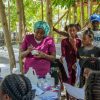
Funding Shortfalls Threaten Haiti’s Future
The humanitarian situation in Haiti has deteriorated significantly in the recent weeks as rates of violence, hunger, and displacement soar amid a severe lack of funding. As armed gangs continue to seize more territory in the capital, Port-Au-Prince, as well as in areas in the Artibonite and Centre Department, humanitarian organizations have found themselves unable to keep up with the growing scale of needs.
Can Money Change the World?
While headlines often focus on crises, inequality, or instability, they rarely highlight one of the most powerful tools for transformation: development finance. Can money change the world? Yes—if mobilized with strategic vision, sustainability, and equity.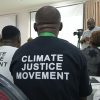
Climate Justice Movement in Nigeria to Tackle Oil Polluters Launched
Greenpeace Africa earlier in May brought together over 40 Nigerian civil society groups in Abuja to launch the Climate Justice Movement, the first of its kind in the country. The goal is to unite various climate efforts nationwide and address the severe impacts of climate change on Nigeria and the African continent.
Can These Prehistoric Sea Creatures Survive Climate Change?
In November, tens of thousands of male olive ridley sea turtles (Lepidochelys olivacea) start congregating on just five kilometers of nearshore in Odisha in eastern India. They wait for the females of the species to arrive. The survival of these prehistoric sea species has largely depended on suitable pairing and mating. However, research findings from around the world indicate that, in the long term, there may be a limited number of males at these mating sites compared to an overwhelming number of females.
The 2025 World Social Summit Must Not Be a Missed Opportunity
Rumors circulating at UN Headquarters suggest there is little appetite for ambition at the Second World Summit for Social Development, set to take place in Doha on 4-6 November 2025. Diplomats and insiders whisper of “summit fatigue” after a packed calendar of global gatherings—the 2023 SDG Summit, the 2024 Summit of the Future, and the upcoming June 2025 Fourth International Conference on Financing for Development. Compounding this fatigue is the chilling rise of anti-rights rhetoric and political resistance from some governments, casting a shadow over multilateral efforts. For some, just getting any multilateral agreement is good enough. As a result, the Zero Draft of the Social Summit Political Declaration lacks the ambition required to confront the multiple social crises our world faces.
UNOC3: Bringing Ocean Education and Science to the Global Agenda
A greater understanding and appreciation of the world’s oceans is needed to protect them. As the global community prepares to convene for the ocean conference, they must also prepare to invest in scientific efforts and education that will bolster their joint efforts.
Unmasking Harm Reduction: Youth Demand Action on Tobacco Industry’s New Tactics
The World Health Organization (WHO) for this year’s World No Tobacco Day (May 31) has chosen the theme, “Unmasking the Appeal”, to reveal the tactics employed by the tobacco and nicotine industries to make their harmful products enticing, particularly to young people.
UN 80 Reforms, Lacking Transparency, Come Under Heavy Fire
As the UN continues with its plans to restructure the world body, designated UN 80, the complaints continue to pour in—first, the Staff Union in New York and now, the Staff Union in Geneva. After a meeting with management last week-- to discuss UN 80 through the Staff-Management Committee (SMC)—a memo addressed to staffers, says that among the issues raised was “the continuing lack of transparency and lack of consultation”.
Polish Border Wall Puts Local Tatars on the Brink
Dzenneta Bogdanowicz never imagined she would witness the construction of a wall in the middle of nowhere, just two kilometres from her front door.
Energy Storage Has Yet to Take Off in Mexico
Researcher Edilso Reguera and his team began studying electric battery manufacturing in 2016, but in 2023, they ramped up efforts to develop a lithium-based prototype for motorcycles.
Hide the Numbers, Control the Message
In the past, Shakespeare famously wrote in his play Henry VI that the first step for those seeking power was to “kill off the lawyers”. Today, the first step taken by those seeking power is to hide the numbers and control the message.
Kenya Pilots AI System to Protect Black Rhino Calves in Aberdare National Park
Conservationists in Kenya’s Aberdare National Park have piloted an artificial intelligence (AI) system designed to detect and deter hyenas—as part of an effort to protect black rhino calves ahead of their reintroduction to the zone.« Previous Page — Next Page »


Want to keep up with the latest news and views from the Global South? Sign up for IPS Daily News Report for daily emails with our top stories about international development, climate change, gender and more. (Formerly IPS TerraViva since 1993).

The Week with IPS

NEXT STOP - SDGs
Tracking global progress towards a sustainable world
Tracking global progress towards a sustainable world
