Languages
Tuesday, November 10, 2026



News and Views from the Global South

Ecobreves – HONDURAS: Journalists Launch New Environmental Award
A small association of journalists in the Honduran interior has announced the creation of the "Bellota de Oro" (Golden Acorn), an award to recognize efforts to defend the environment.Ecobreves – CUBA: Eco-Gardens Outside Your Door
Several vacant lots in central and heavily populated areas of 14 of Havana's 15 municipalities have been refurbished for "organoponic" gardening as part of an urban agriculture program for 2006 in the Cuban capital.Ecobreves – ITALY: Ant Farming Is Good Business
In the northern Italian hills of Ascoli, beekeeper Emidio Ferreti is raising ants to sell them at market. The ants are used for fighting other crop-destroying insects, pollinating olive trees, and even for filming movie scenes.
A Flammable Neighborhood
Potentially explosive chemical storage sites threaten the lives of thousands of people in Argentina's Matanza-Riachuelo river basin. Officials are studying the possibility of relocating some communities.
Dunes at the Center of All-Terrain Battle
The U.S. government insists on allowing recreational activities in a fragile desert ecosystem on the U.S.-Mexico border. Environmentalists oppose efforts to open up protected areas to all-terrain vehicle enthusiasts.
Butterflies in an Italian Eden
Two Italian bird experts have created a paradise in the province of Pavia for another type of flying creature: butterflies -- the hardest hit by pollution and changes in farming over the past 30 years. Tierramérica paid them a visit.Ecobreves – MEXICO: Energy Drink Formula Seeks Market
Students at Mexico's National Polytechnic Institute developed a unique energy drink that combines sugarcane juice and an endemic plant that is also believed to be a sexual stimulant. In six months, it may be ready to compete on the market.Ecobreves – BRAZIL: Amazon Deforestation Still a Worry
Although deforestation of the vast Brazilian Amazon region has seen an "encouraging" decline this year, the forested area destroyed is equivalent to more than half the territory of Belgium, according to the head of the Amazonian Institute of Man and the Environment, Carlos Souza Junior.Ecobreves – ARGENTINA: Calls for Highway's Environmental Impact Study
Residents and environmentalists in the central Argentine province of Córdoba denounced that for the past six months a 25-km road project has been under way to unite two tourist towns, but that they haven't been given access to the environmental impact study.Ecobreves – GUATEMALA: Keeping an Eye on the Jaguar
Fifteen research and photo stations deep in the jungles of the northern Guatemalan department of El Petén are tracking the behavior of jaguars, which face extinction due to deforestation and over-hunting.Ecobreves – URUGUAY: Majority Heeds Anti-Smoking Decree
With few exceptions, Uruguayans are obeying the six-month-old presidential decree that bans smoking in enclosed spaces, whether public or private, aside from one's own home.Ecobreves – CHILE: Water Dispute with Argentina Resurfaces
Chile has renewed its protest against Argentina's publication of maps that annex the southern territory of Campos de Hielo Sur (Southern Ice Field of Patagonia), one of the planet's largest reserves of freshwater.Ecobreves – BRAZIL: World Record for Container Collection
Brazil, world champion in recycling of aluminum cans, has achieved the same record for collecting used containers for agro-chemicals, surpassing similar programs in countries of the North, like Canada and Germany.Ecobreves – GUATEMALA: An Eye on Nuclear Waste in the Pacific
The Guatemalan government and private entities have opened a laboratory for detecting contamination from toxic and nuclear substances in industry and ship traffic in a portion of the Pacific Ocean.Ecobreves – VENEZUELA: Much-Feared Duckweed Generates Income
Three resident cooperatives in the San Luis neighborhood of Maracaibo, Venezuela's second largest city, located on the lake of the same name, have obtained up to 5,000 dollars per day for harvesting lemna sp, the much-feared water lentil, or duckweed, that has taken over the lake's surface.Ecobreves – HONDURAS: 'Green' Village at Heart of a Mountain
El Pino, which covers more than 107 million hectares in the northern Honduran department of Atlántida, is being promoted as "the green villate" for the environmentally sustainable activities of its residents.
Mining an Open Pit of Disputes
Latin America's two leading mines have been hit by labor conflicts. The workers who daily risk their lives in extracting ore are demanding their share of the industry's recent bonanza.
Binational Crusade to Save Wetlands
A powerful desalinization plant will reopen in 2007 near the Mexico-U.S. border. Scientists in both countries will be working to halt harm to the Ciénaga de Santa Clara, a large marsh in the northern Mexican state of Sonora.
Thirsty and in the Dark
The current drought -- worsened by deforestation -- is the culprit behind the blackouts hitting Nicaragua during the past four months. If it doesn't rain soon, public discontent could boil over, warns the nation's president.Two Decades of Biotech Advances
The vaccine against hepatitis B is the star product of Cuban biotechnology, which is celebrating its 20th anniversary. In November, scientists and investors from around the world will gather for a meeting in Havana.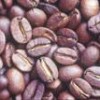
Ecobreves – BRAZIL: Coffee, Ally of the Heart
Brazilian experts are working to prove the benefits of coffee (Coffea arabica L.) for treating heart diseases and Type 2 diabetes, in a groundbreaking study that will take place over four years and involve nearly 4,000 volunteers in this South American country.« Previous Page — Next Page »





Tierramérica is the main communications platform on sustainable development and the environment in Latin America and the Caribbean. It is produced by IPS Noticias, the agency’s Spanish-language service, which created it jointly with the United Nations Development Programme (UNDP) and the United Nations Environment Programme (UNEP), with later support from the World Bank. The weekly editions of Tierramérica are published in Spanish, Portuguese and English and are picked up and printed by dozens of media outlets in the region. Follow us on Facebook and Twitter.

From the Frontline of Environment
Supported by

Tierramérica en Español

Terramérica em Portuguese

