Languages
Friday, November 13, 2026



News and Views from the Global South

Ecobreves – GUATEMALA: Trials for Illegal Logging
The environmental prosecutor of Guatemala is pursuing more than 20 lawsuits against companies and individuals for the illegal logging and trade of the country’s forest resources, the aim being to halt deforestation, legal assistant José Luis Rivera told Tierramérica.Ecobreves – NICARAGUA: Effects of Solar Radiation Studied
Ten years of investigations into the impact of solar radiation on life and on human health have been compiled in the book “Tropical Solar Radiation”, written in Spanish, and published in Nicaragua by the Jesuit Central American University (UCA).Cluster Bombs Turn Iraq into a Minefield
In the post-war it is essential, say experts, to assess the impact on civilians of the weaponry used by the United States in Iraq, including the lethal cluster bombs.“The anthill from below and from above”
Brazil's environment minister, Marina Silva, comes from a movement that "defends the jungles inseparably from the people who live in them." And that means "introducing all aspects of sustainable development into the heart of government," she told Tierramérica.Ecobreves – BRAZIL: Giant Cross-Border Forest Reserve
The Tumucumaque Mountains National Park, the world’s largest tropical forest conservation area, covers 38,000 square km in northern Brazil, and will soon add another 30,000 in neighboring French Guiana.'Better Off against the Soviets'
"The worst thing about the Iraq war is that it sets the precedent for unilateral action by Washington and makes clear that there is nothing to stand in its way," says Venezuelan commentator Ignacio Avalos Gutiérrez. To avoid this sort of unilateral action in the future it is essential to rebuild the United Nations, he adds.Ecobreves – CHILE: ‘Where Muck Goes’
The popular children’s show “31 Minutes”, of the state-run Televisión Nacional de Chile, is hosted by puppets and includes a segment on the environment, the first broadcast of which will track “where muck goes”.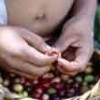
Organic Coffee Tasting Better All the Time
Coffee grown without the use of chemical inputs is giving the indigenous Lencas reason to be optimistic, as their organic harvest fetches higher prices in a depressed market. The aim is to cultivate crops "in harmony with nature."Ecobreves – ARGENTINA: Digging Up Banned Pesticide
A New Zealand firm, with the backing of the Argentine Chamber of Chemical and Petrochemical Industries, is beginning this week to dig up 30 tons of the toxic Gamexane, buried clandestinely 13 years ago in a northwestern province of ArgentinEcobreves – COLOMBIA: Streamlining Environmental Paperwork
Environmental officials in the Colombian capital recently launched a program to shorten by up to 40 percent the timeframes for evaluation and follow-up for licenses, permits, concessions, authorizations and other instruments used in ecological controls.
War Could Wipe Out Ancient History
Iraq, set in the cradle of Western civilization, holds 10,000 archeological sites with countless secrets still to be deciphered. Experts fear that the war will bury many of them forever.“We hope for some sensitivity from the military”
A special UNESCO team will assess the damage to Iraq’s cultural heritage caused by the war, which poses numerous threats to this historic legacy, said Mounir Bouchenaki, assistant director of the organization, in a conversation with Tierramérica.Do We Face a Global Quarantine?
Thousands of cases of a new and potentially lethal form of pneumonia have been reported in the past few weeks, but while the disease spreads, experts are realizing how little they know about the virus that causes it.
Humanitarian Emergency
The war in Iraq has caused a humanitarian emergency affecting 27 million people. The conflict has obvious repercussions for a civilian population that is already suffering the lack of health care, food, water and housing, even if they are not directly threatened by bombs and bullets.Ecobreves – MEXICO:: Forest Emergency
Seasonal fires are devastating the forests of Mexico, and officials should declare a national emergency, says the non-governmental Network of Peasant Forestry Organizations.Ecobreves – HONDURAS: Illness Blamed on US Mining Firm
Residents of Valle de Siria, in the central department of Francisco Morazán, suffer skin diseases and respiratory illnesses, which they blame on the mining activities of the U.S.-based transnational Entre Mares.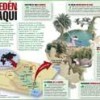
Eden in the Line of Fire
Ninety-three percent of the wetlands have disappeared in Mesopotamia, the great oasis of the Middle East. Now, war threatens to destroy what little remains.Ecobreves – BRAZIL: Dam Dilemma Resurfaces
Brazil faces the dilemma of whether to build big hydroelectric dams, weighing the need to keep up with the demand for greater electricity generating capacity -- to avoid a repeat of the 2001 energy crisis -- and the fears of environmental and social harm.Squid under Siege
Foreign ships clandestinely fish for this profitable species in Argentine waters.Ecobreves – VENEZUELA: Drought Triggers Religious Quandary
The drought hitting Venezuela set off a debate with religious nuances when the state-run Parks Institute decided to limit the gathering of palm fronds on Avila mountain, which separate Caracas from the Caribbean coast, a traditional activity in the days before Catholic Holy Week
Carlos Monsiváis”Leaving future generations with the right to breathe once every three days”
Many in Mexico agree that it is impossible to categorize writer Carlos Monsiváis, but he defines himself as "a reader". Regardless, his active participation in an array of cultural, social and political movements in this country has made him a privileged witness of contemporary history.« Previous Page — Next Page »


Tierramérica is the main communications platform on sustainable development and the environment in Latin America and the Caribbean. It is produced by IPS Noticias, the agency’s Spanish-language service, which created it jointly with the United Nations Development Programme (UNDP) and the United Nations Environment Programme (UNEP), with later support from the World Bank. The weekly editions of Tierramérica are published in Spanish, Portuguese and English and are picked up and printed by dozens of media outlets in the region. Follow us on Facebook and Twitter.

From the Frontline of Environment
Supported by

Tierramérica en Español

Terramérica em Portuguese

